
Blog
Are Digital Monitoring Systems Changing How Rental Providers Manage Tower Crane Fleets?


Construction projects are becoming increasingly complex, particularly as developers and contractors work across high-rise buildings, infrastructure projects, commercial developments, and other applications requiring substantial lifting capabilities. In this environment, tower crane rental provides an alternative to outright equipment ownership, allowing project teams to access specialized lifting equipment while aligning deployment with individual project requirements. According to Vyansa Intelligence, the global tower crane rental market was valued at USD 15 Billion in 2025 and is projected to reach USD 27 Billion by 2032, expanding at a CAGR of 8.76% during 2026-2032.
Rental Models Are Changing Equipment Access
Tower cranes are closely connected with construction logistics because they provide the lifting capability required to move materials vertically and horizontally across demanding worksites. However, purchasing and maintaining heavy lifting equipment can create substantial financial and operational commitments for construction companies.
Rental arrangements offer greater flexibility by allowing contractors to obtain equipment for specific projects instead of maintaining permanent ownership. This approach can be particularly relevant when crane requirements vary between projects according to building height, site configuration, lifting requirements, construction duration, and available working space.
In this report, the rental model can therefore be viewed as more than an equipment procurement option. It represents a way for contractors to align lifting resources with changing project requirements.
High-Rise Construction Requires Specialized Equipment
Urban construction frequently involves constrained sites where material movement must be carefully coordinated. As buildings become taller and construction activities become more concentrated within limited footprints, lifting equipment becomes an important component of overall project planning.
Tower cranes can support the movement of structural materials, equipment, and other construction components across elevated work areas. Their ability to operate from a fixed position while covering a substantial working radius makes them particularly relevant to projects where conventional ground-based lifting solutions may not provide sufficient reach or operational flexibility.
According to this industry report, the continuing importance of vertical construction provides a strong foundation for rental providers serving contractors with changing equipment requirements.
Project Flexibility Strengthens the Rental Proposition
Construction companies rarely have identical equipment requirements across every project. A residential development, commercial building, infrastructure project, and specialized construction site may require different crane configurations and lifting capabilities.
Rental services allow contractors to select equipment based on the characteristics of a particular project. This can help reduce the need to maintain a large permanent fleet covering every possible application.
The approach can also support project-based planning. Contractors can evaluate crane requirements during the planning stage and arrange equipment according to construction schedules, site conditions, and expected lifting activities.
This flexibility makes rental particularly relevant to companies seeking to maintain operational adaptability while managing their equipment resources.
Safety and Compliance Remain Central
Tower crane operations require careful attention to installation, climbing, dismantling, inspections, structural support, load handling, and operating procedures. Regulatory requirements therefore play an important role in determining how rental equipment is prepared and deployed.
For example, the U.S. Occupational Safety and Health Administration has dedicated requirements for tower cranes covering areas including erection, climbing, dismantling, foundations and structural supports, counterweights, safety devices, and inspections.
For rental providers, this means equipment management extends beyond simply supplying a crane. Maintaining appropriate inspection procedures, documentation, technical support, and equipment condition is essential for responsible deployment.
Maintenance Becomes a Fleet Management Priority
Rental fleets experience repeated deployment across different projects, which makes equipment condition and maintenance important considerations. Cranes may be transported, erected, operated, dismantled, inspected, and redeployed multiple times during their service lives.
Effective maintenance programs can help rental companies maintain equipment reliability while supporting contractors’ expectations for consistent availability. Regular inspections are particularly important because crane components can experience wear through repeated operation and transportation.
ISO 9927-3:2019 specifically addresses regular inspections for tower cranes, highlighting the importance of systematic inspection practices within tower crane operations.
Digital Capabilities Can Improve Fleet Management
Technology is also becoming increasingly relevant to equipment rental operations. Digital monitoring can provide rental providers and contractors with greater visibility into equipment condition and operational performance.
Connected systems can support activities such as equipment monitoring, maintenance planning, operational coordination, and documentation. For rental companies managing equipment across multiple construction sites, these capabilities can improve visibility over fleet utilization and maintenance requirements.
Latest market analysis therefore points toward an equipment rental environment where physical machinery and digital management capabilities increasingly work together.
Choosing Equipment Requires Project-Specific Assessment
Selecting a tower crane is not simply a matter of choosing the largest available lifting capacity. Contractors need to evaluate the characteristics of the construction site and the work that the equipment must perform.
Factors such as site access, foundation conditions, building configuration, lifting requirements, working radius, installation procedures, surrounding structures, and project scheduling can influence equipment selection.
International standards also provide an important reference framework. ISO/TR 27245 addresses international standards applicable to the design, manufacture, use, and maintenance of tower cranes, demonstrating the breadth of technical considerations associated with these machines.
Rental Providers Become Construction Partners
As contractors increasingly rely on flexible equipment access, rental providers can take on a broader role within construction projects. Their responsibilities may extend from equipment availability to technical assistance, transportation coordination, installation support, inspection management, and maintenance.
This creates an opportunity for rental businesses to differentiate themselves through service quality rather than equipment availability alone. Reliable deployment, responsive technical support, equipment condition, and effective project coordination can all influence contractor relationships.
A market research report perspective therefore shows how the rental business is becoming increasingly connected to broader construction project management.
The Road Ahead
The tower crane rental industry is positioned within a construction environment where flexibility, equipment access, safety, and operational efficiency are becoming increasingly important. Contractors need lifting solutions that can adapt to project-specific requirements without creating unnecessary long-term equipment commitments.
Detailed market insight suggests that the industry’s future will depend not only on crane availability but also on how effectively rental providers manage fleets, maintenance, safety requirements, technical services, and changing customer expectations.
As construction projects continue to demand specialized lifting capabilities, rental models can provide contractors with a practical mechanism for accessing equipment when and where it is required. The combination of flexible deployment, professional equipment management, and stronger attention to safety and technical standards can continue shaping the role of tower crane rental within modern construction.



Vietnam’s agricultural sector depends on effective crop protection across rice, coffee, pepper, maize, fruits, vegetables, rubber, and other commercial crops. Insecticides help farmers manage pest pressure that can damage crops, reduce quality, and affect commercial returns. According to a Vyansa Intelligence report, Vietnam’s insecticides industry was valued at USD 78 million in 2025 and is projected to reach USD 112 million by 2032, registering a CAGR of 5.3% during 2026-2032.
Crop Protection Remains a Key Agricultural Requirement
Vietnam’s varied agricultural landscape creates demand for solutions capable of addressing different insect pressures across crops and growing conditions. Rice can face pests such as stem borers, leaf folders, and planthoppers, while horticultural and plantation crops can experience aphids, thrips, whiteflies, beetles, and caterpillars.
The decision to apply an insecticide is increasingly connected with field conditions rather than routine spraying. Farmers may consider pest presence, crop development, weather, expected crop losses, treatment costs, and the suitability of a particular product before making an application.
According to this industry report, crop-specific requirements are an important factor shaping demand for insecticides in Vietnam, particularly across commercially important and export-oriented agricultural production.
Rice and Commercial Crops Create Significant Opportunities
Rice remains a major area for insecticide applications because pest pressure can affect plant development and the quality of harvested grain. Maintaining effective pest management is therefore important for growers seeking reliable crop production.
Other agricultural segments also provide opportunities for insecticide suppliers. Coffee, pepper, maize, fruits, vegetables, dragon fruit, durian, and rubber each present different pest-management requirements.
High-value crops can require particularly careful protection because visible pest damage may affect product quality and buyer acceptance. Export-oriented growers must also consider residue requirements and responsible application practices when selecting crop-protection products.
This makes product performance only one part of the purchasing decision. Farmers and distributors increasingly need products that combine effective pest control with clear application guidance and compliance support.
Synthetic Insecticides Continue to Play an Important Role
Synthetic insecticides remain an important part of crop protection because they are familiar to farmers, widely distributed, and available in formulations designed for different agricultural applications.
The report identifies synthetic insecticides as a leading origin category, while pyrethroids represent an important product type. Other product categories include organophosphates, carbamates, neonicotinoids, botanicals, and other solutions.
The continued use of synthetic products does not mean that agricultural pest management is focused exclusively on chemical control. Instead, farmers are increasingly expected to use registered products appropriately and incorporate chemical treatments into broader crop-management programs.
For suppliers, this creates opportunities to provide technical assistance alongside products, helping growers understand appropriate applications, resistance considerations, and compatibility with integrated pest management.
Integrated Pest Management Is Influencing Farmer Decisions
Integrated pest management is becoming increasingly relevant to Vietnam’s agricultural practices. Rather than depending on a single control method, IPM combines monitoring, preventive measures, biological approaches, and carefully selected chemical treatments.
Vietnam’s Plant Production and Protection Department provides resources covering plant protection and integrated pest management, including guidance related to IPM practices in rice production.
This approach is influencing how insecticides are positioned within modern crop-protection programs. Products may be selected according to pest identification, crop stage, treatment timing, resistance-management considerations, and the requirements of the wider farming system.
The result is a more targeted approach in which insecticides remain important but are increasingly used as one component of a broader pest-management strategy.
Regulatory Compliance Is Reshaping Product Selection
Regulation is another important consideration for companies operating in Vietnam. Plant-protection products must comply with applicable registration and permitted-use requirements, while growers and distributors need to remain aware of regulatory updates.
Vietnam’s Ministry of Agriculture and Environment issued Circular 28/2026/TT-BNNMT, which amended the country’s lists of permitted and prohibited plant-protection products. The official update highlights the continuing importance of regulatory compliance within the sector.
For insecticide suppliers, regulatory discipline can influence product portfolios, distribution, labeling, application guidance, and commercial planning.
Export-oriented agriculture adds another layer of complexity because growers must pay close attention to residue requirements and buyer expectations. As a result, registered products with clear instructions and reliable technical support can become increasingly attractive.
Biological Solutions Are Creating New Opportunities
Bio-insecticides and other biological crop-protection solutions are gaining attention as farmers seek additional tools for integrated pest management and more responsible agricultural production.
Biological products can provide opportunities in residue-sensitive and high-value crops, particularly when growers want to diversify pest-management programs. Their effectiveness, however, can depend on factors such as pest stage, environmental conditions, storage, timing, and application practices.
This means biological products are not necessarily direct replacements for conventional insecticides. Instead, they can complement synthetic products within carefully designed crop-protection programs.
For suppliers, opportunities may therefore emerge through products supported by technical guidance, appropriate storage recommendations, application support, and integration with existing pest-management practices.
Formulation and Product Innovation Are Becoming More Important
Insecticide suppliers are increasingly competing through formulation quality, application convenience, targeted performance, and technical support.
Different formulation formats can be suited to different application requirements, while product selection may depend on crop type, insect species, application timing, and farming conditions.
Resistance management is also an important consideration. Repeated reliance on the same type of insecticide can reduce long-term effectiveness against certain pest populations. Rotating appropriate modes of action and incorporating non-chemical control measures can therefore support more sustainable pest management.
This creates an opportunity for companies that can provide broader crop-protection programs rather than focusing only on individual products.
The Industry Is Moving Toward More Responsible Crop Protection
Vietnam’s insecticide industry is increasingly balancing effective pest control with food safety, regulatory compliance, resistance management, and environmental responsibility.
The Plant Production and Protection Department has also highlighted cooperation focused on sustainable pesticide management, including approaches based on risk assessment, safety, effectiveness, and sustainability.
These developments are encouraging a more disciplined approach to insecticide use. Farmers need effective solutions when pest pressure threatens crops, but product selection and application must increasingly fit within responsible agricultural practices.
Looking Ahead
Vietnam’s diverse crop base will continue creating opportunities for insecticide suppliers, particularly across rice, horticulture, coffee, pepper, and other commercial crops. At the same time, changing regulatory requirements and growing attention to integrated pest management are reshaping how these products are selected and used.
The strongest opportunities are likely to emerge for companies that combine reliable insect-control solutions with formulation expertise, technical guidance, regulatory awareness, and biological alternatives.
Vietnam’s crop-protection sector is therefore moving toward a more targeted model in which insecticides remain essential while becoming increasingly integrated with monitoring, responsible application, resistance management, and broader plant-health strategies.


Laser cutting has become one of the most important fabrication technologies in the UAE. It turns flat sheets of metal, acrylic, wood, and other materials into precise parts with clean edges and tight tolerances. From architectural panels in the capital’s skyline to signage, machinery parts, and custom interiors, laser-cut components are everywhere.
This guide explains how laser cutting works, which materials and machines suit different jobs, where the technology is used, and what to consider before starting a project.
What Is Laser Cutting?
Laser cutting uses a highly focused beam of light to melt, burn, or vaporize material along a programmed path. A CNC (computer numerical control) system guides the beam, following a digital design file. A stream of assist gas, usually oxygen, nitrogen, or compressed air, blows away molten material and leaves a clean cut edge.
Because the process is non-contact, there is no physical cutting tool to wear down or break. The result is high repeatability, which means the hundredth part matches the first. It also handles intricate shapes that would be slow or impossible with traditional methods such as sawing, shearing, or stamping.
Main Types of Laser Cutting Technology
Different laser sources suit different materials and thicknesses.
Fiber lasers. These are the standard for cutting metals. They are fast, energy-efficient, and excellent for stainless steel, mild steel, aluminum, brass, and copper. They also need less maintenance than older technologies.
CO2 lasers. These work well on non-metals such as acrylic, wood, MDF, leather, fabric, paper, rubber, and some plastics. They can also engrave detailed surfaces and produce smooth, polished edges on acrylic.
Crystal lasers (Nd:YAG and similar). Less common today, they are used in specialized applications such as fine metal work and marking.
Choosing the right laser type affects cut quality, speed, and cost, so it is worth knowing which one your material needs.
Materials That Can Be Laser Cut
Metals: Mild steel, stainless steel, aluminum, galvanized steel, brass, and copper. Fiber lasers can cut a wide range of thicknesses, from thin foil-like sheets to heavy plate, depending on machine power.
Acrylic: Popular for signage, displays, and decorative items. It cuts cleanly and often needs no further polishing.
Wood and MDF: Used in furniture, models, partitions, and interior décor.
Leather and fabric: Suitable for fashion, upholstery, and craft applications.
Foam, rubber, and gaskets: Useful in industrial sealing and packaging.
Some materials should never be laser cut because they release toxic fumes. PVC, for example, produces corrosive chlorine gas and should be avoided. A responsible fabricator will advise you on safe alternatives.
Key Advantages of Laser Cutting
Precision. Tolerances can be extremely tight, making the process ideal for parts that must fit together exactly.
Clean edges. Many cuts need little or no finishing, which saves time and money.
Complex designs. Fine patterns, small holes, sharp corners, and decorative cutouts are all achievable.
Speed. Automated cutting is far faster than manual methods, especially for batches.
Material efficiency. Nesting software arranges parts tightly on a sheet to reduce scrap.
Flexibility. The same machine can produce one prototype or thousands of repeat parts, with changes made simply by editing the digital file.
Minimal distortion. The narrow heat-affected zone reduces warping, particularly on thin sheets.
Industries and Applications in the Capital
Abu Dhabi’s mix of construction, energy, manufacturing, and hospitality creates steady demand for fabrication work. Businesses that look for laser cutting services Abu Dhabi wide often come from sectors such as:
- Construction and architecture: Decorative facade panels, mashrabiya-style screens, balustrades, gates, and cladding.
- Oil, gas, and energy: Brackets, flanges, plates, and precision components for equipment.
- Automotive and transport: Custom parts, brackets, and panels.
- Signage and advertising: Illuminated letters, logos, display stands, and dimensional signs.
- Interior design and furniture: Metal partitions, wall art, lighting fixtures, and decorative panels.
- Manufacturing and engineering: Prototypes, enclosures, machine guards, and production parts.
- Hospitality and retail: Custom fixtures, shelving, and branded displays.
Islamic geometric patterns are especially popular in the region. Laser cutting reproduces these intricate designs with a level of detail that suits both traditional and contemporary architecture.
From Idea to Finished Part: The Typical Workflow
1. Design. Projects begin with a digital drawing, typically in DXF, DWG, AI, or similar vector formats. Designers must ensure lines are clean, closed, and drawn to scale.
2. Material selection. The material and thickness are chosen based on strength, appearance, weight, and environment. Outdoor parts may need stainless steel, aluminum, or coatings that resist heat and humidity.
3. Programming and nesting. Software arranges parts on the sheet and sets cutting parameters such as speed, power, and gas type.
4. Cutting. The machine cuts the parts, with operators monitoring quality and adjusting as needed.
5. Finishing. Depending on the job, parts may be deburred, bent, welded, sanded, polished, powder coated, painted, or anodized.
6. Quality check and delivery. Dimensions and edge quality are checked before the parts are packed and delivered or installed.
Design Tips for Better Results
Good design reduces cost and improves quality. Keep these points in mind:
- Avoid extremely thin features relative to material thickness, as they may warp or burn.
- Keep holes and slots at least as wide as the material is thick where possible.
- Leave enough space between cuts to prevent heat buildup.
- Use clean vector files with no duplicate or overlapping lines.
- Add small tabs or bridges for parts such as stencil letters so inner pieces do not fall out.
- Consider bending allowances if the part will be folded after cutting.
- Choose fonts carefully for text cutouts, as thin or script styles may be fragile.
Factors That Influence Cost
Pricing is rarely based on a single number. The main drivers include:
- Material type and thickness: Thicker or specialty metals cost more to buy and cut.
- Cutting time: Complex shapes with many holes and long cutting paths take longer.
- Quantity: Larger batches reduce the per-piece cost because setup is shared.
- Finishing requirements: Bending, welding, coating, and polishing add labor and time.
- Design preparation: Poorly prepared files may need editing before production.
- Delivery and installation: Large or delicate pieces may require special handling.
Requesting a detailed quote that separates these components helps you compare options fairly.
How to Choose a Reliable Fabrication Partner
The quality of the finished part depends heavily on the provider. When evaluating laser cutting services Abu Dhabi businesses can rely on, look at these factors:
- Equipment: Modern fiber and CO2 machines with adequate bed sizes and power for your material.
- Material range: The ability to cut and source the metals or sheets your project needs.
- Technical support: Staff who can review your drawings, suggest improvements, and flag problems early.
- Finishing capabilities: In-house bending, welding, and coating simplify coordination.
- Quality control: Inspection processes, tolerance checks, and consistent results.
- Turnaround time: Clear lead times and the ability to meet deadlines.
- Sample work: Examples of previous projects similar to yours.
- Communication: Prompt, clear answers about pricing, timelines, and limitations.
Safety and Sustainability
Laser cutting involves high-energy beams, heat, and fumes, so safety systems matter. Professional workshops use enclosed machines, fume extraction, and trained operators. Sustainability is also improving: efficient nesting reduces scrap, offcuts can often be recycled, and modern fiber lasers consume less electricity than older systems. Choosing a provider that manages waste responsibly supports both environmental and corporate responsibility goals.
Final Thoughts
Laser cutting combines accuracy, speed, and design freedom, which explains its growing role across construction, industry, and creative fields. Understanding the technology, materials, design requirements, and cost factors helps you plan better and avoid delays or surprises. Prepare clean design files, choose suitable materials for the local climate, and work with a technically capable fabricator. With the right approach, laser cutting can turn a concept into a precise, durable, and visually striking finished product.

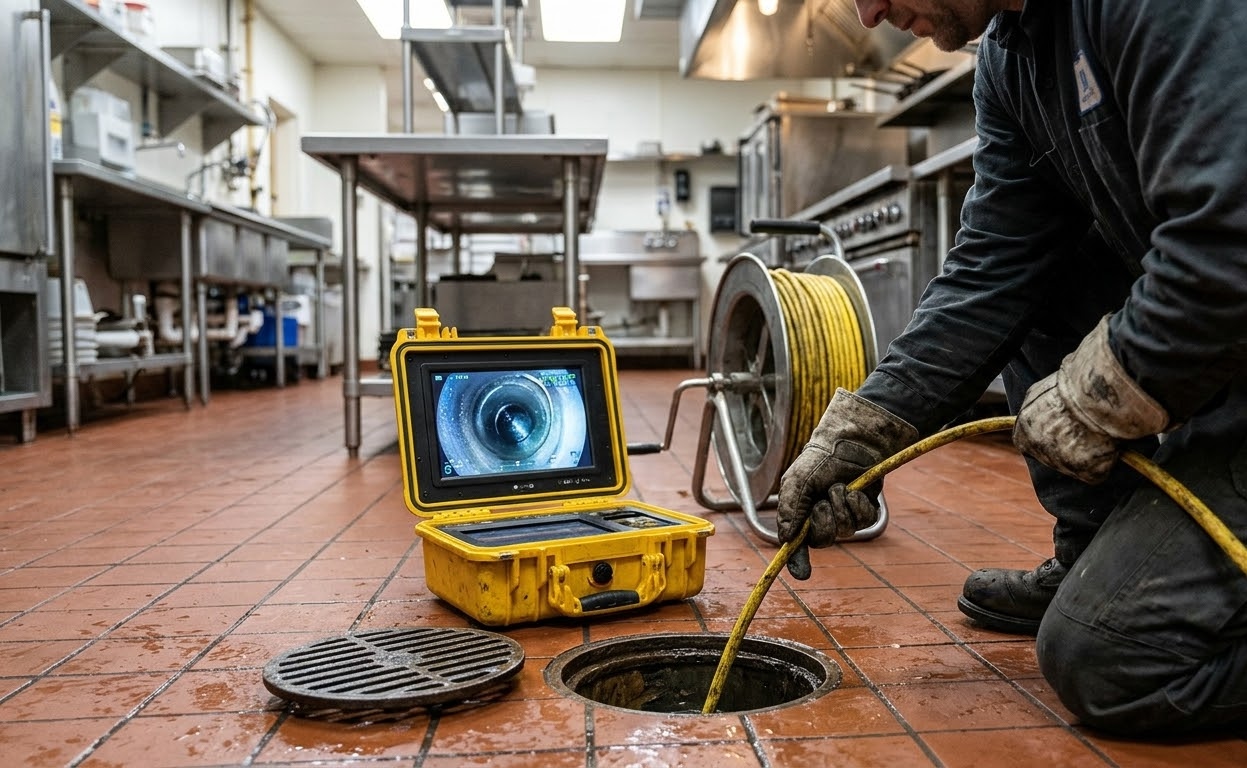
A clean drainage system is something most people only think about when it fails. A slow kitchen sink, a gurgling bathroom, or a foul smell from the floor drain usually signals a problem that has been building for weeks or months. In a city like Abu Dhabi, where high temperatures, dense residential communities, and busy commercial kitchens put constant pressure on plumbing, regular drain maintenance is essential.
This guide explains why drains block, how to spot early warning signs, which cleaning methods work best, and how to keep your plumbing healthy over the long term.
Why Drain Maintenance Matters in Abu Dhabi
Abu Dhabi’s climate and lifestyle affect drainage in several ways. Heat speeds up the breakdown of organic waste inside pipes, which intensifies odors. Grease and oil from kitchens solidify as they cool inside pipes, even in a warm climate, because pipes and wastewater cool compared to the cooking surface. Villas with large gardens, outdoor bathrooms, and pool areas have extra drainage points that collect sand, dust, and leaves. High-rise apartments share vertical stacks, so one neglected blockage can affect multiple units.
Commercial properties face even greater demands. Restaurants, cafés, hotels, salons, laundries, and labor accommodations all generate heavy wastewater loads. Neglecting drains in these settings can lead to unpleasant odors, hygiene violations, operational downtime, and potential penalties from authorities.
Common Causes of Blocked Drains
Understanding what blocks a drain is the first step toward preventing it.
Grease, oil, and fat. These are the leading culprits in kitchen drains. They cling to pipe walls, trap food particles, and gradually narrow the pipe until water barely passes.
Hair and soap scum. In bathrooms, hair combines with soap residue and forms dense clumps near the trap or just beyond the shower outlet.
Food waste. Rice, pasta, coffee grounds, and vegetable peelings swell or settle in pipes, especially where there is a bend.
Wet wipes and sanitary products. Even products labeled “flushable” do not break down like toilet paper and are a major cause of sewer line blockages.
Sand and construction debris. Renovation work and outdoor drains often send sand, cement residue, and small debris into the system.
Tree roots. In villas with gardens, roots can seek out moisture and enter joints in older underground pipes.
Pipe damage or poor installation. Sagging pipes, incorrect slopes, and broken joints create places where waste collects.
Warning Signs You Should Not Ignore
Catching a problem early saves money and prevents damage. Watch for these signals:
- Water draining slowly from sinks, showers, or floor drains
- Gurgling sounds from pipes after flushing or running water
- Persistent bad smells near drains or in bathrooms
- Water backing up in one fixture when another is used
- Damp patches, stains, or mold on walls and floors near plumbing
- Multiple fixtures draining poorly at the same time, which often points to a main line issue
- Flies or insects gathering around drains
If more than one of these appear together, the blockage may be deeper in the system rather than just in a single fixture.
Professional Drain Cleaning Methods Explained
Different blockages call for different solutions. Here are the main techniques plumbers use.
Manual and Mechanical Snaking
A drain snake, also called an auger, is a flexible cable with a rotating head that breaks through or pulls out the obstruction. This method suits small to medium blockages caused by hair, paper, or soft debris in sinks, showers, and toilets.
High-Pressure Hydro Jetting
Hydro jetting uses a high-pressure stream of water to scour the inside of pipes. It removes grease, scale, sand, and stubborn buildup that snaking can leave behind. Because it cleans the full pipe wall instead of punching a hole through the clog, it gives longer-lasting results. It is widely used for restaurant lines, main sewer lines, and large commercial systems.
CCTV Drain Inspection
A waterproof camera on a flexible cable is fed into the pipe, sending live video to a monitor. This allows technicians to locate blockages, cracks, root intrusion, collapsed sections, and misaligned joints without digging. Inspection is especially useful when blockages keep returning, when buying or renting a property, or before planning repairs.
Drain Rodding and Descaling
For hardened deposits or mineral scale, specialized cutting tools can be attached to rods or jetting equipment to break the buildup and restore the pipe’s internal diameter.
Enzyme and Bio Treatments
Biological treatments introduce enzymes or beneficial bacteria that digest organic matter in pipes and grease traps. They are not a substitute for mechanical cleaning on severe blockages, but they work well as part of a regular maintenance program and help control odors.
Grease Trap Cleaning
Commercial kitchens are generally required to maintain grease traps, and regular emptying and cleaning are essential. A full or poorly maintained trap allows fat to flow downstream, where it causes severe blockages in the building’s drainage and the wider network.
DIY Fixes: What Works and What Doesn’t
Some minor clogs can be handled at home, but caution matters.
What can help:
- A plunger for sinks and toilets
- Hot water flushes to loosen light grease
- A mix of baking soda and vinegar for mild odors
- Removing and cleaning the sink trap or shower drain cover
What to avoid:
- Strong chemical drain cleaners. They can corrode older pipes, damage seals, and pose safety risks to you and to anyone who later works on the drain.
- Forcing sharp objects into the pipe, which may scratch or puncture it.
- Repeatedly treating the same blockage with home remedies. A recurring clog is a sign of a deeper issue that needs professional assessment.
How to Choose a Reliable Service Provider
Not every plumbing contractor offers the same level of equipment or expertise. When you need professional drain cleaning Abu Dhabi residents and businesses can trust, consider the following factors:
- Licensing and trade registration: Confirm the company is properly registered to operate in Abu Dhabi.
- Equipment: Look for providers with hydro jetting machines, CCTV cameras, and drain machines suited to different pipe sizes.
- Experience across property types: Residential, commercial, and industrial systems have different needs.
- Transparent pricing: A good provider explains the work, the method, and the cost before starting.
- Emergency availability: Blockages and overflows do not wait for office hours.
- Safety and cleanliness: Technicians should protect your floors, follow safe working practices, and dispose of waste properly.
- Reports and documentation: Especially for commercial clients, inspection footage and service records are valuable for compliance and maintenance planning.
Preventive Habits That Keep Drains Clear
Prevention is cheaper than repair. Build these habits into your routine:
- Collect cooking oil and fat in a container and throw it in the trash rather than pouring it down the sink.
- Use drain strainers in kitchen sinks, showers, and floor drains to catch food scraps and hair.
- Flush only toilet paper and human waste. Dispose of wipes, cotton buds, and sanitary items in the bin.
- Run hot water through kitchen drains for a minute after washing greasy dishes.
- Clean floor drains and balcony outlets regularly so sand and leaves do not build up.
- Schedule routine maintenance. Homes can benefit from an annual inspection, while restaurants and large buildings may need monthly or quarterly service.
- Report slow drains early. Small issues are easier and cheaper to fix.
Residential vs. Commercial Needs
Homeowners usually need occasional clearing and periodic inspection, with attention to bathrooms, kitchens, laundry areas, and external drains. Commercial users need structured maintenance contracts that include grease trap servicing, scheduled jetting of main lines, and inspections to reduce the risk of emergency shutdowns. A restaurant that closes for even one day because of a sewage backup loses revenue and risks its reputation.
The Environmental and Health Angle
Poorly maintained drains are not just an inconvenience. Standing wastewater can breed bacteria, attract pests, and produce harmful gases. Overflows contaminate floors and surfaces, creating health risks, particularly in food preparation areas. Proper cleaning, responsible waste disposal, and well-maintained grease traps also reduce the load on the public sewer network and protect the wider environment.
Final Thoughts
Healthy drains depend on awareness, prevention, and timely professional help. Pay attention to early warning signs, avoid harsh chemicals and risky shortcuts, and choose the right cleaning method for the problem at hand. Whether you manage a villa, an apartment building, or a busy commercial kitchen, a small investment in regular drain care can spare you from costly repairs, unpleasant odors, and disruptive emergencies. When you need expert help, look for a licensed provider with modern equipment and a transparent approach. Reliable drain cleaning Abu Dhabi services will not only clear the blockage in front of you but also help identify what caused it, so it stays fixed.

Cuánto Duran los On Cloud Shoes? Todo Sobre su Durabilidad y Vida Útil

Best Doctors in Dubai for Septoplasty: A Complete Surgery Guide

How to Set Realistic Goals for Dermal Fillers Treatments in Dubai

Luxury Urbania Hire in Delhi: A Comfortable Way to Travel with Family and Groups

Custom Tuck Boxes and Custom Straight Tuck End Boxes: A Practical Guide for Australian Brands

Rani No Hajiro in Ahmedabad: A Complete Guide to History, Shopping & Hidden Secrets

How to Get Promoted Faster at Work: Smart Career Growth Tips

Dublin City University: Everything You Need to Know Before Applying in 2026

Why Amazon Listing Services Are a Game-Changer for New Sellers in 2026








