
Uncategorized
Motto for Raising Awareness for Mental Health and Suicide Prevention

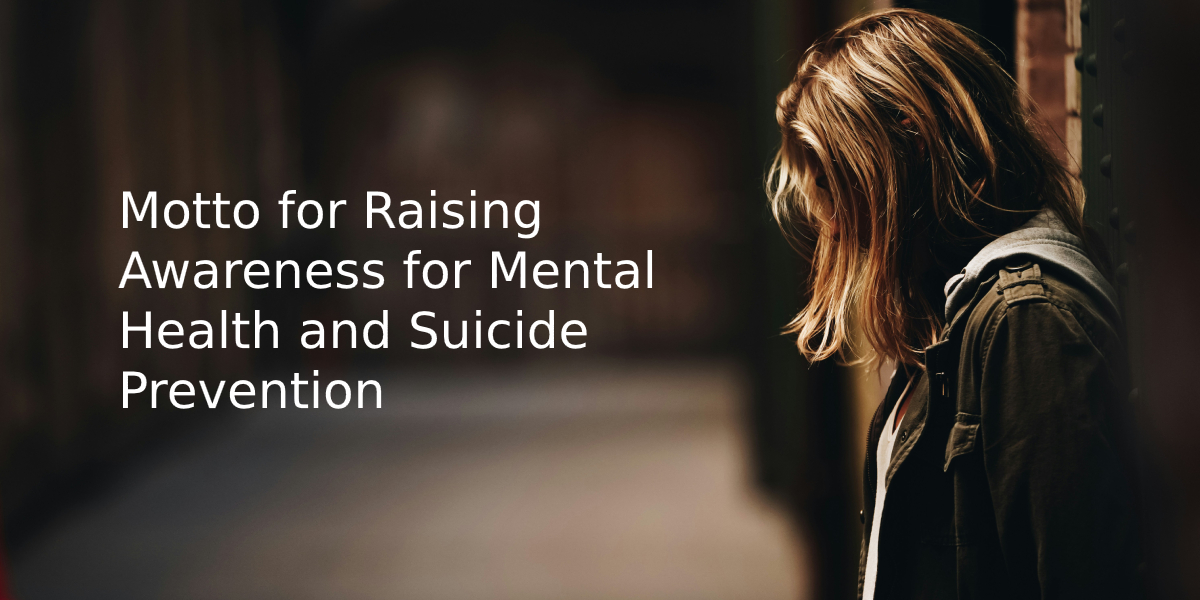
In today’s world, where societal challenges are more complex than ever, the importance of raising awareness for mental health and suicide prevention has become a crucial focus for communities, organizations, and individuals alike. Despite the remarkable strides made in de-stigmatizing mental health issues, many people still suffer in silence, unaware of the support systems that exist or too afraid to seek help due to societal misconceptions. One powerful way to spark change is through a motto for raising awareness for mental health and suicide prevention. A clear and compelling motto can help shift perceptions, foster understanding, and encourage action at both personal and societal levels.
The mental health crisis is not something that can be solved overnight, but with sustained effort and advocacy, significant progress can be made. It requires a collective mindset shift, and the use of mottos can play a pivotal role in achieving this change. Mottos are simple but impactful phrases that serve as rallying cries, unifying people under a common cause. By creating a clear message that can resonate with people, these mottos can contribute to removing the stigma around mental health issues and provide those in need with a sense of hope, support, and a pathway to recovery.
Understanding the Mental Health Crisis
Before we delve deeper into the importance of having a motto for raising awareness for mental health and suicide prevention, it’s essential to understand the scale of the mental health crisis. Mental health disorders affect millions of people worldwide, transcending age, gender, race, and socioeconomic background. According to the World Health Organization (WHO), approximately one in four people will be affected by a mental or neurological disorder at some point in their lives. In addition, suicide is one of the leading causes of death globally, with nearly 800,000 people taking their lives every year, representing one person every 40 seconds.
These staggering statistics highlight the urgency of raising awareness and taking action. Mental health and suicide are not topics to be whispered about in hushed tones. They deserve open discussion and advocacy. Mottos aimed at raising awareness for mental health and suicide prevention can help create a foundation of trust, solidarity, and education to break the silence and encourage people to seek the help they need.
The Role of Motto for Raising Awareness for Mental Health and Suicide Prevention
A motto for raising awareness for mental health and suicide prevention serves several purposes. It can be used to:
- Combat Stigma: For too long, mental health issues have been viewed through a lens of shame and judgment. A powerful motto can help challenge these misconceptions, offering a new narrative that encourages acceptance and understanding.
- Encourage Help-Seeking Behavior: One of the major barriers to addressing mental health issues is the fear of seeking help. People who are struggling may worry about being labeled or misunderstood. A well-crafted motto can send a message that it is okay to ask for help and that support is available.
- Foster Community Support: A strong motto has the potential to unite individuals, families, and communities in support of those dealing with mental health challenges. It creates a sense of shared responsibility and solidarity in the fight against mental health issues and suicide.
- Raise Public Awareness: Mottos can be used in media campaigns, social media posts, posters, and other public platforms to increase visibility around the topic of mental health. The more people understand mental health and suicide prevention, the more likely they are to recognize warning signs, offer support, and act in ways that prevent unnecessary loss of life.
- Promote Long-Term Change: A motto can serve as a lasting symbol for a cause, encouraging ongoing dialogue and policy changes aimed at improving mental health care, suicide prevention programs, and support systems.
Crafting a Strong Motto for Mental Health Awareness
Creating an effective motto for raising awareness for mental health and suicide prevention requires careful thought and consideration. A successful motto should be short, simple, and easy to remember while conveying a clear message. Here are a few key factors to keep in mind when crafting a motto:
1.Clarity and Brevity
A motto should be clear and direct, offering a concise message that people can easily understand and recall. The best mottos often capture the essence of a cause in just a few words. For example, a motto like “You Are Not Alone” effectively conveys the message that individuals struggling with mental health issues and suicidal thoughts are supported and not isolated in their pain.
2.Inclusivity
Mental health affects people from all walks of life, and a successful motto must reflect this universal experience. It should speak to all people, regardless of their background, and convey a message of hope and unity. A motto like “Together for Mental Health” reinforces the idea that everyone—whether directly affected or not—has a role to play in advocating for mental health awareness and suicide prevention.
3.Positive Messaging
Although mental health and suicide prevention are serious topics, a successful motto should focus on positivity and hope. Words that evoke optimism, healing, and support can empower individuals facing mental health struggles. Mottos like “Hope Starts Here” or “Healing is Possible” can inspire people to take the first step toward recovery.
4.Action-Oriented
Mottos that encourage action are particularly effective in raising awareness and mobilizing people to take tangible steps toward addressing mental health issues. “Speak Up, Reach Out” and “Act Now, Save Lives” are examples of action-oriented mottos that not only raise awareness but also motivate individuals to engage in conversations or seek help when needed.
5.Empathy
An effective motto should express empathy, compassion, and understanding. This can help reduce the feelings of shame that often accompany mental health struggles. Phrases like “We Listen, We Care” or “You Matter” can provide reassurance and demonstrate that help is available and that others are willing to offer support without judgment.
The Power of Mottos in Campaigns and Social Movements
A motto for raising awareness for mental health and suicide prevention can have a powerful impact when integrated into larger advocacy campaigns. Whether through grassroots efforts, national awareness months, or digital media campaigns, the right motto can serve as a rallying cry that encourages people to take action.
For example, during National Suicide Prevention Month, slogans such as “Be the Voice, Save a Life” or “Every Life is Worth Living” can be featured across social media platforms, on billboards, and in educational materials to highlight the importance of mental health and suicide prevention. These messages can not only reduce stigma but also educate people on the resources and support systems that are available to those in need.
Inspiring Examples of Mottos in Mental Health and Suicide Prevention
Over the years, many impactful mottos have emerged in the field of mental health and suicide prevention. Some of these include:
- “End the Stigma”: A call to end the societal stigma that often accompanies mental health challenges, urging people to speak out and seek help without fear of judgment.
- “It’s Okay to Not Be Okay”: A message that acknowledges the reality of mental health struggles and encourages individuals to be open about their feelings without shame or fear.
- “Take a Step, Save a Life”: This motto encourages people to take action—whether it’s reaching out to a loved one, getting involved in a mental health campaign, or seeking support for themselves.
- “Small Steps, Big Change”: This motto emphasizes that even small actions can have a significant impact, whether it’s talking about mental health or making small changes to improve one’s own well-being.
- “Hope is Real”: A simple but powerful motto that reinforces the idea that recovery is possible, offering a sense of hope to those in the midst of crisis.
The Future of Mental Health Advocacy
As society continues to evolve, so too should our approach to mental health awareness and suicide prevention. With the help of effective mottos, campaigns, and advocacy efforts, we can continue to make progress in reducing the stigma around mental health and creating an environment where people feel supported and empowered to seek help.
A motto for raising awareness for mental health and suicide prevention has the potential to spark lasting change. It can remind people that mental health is as important as physical health and that everyone deserves to live a life free from the burden of silence, shame, and suffering.
Conclusion
In conclusion, the power of a motto for raising awareness for mental health and suicide prevention cannot be underestimated. It can unite individuals, organizations, and communities in the fight to reduce stigma, promote open dialogue, and ensure that mental health support is accessible to all. Through impactful mottos, we can inspire change, save lives, and create a world where mental health is no longer an afterthought but a priority for everyone.
By continuing to spread messages of hope, support, and understanding, we can build a future where mental health challenges are met with empathy, resources, and a commitment to helping those who need it most.




Scientific research is evolving rapidly, and biotechnology is playing an increasingly important role in improving healthcare, agriculture, pharmaceuticals, and environmental studies. Among the technologies contributing to this progress, gene synthesis has become a valuable resource for researchers and biotechnology professionals. It allows scientists to obtain specific DNA sequences for research purposes without relying entirely on traditional DNA extraction methods.
In Pakistan, the growing interest in molecular biology, genetic research, and biotechnology has created new opportunities for advanced scientific solutions. Universities, research institutions, pharmaceutical companies, and laboratories are exploring modern technologies to improve research quality and efficiency. As a result, access to reliable gene synthesis solutions is becoming increasingly important for the country’s scientific community.
Understanding how gene synthesis works, where it can be applied, and how researchers can access these services can help Pakistani scientists make informed decisions about their research requirements.
Understanding Gene Synthesis and Its Importance
Gene synthesis is a biotechnology process used to produce specific DNA sequences based on a desired genetic design. Unlike traditional approaches that involve extracting DNA from existing biological samples, synthetic DNA can be prepared according to the sequence requirements of a research project.
This technology supports various scientific applications, including gene expression studies, molecular biology research, protein development, and genetic analysis. It also provides researchers with greater flexibility when working on projects that require particular DNA sequences.
For laboratories in Pakistan, access to advanced gene synthesis technology can reduce certain research limitations and support more consistent experimental planning. Furthermore, it allows scientists to focus more on analysing results and developing scientific knowledge.
Why Pakistani Researchers Need Reliable Gene Synthesis Solutions
Pakistan has a developing biotechnology sector supported by universities, medical research centres, pharmaceutical organisations, and agricultural research institutions. However, researchers may face challenges related to specialised laboratory resources, technical expertise, and access to advanced research materials.
Reliable gene synthesis solutions can help address some of these challenges.
For example, universities conducting molecular biology research may require customised DNA sequences for academic investigations. Similarly, pharmaceutical researchers may use synthetic genes as part of broader studies involving biological processes and potential therapeutic developments.
A professional custom gene synthesis service can provide access to DNA sequences designed according to specific research requirements. This flexibility is particularly useful when standard biological materials do not meet the needs of a particular project.
Additionally, working with experienced providers can help researchers understand available services, technical specifications, quality assurance procedures, and delivery expectations.
Key Applications of Gene Synthesis in Biotechnology
Gene synthesis supports several important areas of scientific research. Its applications extend beyond academic laboratories and contribute to developments in multiple industries.
1. Medical and Pharmaceutical Research
Medical research increasingly depends on molecular biology and genetic technologies. Synthetic DNA can support investigations into gene function, disease mechanisms, and biological pathways.
Pharmaceutical researchers may also use synthetic genetic materials during early-stage research and development activities. These applications can contribute to a better understanding of biological systems and support the investigation of potential medical innovations.
For Pakistani pharmaceutical companies and research institutions, access to dependable DNA synthesis solutions can strengthen research capabilities and encourage scientific collaboration.
2. Agricultural Biotechnology
Agriculture remains an important part of Pakistan’s economy. Crop productivity, plant diseases, changing environmental conditions, and food security are ongoing concerns for agricultural researchers.
Gene synthesis can support plant biotechnology research by providing genetic materials for controlled scientific investigations. Researchers can study genetic functions and explore approaches that may contribute to improved agricultural outcomes.
Consequently, modern biotechnology offers opportunities to support agricultural research and address challenges affecting local farming communities.
3. Academic and Educational Research
Universities and higher education institutions play an essential role in developing Pakistan’s scientific workforce. Students pursuing biotechnology, genetics, microbiology, and related disciplines often participate in laboratory-based research.
Synthetic DNA materials can support educational experiments and advanced academic investigations when used under appropriate institutional supervision.
Moreover, access to specialised biotechnology services can help universities expand research opportunities and encourage students to explore modern scientific methods.
What to Consider When Choosing a Gene Synthesis Provider
Selecting an appropriate provider is an important decision because the quality and reliability of research materials can influence experimental outcomes. Researchers should evaluate several factors before placing an order.
Technical Expertise: Choose a provider with relevant experience in synthetic biology and DNA production. Technical knowledge is essential for understanding research specifications and addressing potential challenges.
Quality Assurance: Ask about quality control procedures, sequence verification, documentation, and applicable laboratory standards. Reliable quality management helps researchers maintain confidence in their materials.
Customer Support: Clear communication is particularly important when researchers have specialised requirements. A knowledgeable support team should be able to explain service options and clarify technical questions.
Delivery and International Support: Pakistani researchers should also consider international shipping arrangements, estimated delivery periods, import requirements, and any documentation needed for research materials.
A dependable custom gene synthesis service should provide clear information about its capabilities, quality standards, and ordering procedures rather than making unrealistic promises.
How to Synthetic Gene Order Online for Research Projects
Accessing biotechnology services has become more convenient through online platforms. Researchers can explore available solutions, review technical information, and communicate their requirements without initially visiting a physical laboratory.
When looking to synthetic gene order online, researchers should begin by identifying their project’s scientific objectives and determining the type of DNA synthesis support required.
The next step involves reviewing the provider’s service information, technical capabilities, quality assurance policies, and eligibility requirements. Researchers should also check whether the provider supports international customers and can arrange delivery to Pakistan.
Before confirming an order, it is important to review quotations, documentation, shipping conditions, and applicable regulatory requirements. Research institutions should ensure that all purchases follow their internal biosafety procedures and relevant national and international regulations.
Online ordering can simplify communication and administration. However, choosing a reputable provider remains more important than selecting a service based only on convenience or price.
The Future of Gene Synthesis in Pakistan
Pakistan has considerable potential to expand its biotechnology and life sciences research activities. Increasing investment in scientific education, improved laboratory infrastructure, and international research partnerships could create new opportunities for innovation.
Gene synthesis may contribute to this progress by supporting research in healthcare, agriculture, environmental science, and pharmaceutical development.
As biotechnology becomes more accessible, researchers will need dependable suppliers, appropriate technical guidance, and responsible research practices. Collaboration between universities, private laboratories, government institutions, and international biotechnology companies can further strengthen the country’s scientific ecosystem.
Furthermore, greater awareness of synthetic biology may encourage students and emerging researchers to develop specialised skills that are increasingly relevant to modern scientific careers.
Conclusion
Gene synthesis is an important biotechnology solution that supports modern scientific research across multiple industries. From pharmaceutical investigations and agricultural studies to university research projects, synthetic DNA provides valuable opportunities for scientific exploration.
For Pakistan, access to reliable synthesis providers can help researchers overcome certain resource limitations and participate more actively in global biotechnology developments. Choosing an experienced provider, reviewing quality standards, and following appropriate regulatory procedures are essential steps towards successful research.
Whether researchers need a custom gene synthesis service for specialised investigations or want to synthetic gene order online through an established provider, making informed decisions can support better research planning and long-term scientific progress.


Most owners don’t think about lighting until the space is almost built. Then they stand in a half-finished lobby, look up at a ceiling full of holes, and realize nobody has decided what goes in them.
That’s the moment a lighting consultation should have already happened. In hospitality lighting, it’s the difference between a room that feels good and a room that just happens to be lit.
What a Lighting Consultation Actually Covers
A lighting consultation is a planning session, or a series of them, with a specialist who looks at your space, your brand, and your budget, then maps out how light should work in each area. That includes fixtures, brightness, color temperature, dimming, and running costs.
It isn’t a shopping trip. The consultant’s job is to figure out what you need before anyone talks about products.
Why One-Size-Fits-All Doesn’t Work
A rooftop bar and a family restaurant can both be “hospitality,” but they need completely different light. The bar wants low, warm pools of glow. The restaurant needs enough brightness to read a menu without squinting.
Energy matters too. The U.S. Department of Energy has long reported that lighting makes up a meaningful chunk of commercial electricity use, and LED upgrades are one of the easiest ways to cut it. A tailored plan lets you save on power and still keep the atmosphere you’re paying for.
How the Process Usually Works
Step 1: The Conversation
Good consultants start by asking questions, not selling. Who are your guests? What should the room feel like at 6 p.m. versus midnight? Which features do you want people to notice?
Step 2: The Site Visit
Dark wood soaks up light. White plaster bounces it around. Ceiling height changes which fixtures make sense. Skipping this step is how people end up buying pendants that look great in a catalog and terrible in the actual room.
Step 3: Building the Layers
Strong hospitality lighting is almost never one type of light. It’s usually a mix:
- Ambient for general comfort
- Task for reading, cooking, or checking in
- Accent to pick out art, textures, or architecture
- Decorative for personality
Step 4: Specifying and Controlling
This is where the details get locked in: color temperature (warm spaces usually sit around 2200K to 3000K), beam angles, and dimming. Controls matter more than people expect. A restaurant that can shift from bright lunch service to a softer dinner mood with one preset is getting far more from the same fixtures.
Step 5: Testing on Site
Even a great design needs tweaking once it’s installed. Aiming, dimming levels, and glare checks all happen here, and a good consultant sticks around for them.
What You Get Out of It
- A look people remember. Light becomes part of your identity.
- Lower bills. Efficient fixtures and smart controls reduce power and maintenance costs.
- Happier guests. Less glare and better brightness make a room more comfortable to sit in.
- Fewer expensive surprises. It’s much cheaper to fix a plan than a finished ceiling.
Picking a Hospitality Lighting Supplier
A consultation gives you the plan. Your hospitality lighting supplier gives you the means to carry it out, so choose carefully. A few things worth checking:
- Past work in hotels, restaurants, or resorts
- Custom finishes and sizes, not just stock items
- Clear warranties and certified components
- Real technical support, not just a sales contact
- Reliable lead times
The best projects happen when the consultant and the supplier talk early. If they don’t, you can end up with a design the supplier can’t deliver or products that don’t match the drawings.
A Few Tips Before You Start
- Walk through the guest journey yourself, from front door to table or bed.
- Include controls and maintenance in the budget, not just fixtures.
- Ask for samples and test them in the actual space.
- Leave room to adjust, because venues change.
- Don’t pick the cheapest option just because it’s cheapest.
Final Thoughts
Lighting is one of the few design decisions guests feel without ever noticing. A consultation gives you control over that feeling. Pair it with a supplier you trust, and your hospitality lighting will do its job quietly and well, long after opening night.

Think about the last time you waited 20 minutes on hold just to ask where your order was. Annoying, right? That’s the problem AI customer experience is trying to fix, and chatbots are where most businesses start.
What Is AI Customer Experience?
It’s pretty simple. AI customer experience means using tools like machine learning and natural language processing to help customers faster, at any hour, without making them repeat themselves.
The old chatbots were clumsy. You typed “I want to cancel my order” and got a menu of five unrelated options. Newer AI powered customer experience tools actually understand what you’re asking, even when you phrase it badly, and they remember what you said two messages ago.
Why Businesses Are Moving Fast
Support teams are stretched thin. Customers want answers now, and hiring doesn’t keep up. Gartner predicts that by 2029, agentic AI will resolve around 80% of common customer service issues without a human stepping in. Even if that number lands a bit lower, the direction is clear.
How AI Chatbots Improve Customer Experience
They never clock out
Someone has a billing question at 2 a.m. A chatbot answers. No ticket, no waiting until Monday.
They clear the boring stuff
Order tracking, password resets and return policies make up a huge chunk of support volume. A bot handles those in seconds, and your human agents get time for the messy problems that need empathy.
They make things feel personal
When a bot knows what you bought last month, it can skip the “what’s your order number?” routine. That small thing makes a customer feel recognized rather than processed.
They give the same answer every time
Ask three different human agents about a refund policy and you might get three versions. A well-trained bot sticks to the facts.
They speak more languages than your team can
Going into a new market doesn’t mean hiring a whole new support department. Multilingual bots cover the basics from day one.
Where It Works in Real Life
A clothing store can use a bot for size questions and returns, which are two things shoppers ask about constantly. Banks use bots to answer balance questions and flag odd transactions. Airlines use them during delays, when thousands of people ask the same thing at once and no human team could keep up.
Getting Started Without Making a Mess
Pick one job first. Don’t try to automate everything. Choose your most repetitive question and do it well.
Feed it good material. A bot is only as good as what it learns from. Use real FAQs, up-to-date product info and actual support chats. Then read the conversations yourself every week. You’ll spot problems fast.
Always give people a way out. This matters more than anything else here. If a customer is frustrated, let them reach a human in one click, and pass along the chat so they don’t start over. Nothing kills trust faster than a bot that traps people in a loop.
Track a few numbers that matter:
- Customer satisfaction (CSAT)
- How long it takes to resolve an issue
- How many chats the bot solves alone
- How often it hands off to a person
Mistakes I See Constantly
- Hiding the “talk to a human” option
- Writing bot replies that sound like a legal notice
- Launching without testing it on real questions
- Forgetting about customer data privacy
The Bottom Line
AI chatbots aren’t a gimmick anymore. Done right, they cut waiting time, keep answers consistent and free your team for work that matters. Done badly, they frustrate people. The difference usually comes down to starting small, testing honestly and keeping a human within reach.
If you’re serious about AI-powered customer experience, build it around how customers actually behave, not how your org chart looks.

How to Renew a License in Virginia: Complete Driver’s License Renewal Guide

Choose the Right Food and Beverage Course in Faisalabad

Start Your AI Journey with Professional Training in Faisalabad

Hail Protection Car Cover: Reliable Protection Against Hail Damage

Cropped Bomber Jacket: A Short Guide to Wearing the Shorter Cut

Rani No Hajiro in Ahmedabad: A Complete Guide to History, Shopping & Hidden Secrets

Digital Marketing for Beginners: Step-by-Step Guide to Start and Succeed in 2026

How to Get Promoted Faster at Work: Smart Career Growth Tips

Dublin City University: Everything You Need to Know Before Applying in 2026








