
Technology
How Multi-Warehouse Businesses Can Create a Reliable View of Inventory

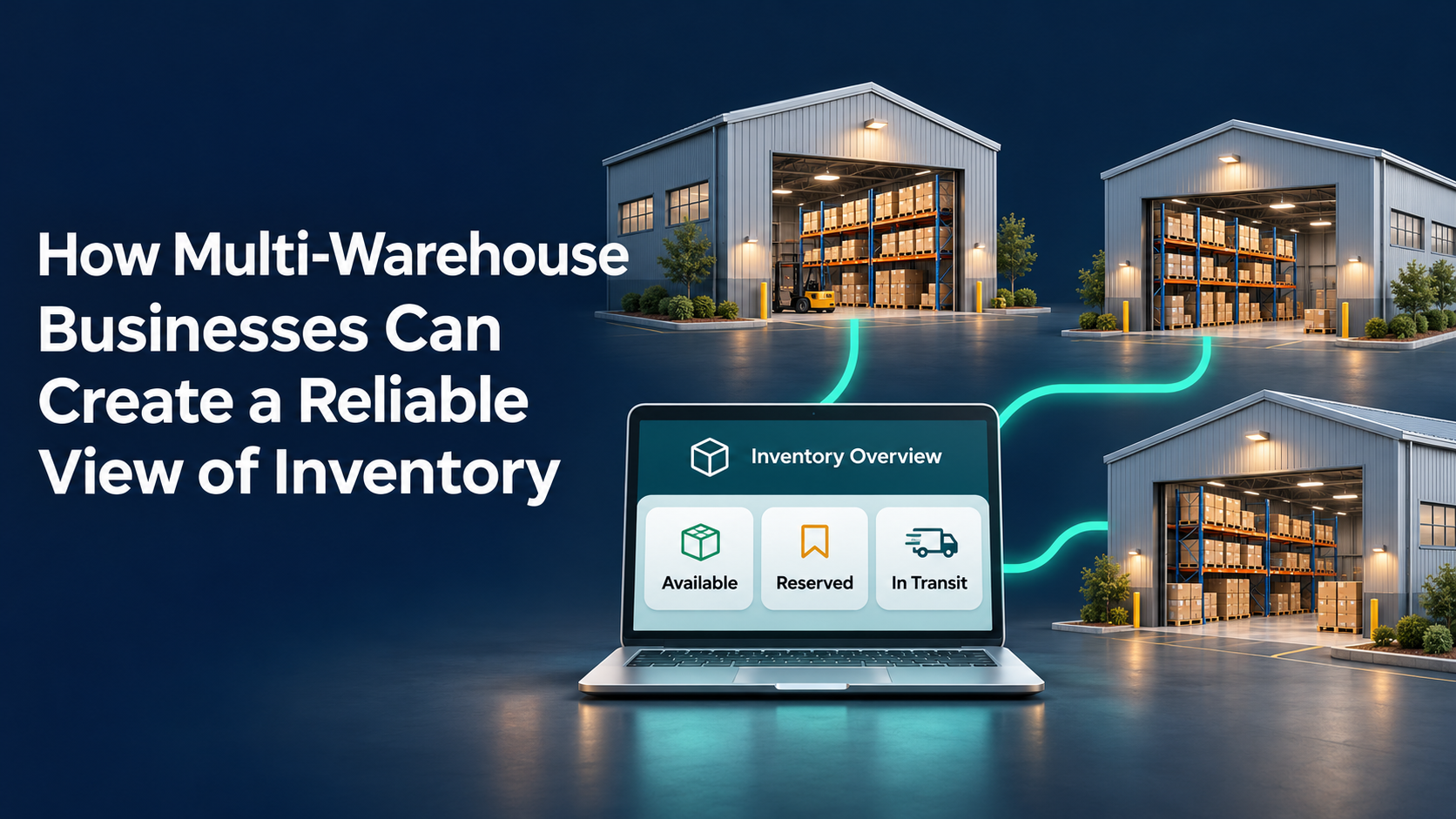
An order needs 80 units. Across three warehouses, the business has 140. Yet the sales team still cannot confidently confirm delivery.
One location has stock reserved for another customer. Another is holding returned goods for inspection. The third has available units, but its collection window has already closed.
The total is correct. The delivery promise remains uncertain.
For a multi-warehouse business, reliable inventory visibility means understanding what can actually be used, where it sits, and when it can reach the next destination. That requires more than combining quantities on a dashboard.
The work begins with agreeing what each inventory figure represents and keeping that meaning intact as stock moves between locations.
Define Availability Before Combining Stock Figures
Warehouses may describe inventory differently. One site counts everything physically present as “on hand.” Another excludes damaged goods. A third uses a spreadsheet to track stock reserved for important customers.
Combining these figures produces a number that is difficult to interpret.
Establish shared definitions for the inventory states that affect decisions:
- On hand: Stock physically recorded at a location.
- Reserved: Units committed to existing demand.
- On hold: Goods awaiting inspection, investigation, or release.
- In transit: Stock dispatched from one location but not yet received at another.
- Available to allocate: Units eligible for a new commitment under agreed rules.
Keep physical availability separate from delivery feasibility. An item can be available in a warehouse without being able to meet a customer’s requested date.
The shared view should preserve both pieces of information.
Make Product and Location Records Consistent
The same product may have different codes across warehouses, especially after acquisitions or separate system implementations. Pack sizes can differ too.
A location reporting 20 cartons cannot be compared directly with another reporting 20 individual units.
Create dependable mappings between local product codes and the business’s shared item records. Include units of measure, pack conversions, warehouse identifiers, and relevant product attributes.
For goods managed by batch, serial number, or expiry date, retain that detail wherever it affects allocation. Two units of the same product may not be interchangeable if one is expired, restricted, or committed to a specific customer requirement.
Assign ownership for maintaining these mappings. Otherwise, each new product or warehouse can introduce another inconsistency.
Capture Stock Changes Where the Work Happens
A central inventory view depends on the events recorded at each site.
If goods arrive in the morning but receiving is posted at the end of the shift, other teams operate with an outdated picture. The same problem occurs when damaged stock remains available in the system until someone completes an adjustment.
Review when each warehouse records:
- Receipts and putaway.
- Reservations and picking.
- Dispatch confirmations.
- Returns and inspection results.
- Damage, losses, and count adjustments.
Where practical, capture movements as part of the physical task through scanning or another controlled entry process. Make the remaining manual steps explicit.
Then establish how those updates reach the ERP, OMS, and shared inventory view. Monitor rejected or missing updates, and display when each location’s information was last refreshed.
A stale quantity should be recognisable before someone uses it to promise an order.
Treat Transfers as a Complete Workflow
Inter-warehouse transfers deserve particular attention because stock changes location without leaving the business.
Suppose Warehouse A dispatches 50 units to Warehouse B. If A removes them immediately but B adds them only on arrival, a combined view may temporarily hide those units. If both locations count them as available during the journey, the business may promise the same stock twice.
Maintain an identifiable transfer record through dispatch, transit, receipt, and any discrepancy.
That record should show the sending and receiving locations, quantities dispatched and received, expected arrival, and current status. In-transit stock should remain visible without being mistaken for stock ready to pick.
Partial receipts need their own treatment. If B receives 47 units, the remaining three should stay under investigation rather than disappearing through an unexplained adjustment.
Connect Inventory Visibility to Allocation Rules
Seeing stock across all sites does not determine which warehouse should fulfil an order.
Allocation may depend on delivery distance, handling capacity, customer restrictions, transport schedules, or the need to preserve local stock for existing commitments.
Document those rules and make sure the order workflow applies them consistently.
Reservations also need coordination. When several channels draw from a shared stock pool, an accepted order must reduce the quantity available for subsequent commitments. Cancellations should release stock only when the relevant fulfilment activity has been stopped or reconciled.
Without this coordination, a dashboard can display accurate warehouse balances while the business still accepts more orders than it can fulfil.
Reconcile System Records with Physical Stock
Integration can distribute a wrong quantity just as efficiently as a correct one.
Maintain a counting programme that reflects operational risk. High-movement products, recurring discrepancies, and items with significant service consequences may need more attention than stable, low-activity stock.
When a difference appears, investigate the underlying movement. Was a receipt missed? Was a transfer posted incorrectly? Did a return become available before inspection?
Correcting the balance resolves the immediate mismatch. Correcting the process helps prevent it from returning.
Give unresolved discrepancies an owner and a clear status so other teams know when availability requires confirmation.
Test Reliability Through Everyday Decisions
Start with a manageable group of products across two warehouses. Follow receipts, allocations, transfers, cancellations, and returns before expanding.
Measure whether the shared view reduces:
- Manual calls to confirm stock.
- Orders accepted without sufficient fulfilable inventory.
- Unexplained differences between systems.
- Transfers requiring reconciliation.
- Time spent resolving stock discrepancies.
Also check whether staff trust the view enough to use it. If they still maintain private spreadsheets, find out what information or control the shared system is missing.
Conclusion
A reliable multi-warehouse inventory view connects quantities with location, condition, commitments, and timing. Shared definitions and dependable updates help teams understand what they can promise and what still needs checking.
For businesses managing disconnected warehouse platforms, supply chain digital transformation services can help assess data gaps, transfer workflows, and allocation rules.
Begin with one recurring inventory mismatch across two locations. Trace it from the physical movement to the customer commitment, then improve the records and handoffs that made the answer uncertain.




Private equity firms manage complex investment processes that involve deal sourcing, investor relationships, fundraising, due diligence, and portfolio management. Handling these activities across spreadsheets, emails, and disconnected systems can create operational challenges and limit visibility into important investment opportunities. This is where Private Equity CRM Software plays an important role by bringing essential investment management activities into one centralized platform.
Modern CRM solutions help private equity firms organize investor information, track deal pipelines, automate workflows, and improve communication. By connecting investment teams with accurate and accessible data, firms can make better decisions, strengthen relationships, and manage their operations more efficiently.
Centralizes Investment and Investor Information
One of the biggest challenges for private equity firms is managing large amounts of information across multiple investments and investor relationships. When information is scattered across spreadsheets and different applications, teams may struggle to find accurate records or maintain consistent communication.
The Private Equity CRM Software provides a centralized database where firms can organize investor profiles, company information, deal histories, meeting notes, and communication records. Investment professionals can access relevant information from one location instead of searching through multiple systems.
This centralized approach improves collaboration between investment, fundraising, and investor relations teams while reducing information gaps.
Improves Deal Flow Management
Identifying and evaluating investment opportunities requires a structured approach. Private equity professionals need to monitor potential deals, evaluate companies, track discussions, and manage opportunities throughout the investment lifecycle.
A dedicated CRM helps firms organize their deal pipelines and monitor opportunities at different stages. Teams can record important deal details, assign responsibilities, schedule follow-ups, and track progress from initial sourcing to final investment decisions.
With better deal visibility, investment teams can prioritize promising opportunities, avoid missed follow-ups, and maintain a more organized investment pipeline.
Automates Repetitive Investment Workflows
Private equity professionals often spend considerable time on administrative tasks, including updating records, preparing reports, scheduling meetings, and following up with investors.
CRM automation reduces this manual workload by streamlining repetitive processes. Teams can automate reminders, update deal statuses, organize investor communications, and generate reports using centralized information.
Automation allows investment professionals to focus more on strategic activities, relationship development, and evaluating potential investments rather than managing administrative processes.
Strengthens Investor Relationship Management
Building and maintaining strong relationships with limited partners (LPs), institutional investors, and other stakeholders is essential for private equity firms.
An effective CRM system helps firms maintain detailed investor profiles, track communication history, record preferences, and manage relationship activities. Fundraising teams can use this information to understand investor interests and deliver more relevant communication.
Better relationship management also helps firms maintain consistent engagement throughout fundraising cycles. By having a clear view of previous interactions and upcoming activities, teams can improve investor experiences and build long-term trust.
Supports More Effective Fundraising
Fundraising involves managing investor outreach, tracking commitments, monitoring engagement, and coordinating communication across multiple stakeholders.
Private Equity CRM Software helps firms organize fundraising activities and monitor investor progress throughout the fundraising pipeline. Teams can identify interested investors, track discussions, manage follow-ups, and maintain visibility into fundraising opportunities.
Centralized fundraising information also helps investment professionals understand which relationships require attention and where additional engagement may be needed.
Provides Better Reporting and Investment Insights
Accurate reporting is important for understanding investment performance, evaluating opportunities, and supporting business decisions.
Modern CRM platforms provide reporting and analytics capabilities that help firms monitor deal activity, investor engagement, fundraising progress, and relationship development.
Instead of manually collecting information from different sources, teams can use centralized dashboards to access relevant operational insights. This improves visibility and helps decision-makers identify trends, evaluate progress, and plan their next steps.
Enhances Collaboration Across Investment Teams
Private equity transactions often involve multiple professionals working together across different departments. Without a connected system, important updates and documents can become difficult to share.
A centralized CRM gives authorized team members access to relevant investor and deal information. Teams can collaborate more effectively, maintain consistent records, assign tasks, and track responsibilities.
This shared visibility reduces communication gaps and helps everyone stay aligned throughout the investment process.
Why Private Equity Firms Need Modern CRM Technology
As private markets become more competitive, investment firms need technology that supports complex workflows and evolving business requirements. Traditional CRM systems may not provide all the specialized capabilities required for deal management, capital raising, investor relations, and distribution activities.
A modern private markets platform can bring these functions together while supporting automation, data management, and intelligent workflows.
InvestorFlow provides an AI-native application suite designed for private markets firms. Its AI-powered CRM and integrated solutions help investment teams manage investor relationships, streamline deal flow, support capital raising, and improve operational efficiency.
By connecting essential investment management activities, InvestorFlow helps firms create more organized workflows and maintain better visibility across their private markets operations.
Conclusion
Managing investments successfully requires more than tracking deals and maintaining investor contact information. Private equity firms need connected systems that support deal sourcing, fundraising, investor relations, reporting, and collaboration.
Private Equity CRM Software brings these activities together through centralized data, workflow automation, and improved reporting. With the right technology, firms can reduce manual work, strengthen investor relationships, and make more informed investment decisions.
Platforms like InvestorFlow help private markets professionals modernize their operations and manage the complexities of investment management through connected, intelligent technology.


Most businesses out here are still running on busted systems that shoulda been retired years ago. Legacy software. Manual processes. Spreadsheets carrying the whole operation in 2026. Nah fam, that ain’t it.
Digital transformation services come through the clutch to clean all that up. It’s the move of embedding modern tech across every part of a business so operations run tighter, faster, and way more dialed in. Cloud infrastructure. Automation. AI-powered workflows. API-first systems. The full package, deadass.
What Digital Transformation Actually Means
Nah fam, it ain’t just about swapping old tools for shiny new ones and calling it a day. Real digital transformation straight up flips the whole script on how a business makes moves, serves customers, and even how it pulls in bread in the first place. It hits differently because it touches everything, and once it clicks, there ain’t no going back. That’s everything.
Automation Is a Straight W
Peep this. A company still processing orders manually is burning time and cash every single day.
- Throw in automation and that same process takes minutes instead of hours
- Fewer errors across the board
- Faster delivery that keeps customers happy
- Teams freed up to focus on stuff that actually matters
- The math ain’t complicated, fam. It’s a no-brainer.
Cloud Migration Changes the Whole Game
On-prem servers cost way too much bread to babysit. The move is bouncing to the cloud where businesses get scalability on demand and stop throwing money into a black hole.
- Need more capacity during peak season? Say less
- Need to scale back? Easy money
- No more paying for resources that just sit there collecting dust
The flexibility alone is a massive flex.
AI and Machine Learning Run the Show Now
AI and ML are straight up running the game for operations right now.
- Predictive maintenance catches equipment issues before they become expensive problems
- Smart analytics surface patterns that humans would totally sleep on
- Chatbots handle customer inquiries around the clock without burning out a support team
It’s efficient on autopilot. Deadass.
What Digital Transformation Services Bring to the Table
- Process automation — killing off repetitive manual tasks that eat up time and resources
- Cloud migration — bouncing infrastructure to scalable, cost-effective cloud environments
- Data integration — connecting siloed systems so information flows across the entire business
- AI and ML implementation — building intelligent systems that learn, predict, and optimize on the fly
- Customer experience upgrades — creating seamless digital touchpoints that keep people pulling up again and again
Silos Get Bodied
Most businesses have departments running on completely different systems that don’t talk to each other. Digital transformation connects all of it into one unified ecosystem.
- Sales, operations, finance, customer service all on the same page
- Data flows freely instead of getting trapped in one department
- Alignment hits different when the data’s crystal clear, for real
The ROI Is No Joke
Businesses that go all in on digital transformation see results that speak for themselves, fam.
- Operational costs get slashed
- Market shifts get handled way faster
- Infrastructure scales without breaking a sweat
- Strategic plays backed by receipts instead of guesswork
It’s the difference between grinding just to keep up and actually staying ahead of the pack. Big flex energy.
Also Read: The Architecture of Digital Growth How Cloud Computing Supports Business Transformation
Small Businesses Eat Too
Small businesses eat just as good as the big dogs here. The tools have gotten way more accessible, and a solid digital transformation partner scales the approach to fit the business, not the other way around. Nobody needs a Fortune 500 budget to level up. That’s a fact.
Conclusion
The businesses that refuse to evolve are the ones getting left in the dust. Digital transformation ain’t a luxury anymore. It’s how operations get done in 2026 and beyond. Period, no discussion.
Tetrahed, Inc. delivers end-to-end digital transformation services, from cloud migration to AI integration, helping businesses modernize operations and scale with mad confidence.


Introduction
Digital publishing has become easier as artificial intelligence continues to influence the way information is created and shared. Bloggers, journalists, businesses, and independent writers can now use automated systems to prepare outlines, summarize research, and develop complete drafts. Although these capabilities save time, they also raise important questions about originality, accuracy, and editorial responsibility.
For online publishers, the challenge is not simply deciding whether artificial intelligence was involved in producing an article. They must also determine whether the information is reliable, whether the writing serves its intended audience, and whether the material meets the publication’s standards. An AI checker can support this review by offering additional insight into the characteristics of digital text.
How Generative AI Is Changing Online Publishing
Traditional publishing often required writers to complete research, prepare drafts, and revise their work manually. Modern AI systems have introduced another way to approach these activities.
A content creator can use a language model to generate topic ideas, reorganize information, or suggest alternative explanations. An editor might use similar technology to identify unclear sentences or improve the organization of a lengthy article.
However, faster production does not necessarily mean better information. Automated systems can produce statements that sound convincing without providing sufficient evidence. They may also repeat familiar expressions or present general explanations that lack the details readers need.
This makes editorial review particularly important. Publishers must evaluate the substance of an article rather than assuming that well-structured language automatically represents trustworthy information.
What Is an AI Checker?
An AI checker is a digital tool designed to examine written material for characteristics commonly associated with machine-generated content.
These systems may analyze sentence construction, vocabulary patterns, writing consistency, and statistical features of language. Based on their analysis, they provide an estimate of whether certain passages resemble content produced by generative AI systems.
The results can help editors identify sections that may deserve additional attention. For example, an article containing several paragraphs with unusually consistent structures could be reviewed more closely to understand how the material was prepared.
A generative AI checker serves a related purpose by examining text in the context of modern content generation systems. It can be useful when publishers receive large volumes of contributed articles and want another layer of review before publication.
Readers searching in Japanese may encounter the term aiチェッカー, while 生成aiチェッカー is another expression used when looking for generative AI detection tools. These terms describe searches for tools that help examine written content, but the usefulness of any detection service depends on its capabilities and limitations.
However, these tools do not establish authorship with complete certainty. A detection result should be treated as an analytical signal, not conclusive proof that a person did or did not write something.
AI Detection and Plagiarism Checking Are Different
One common misunderstanding in digital publishing is treating AI detection and plagiarism checking as interchangeable processes.
Plagiarism checking focuses on similarities between a submitted document and existing material. It helps identify passages that may have been copied or reproduced without proper attribution.
AI detection, on the other hand, examines writing characteristics that may be associated with automated text generation. An article can be completely original in its wording while still containing AI-generated passages.
The opposite is also possible. A writer may produce text independently but include unattributed information from another publication.
This is why editorial teams should use separate review methods for originality, source verification, and authorship-related concerns. Passing one type of check does not automatically mean an article meets every publishing requirement.
Practical Ways to Review AI-Assisted Articles
A consistent editorial process makes it easier to maintain quality without relying entirely on automated results.
1. Examine the Article’s Main Argument
Start by identifying the central purpose of the article. Every major section should contribute useful information to that purpose. Remove paragraphs that repeat the same idea without adding meaningful detail.
2. Verify Facts and Supporting Sources
Check names, dates, figures, technical explanations, and quotations against reliable sources. AI-generated material can contain incorrect information, even when its wording appears professional.
3. Look for Repetitive Writing Patterns
Some automatically generated articles use similar introductions, predictable transitions, and conclusions that repeat earlier statements. Review these sections to determine whether the article offers enough specific information for its audience.
4. Use Detection Software as an Additional Review Step
An AI checker can provide another perspective on the writing. Editors can examine the results and decide whether certain passages require further review, clarification, or source verification.
5. Check the Article’s Relevance to Its Audience
A technically correct article may still be unsuitable for publication if it does not answer the reader’s actual questions. Editors should ensure that examples, explanations, and recommendations are relevant to the intended audience.
6. Complete a Human Editorial Review
The final decision should remain with a person who understands the publication’s subject and standards. An experienced editor can evaluate context, writing quality, factual accuracy, and the overall usefulness of an article.
Why AI Detection Results Need Human Interpretation
Automated detection systems have limitations. Human writers often use predictable language when preparing technical guides, educational material, and professional reports. These writing styles can sometimes resemble the patterns associated with machine-generated text.
Likewise, content that has been revised several times may produce different detection results from its original draft.
Writers working in a second language may also prefer familiar vocabulary and straightforward sentence construction. Such characteristics should not automatically be interpreted as evidence of automated writing.
Publishers should therefore avoid rejecting contributions based exclusively on a detection percentage. Asking for references, reviewing earlier drafts, and communicating with contributors can provide a more complete understanding of the material.
Maintaining Trust in the Digital Publishing Environment
Readers visit online publications because they expect useful explanations and dependable information. Maintaining that trust requires more than producing articles quickly.
Publishing teams should establish clear contribution guidelines, specify acceptable uses of AI tools, protect confidential information, and verify claims before releasing content. When artificial intelligence contributes significantly to an article, publishers should also consider appropriate disclosure practices based on their editorial policies.
Technology can support these responsibilities, but it cannot replace the judgment required to decide whether information is accurate, relevant, and suitable for publication.
Conclusion
Generative AI has created new opportunities for online publishing, but it has also increased the importance of careful content evaluation. Editors need to distinguish between originality, factual accuracy, writing quality, and the possible use of automated systems.
An AI checker can serve as one part of this process by highlighting patterns that deserve further investigation. When combined with source verification and human editorial judgment, it helps publishers approach modern content challenges more responsibly.
Further information: click here

Smart Ways To Use Custom Gumbo Mylar Bags For Small Businesses

Custom Poly Mailers For Small Business Shipping

Nissan Authorised Dealership in Guwahati: Local Dealer Guide

How Private Equity CRM Software Streamlines Investment Management

Ultimate Custom Kraft Mylar Bags Guide

Rani No Hajiro in Ahmedabad: A Complete Guide to History, Shopping & Hidden Secrets

How to Get Promoted Faster at Work: Smart Career Growth Tips

Digital Marketing for Beginners: Step-by-Step Guide to Start and Succeed in 2026

Dublin City University: Everything You Need to Know Before Applying in 2026








