
Technology
Do Electric Cars Have Transmissions?

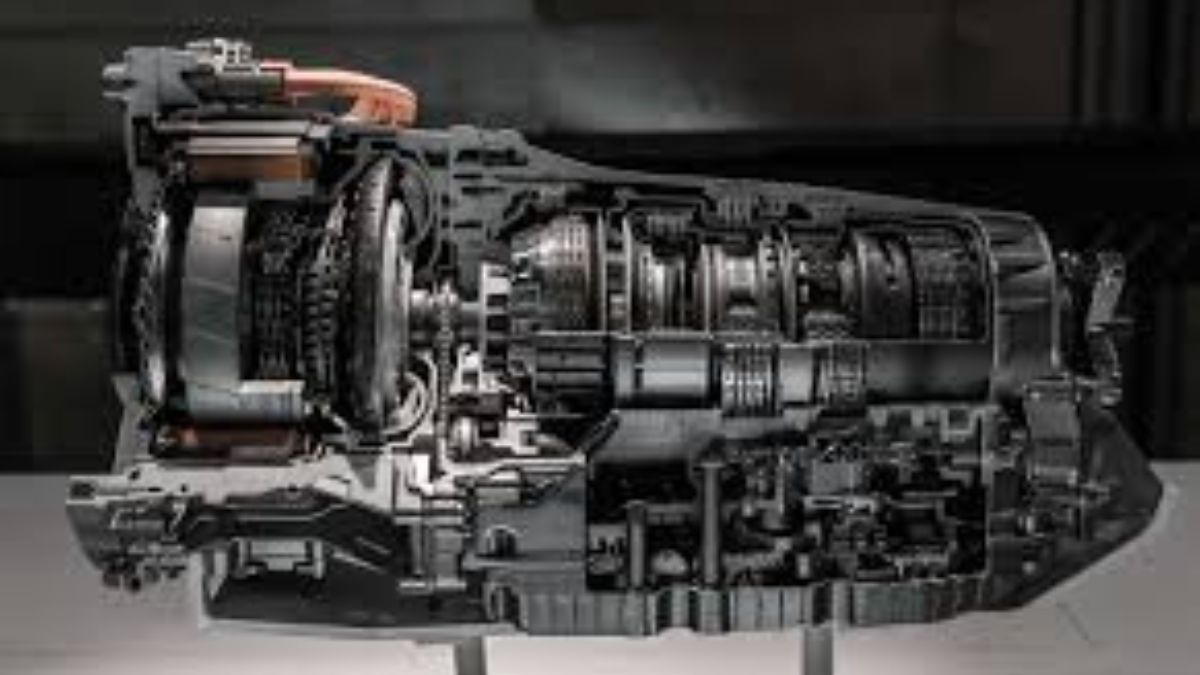
Within the field of automobile engineering, the gearbox has always been an essential part, carrying out the task of effectively distributing power from the engine to the wheels. But as EVs become more popular, a relevant issue is raised: Do electric cars have transmissions?
In a nutshell, not in the conventional sense. Multi-gear gearboxes are not necessary for the power delivery of electric automobiles, in contrast to those powered by internal combustion engines. Let’s investigate this further to see why it is.
The Simplicity of Electric Motors
The simplicity of electric motors is one of its distinguishing features. Electric motors have fewer moving parts than traditional combustion engines, which are made up of a complex assemblage of pistons, valves, and gears. They provide torque practically instantly, eliminating the need for gear changes and enabling a seamless driving experience.
Single-Speed Transmissions
The majority of electric cars use a single-speed gearbox, or sometimes none at all. The wide torque range offered by electric motors is accommodated by this single gear arrangement. Electric automobiles provide a linear power delivery without the need for gear changes, doing away with the well-known jerks and jolts that come with shifting gears in traditional cars.
Efficiency and Performance
There are several benefits to electric cars not having a gearbox. In the first place, it improves efficiency by cutting down on energy losses brought on by gear changes. It also makes maintenance easier because there are fewer parts that can break down. Furthermore, electric motors’ rapid torque delivery eliminates the need for several gears by enabling remarkable acceleration and performance.
Exceptions to the Rule
There are certain exceptions to the rule that most electric cars have single-speed gearboxes. There are high-performance electric vehicles with two-speed gearboxes, including the Porsche Taycan. These gearboxes are designed to maximise performance and economy at various speeds. In particular, they are intended for use during high-speed cruising, where a lower gear ratio might improve economy.
The Future Outlook
There may be more advancements in transmission design as electric car technology develops. Manufacturers may investigate new transmission layouts in order to meet certain performance needs or boost overall effectiveness. But for the foreseeable future, single-speed gearboxes in electric cars will probably continue to be widely used due to its basic simplicity and efficacy.
Conclusion
In conclusion, one characteristic that distinguishes electric automobiles from conventional multi-gear gearboxes is their lack of them. Their dependence on direct-drive systems or single-speed gearboxes highlights the effectiveness and ease of use that come with electric motor technology. The great majority of electric cars embrace a transmission-free driving experience, changing our perception of automobile propulsion, however there are exceptions for certain uses.




Health plans manage large member populations, but not every person needs the same level of support at the same time.
Some members may be stable and following their care plans well. Others may have missed several appointments, stopped filling prescriptions, or recently visited the emergency department. A smaller group may be showing several warning signs at once and need faster intervention.
The difficulty is identifying those members early.
Traditional care management often depends on fixed schedules, broad risk lists, or manual reviews. That approach can work, but it becomes harder as the member population grows.
AI can help health plans prioritize chronic care interventions by bringing different signals together and helping teams focus attention where it is most needed.
Chronic Care Prioritization Is Often Too Broad
Many health plans already segment members by condition or general risk.
That is useful, but chronic care is rarely that simple.
Two members with the same diagnosis may need completely different levels of support.
One person with diabetes may be attending appointments, filling prescriptions, and regularly engaging with their care team. Another may have missed medication refills, stopped responding to outreach, and recently used emergency services.
If both members are treated the same way, care teams may spend time where less intervention is needed while missing someone whose risk is increasing.
For chronic care management, prioritization needs to reflect what is happening now, not only what was known months ago.
AI Can Bring Different Risk Signals Together
One of the strongest uses of AI is its ability to look across different sources of information.
Health plans may have access to:
- claims history
- pharmacy activity
- clinical records
- hospital utilization
- care gaps
- appointment history
- member engagement
- remote monitoring data
Each source tells part of the story.
AI can help identify patterns across these signals.
For example, one missed appointment may not be a major concern. But a missed appointment combined with an unfilled prescription, recent emergency visit, and declining engagement may suggest that the member needs attention sooner.
This helps care teams see the bigger picture instead of reviewing every signal separately.
Move From Fixed Outreach to Risk-Based Intervention
Traditional chronic care programs may follow a regular outreach schedule.
A member gets a call every month or receives the same reminder as everyone else.
That can create unnecessary work.
AI can help health plans move toward risk-based intervention.
A stable member may only need:
- a digital reminder
- routine education
- standard follow-up
A higher-risk member may need:
- direct care coordinator outreach
- medication review
- earlier appointment scheduling
- referral support
- additional monitoring
This makes the intervention more relevant to the member’s actual situation.
It also helps health plans use care-management staff more effectively.
AI Can Help Identify Rising Risk Earlier
Chronic conditions often worsen gradually.
The warning signs may not always be obvious when looked at individually.
A member might slowly increase emergency care use. Medication adherence may decline. Engagement may drop. A remote monitoring pattern may begin to change.
AI can help identify these changes earlier by looking at trends over time.
This does not mean the system should automatically decide what care the member needs.
Instead, it can bring the case forward for review.
That gives the care team more time to understand what is happening and decide whether intervention is necessary.
Care Gaps Can Be Prioritized More Intelligently
Health plans often manage many types of care gaps.
These can include:
- overdue screenings
- missed follow-ups
- incomplete lab work
- medication reviews
- specialist visits
- monitoring requirements
Not every gap carries the same level of risk.
AI can help rank them based on the member’s wider situation.
For example, an overdue follow-up may be more urgent for someone recently discharged from the hospital than for a stable member with no recent change.
That helps care teams avoid treating every open task with the same level of urgency.
Member Engagement Should Be Part of the Risk Picture
Clinical and claims data are important, but engagement also matters.
A member who stops responding to outreach may be harder to support, even if their clinical risk has not changed yet.
AI can help identify patterns such as:
- repeated unanswered calls
- unopened messages
- missed appointments
- incomplete digital assessments
- stopped RPM activity
These signs can help teams understand whether a member is becoming disengaged.
In some cases, disengagement itself may be an early warning sign.
Health plans can then adjust the outreach approach rather than simply sending more of the same messages.
AI Can Help Choose the Right Outreach Channel
Prioritization is not only about deciding who needs support.
It can also help determine how that support should happen.
Some members may respond well to text messages.
Others may prefer phone calls, mobile apps, email, or portal communication.
AI can use previous engagement history to help identify which communication channel is more likely to work.
This reduces repeated outreach attempts and can make engagement more efficient.
The goal is not to automate every interaction.
It is to make each interaction more relevant.
The Data Foundation Still Matters
AI cannot prioritize chronic care effectively if the underlying information is fragmented.
Clinical data may sit in one environment. Claims may live somewhere else. Engagement data may come from another platform.
If those systems do not connect, the AI only sees part of the member’s situation.
Health plans may need to improve:
- API connectivity
- data integration
- patient identity matching
- claims and clinical data alignment
- engagement data access
- data governance
Experienced healthcare software development services can support this work by modernizing data platforms, integration layers, care-management systems, and AI-ready workflows.
The stronger the data foundation, the more useful AI prioritisation becomes.
Human Review Should Stay in the Process
AI can help identify patterns and recommend priorities, but it should not replace clinical judgment.
Care managers and clinicians understand factors that may not be visible in the data.
A member’s family situation, preferences, recent conversations, or other personal circumstances may influence the right intervention.
AI should help answer:
Who may need attention first?
The care team should still decide:
What should happen next?
That balance keeps AI useful without giving it more responsibility than it should have.
Measure Whether Prioritization Is Actually Improving Care
Health plans should evaluate AI by practical results.
Useful measures can include:
- time from risk identification to outreach
- care-gap closure
- medication adherence
- member engagement
- avoidable emergency visits
- follow-up completion
- care-management workload
- intervention response rates
If AI simply creates another risk score without changing what the team does, its value is limited.
The real benefit comes when better prioritization leads to earlier and more appropriate action.
Better Prioritization Makes Chronic Care More Scalable
Health plans do not need to contact every member more often.
They need a better way to understand who needs support, why they need it, and what type of intervention makes sense.
AI can help connect risk signals, identify changing patterns, prioritize care gaps, and guide outreach.
When it is supported by connected data and strong workflows, AI can help health plans use their care teams more effectively and respond to members before smaller issues become larger problems.
That is where AI creates real value in chronic care: not by replacing people, but by helping them focus their attention where it can matter most.

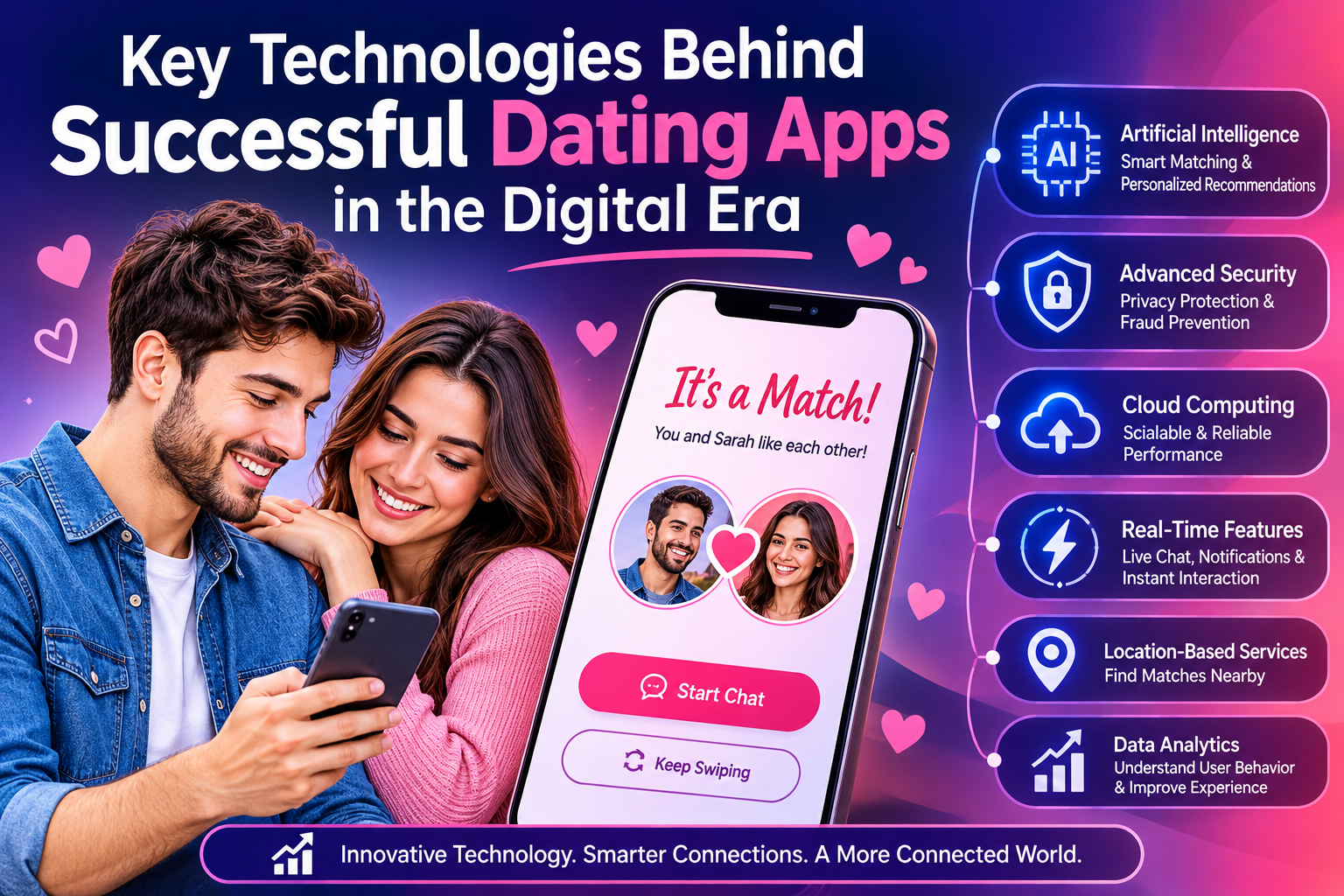
The way people meet, communicate, and build relationships has changed significantly in the digital era. Smartphones and internet connectivity have made it possible to connect with people across cities, countries, and different cultural backgrounds. Dating applications have become an important part of this transformation, offering convenient ways for individuals to discover potential partners, communicate, and develop meaningful relationships. However, building a successful dating app involves much more than creating an attractive interface or adding a simple swipe feature. Behind every engaging dating platform is a combination of advanced technologies working together to deliver personalized recommendations, secure communication, smooth performance, and reliable user experiences. From artificial intelligence and machine learning to real-time messaging, cloud computing, location-based services, and biometric authentication, modern technologies play an essential role in shaping dating applications. Choosing an experienced dating mobile app development company can help businesses integrate these advanced technologies to create platforms that understand user preferences, encourage meaningful interactions, deliver seamless experiences, and protect sensitive personal information. As user expectations continue to evolve, dating businesses must invest in technologies that make their platforms more intelligent, accessible, scalable, and trustworthy. Let’s explore the key technologies behind successful dating apps and understand how they contribute to better digital dating experiences.
1. Artificial Intelligence for Smarter Matchmaking
Artificial intelligence (AI) is one of the most important technologies transforming modern dating applications. Traditional dating platforms often rely on basic filters such as age, location, gender preferences, and interests to recommend potential matches. Although these filters are useful, they do not always capture what makes two people genuinely compatible. AI-powered matchmaking introduces a more intelligent approach by analyzing different types of user information and interaction patterns. It can examine profile preferences, shared interests, communication activity, profile engagement, and previous matching behaviour to generate more relevant recommendations. For example, if a user frequently interacts with profiles featuring outdoor activities, travel interests, and particular hobbies, an AI-powered recommendation system may identify similar preferences when suggesting new profiles. Advanced systems can also learn from user feedback. When people like, skip, or interact with suggested profiles, the application can use these signals to refine future recommendations. This creates a more personalized experience over time. For dating businesses, AI-powered matchmaking can improve user engagement, reduce irrelevant suggestions, and make the discovery process more enjoyable. However, compatibility should not be treated as a guaranteed scientific prediction. AI recommendations are best used as helpful suggestions rather than definitive judgments about relationships.2. Machine Learning for Personalized User Experiences
While artificial intelligence provides the broader capability to make applications intelligent, machine learning (ML) allows systems to improve their performance by learning from data. In dating apps, machine learning can help personalize several parts of the user journey. For example, recommendation algorithms can learn which profiles users are more likely to explore. Content-ranking systems can organize profile suggestions according to relevance, while predictive models can help identify when users may need additional engagement features. Machine learning can also support:- Personalized profile recommendations.
- Improved search and discovery experiences.
- Detection of suspicious account activity.
- Identification of unusual usage patterns.
- Better notification timing.
- More relevant content suggestions.
3. Geolocation Technology for Location-Based Matching
Location is an important consideration in online dating. Many users prefer meeting people who live nearby or within a manageable travel distance. Geolocation technology makes this possible by allowing dating applications to provide location-aware discovery experiences. Modern applications can use smartphone location services, GPS, and mapping APIs to support location-based features. For example, users may be able to discover people within a selected distance, explore potential connections in nearby areas, or adjust their location preferences when travelling. Location-based functionality can also introduce interesting features, such as travel discovery, city-based dating communities, and recommendations for public meeting places. However, location technology must be implemented carefully. Exact location information can create serious privacy and personal safety concerns if it is exposed unnecessarily. Dating applications should avoid displaying precise user coordinates or revealing movement patterns. Instead, developers can use approximate distance ranges, privacy-conscious location processing, and clear user controls. Location permissions should also be requested transparently, allowing individuals to decide whether and when they want to share location information. When implemented responsibly, geolocation can make dating applications more convenient without compromising user privacy.4. Cloud Computing for Scalability and Performance
A dating application may initially attract a few hundred users, but its infrastructure must be prepared for significant growth. As the number of registered members increases, the application needs to handle more profiles, messages, photos, searches, and simultaneous interactions. Cloud computing provides the flexibility required to manage this growth. Cloud platforms such as Amazon Web Services (AWS), Microsoft Azure, and Google Cloud offer infrastructure that allows developers to host applications, store information, process requests, and manage computing resources without maintaining all the physical hardware themselves. For dating applications, cloud technology can support:- Scalable storage for user profiles, photographs, and videos.
- Reliable application hosting and backend processing.
- Automatic resource allocation during traffic spikes.
- Data backup and disaster recovery.
- Faster content delivery across different geographical regions.
- Integration with analytics and AI services.
5. Real-Time Messaging and Communication Technologies
Communication is at the heart of every successful dating application. Once two people express mutual interest, the platform should make it easy for them to begin a conversation. Delayed messages, connection problems, and unreliable notifications can negatively affect the user experience. Real-time communication technologies solve these problems by allowing information to move between users and servers with minimal delay. WebSocket technology is commonly used to support real-time messaging. Unlike traditional request-and-response communication, WebSockets maintain an ongoing connection between a client and a server, allowing messages to be exchanged efficiently. Dating applications can use this technology to provide:- Instant text messaging.
- Online and offline indicators.
- Typing notifications.
- Message delivery and read receipts.
- Real-time match notifications.
- Image and voice message sharing.
6. Database Management for Efficient Information Handling
Dating applications generate and process substantial amounts of information. Every user profile, photograph, preference, message, subscription, and interaction creates data that must be organized and retrieved efficiently. Database management technology plays a major role in ensuring that these operations work smoothly. Relational databases such as PostgreSQL and MySQL are useful for managing structured information, including account details, subscription records, profile preferences, and matching relationships. NoSQL databases, including MongoDB, can be useful for certain flexible data structures and application workloads. Redis is another valuable technology because it provides fast in-memory data access. Developers can use it for caching, session management, temporary information, and selected real-time application operations. The choice of database depends on the application’s architecture, expected traffic, data relationships, and performance requirements. For example, when a user opens a dating application, the system may need to retrieve profile information, check preferences, identify potential matches, and display relevant photographs. A well-designed database architecture ensures these operations happen efficiently. Developers should also consider database indexing, backup strategies, access controls, and data retention policies from the beginning. Good database management may not be visible to users, but it directly influences application speed, reliability, and scalability.7. Cybersecurity and Data Encryption for User Protection
Trust is one of the most important elements of a dating platform. People share personal photographs, preferences, conversations, and other sensitive information when creating their profiles. If this information is exposed or misused, the consequences can extend beyond an ordinary application malfunction. Cybersecurity technologies therefore need to be part of dating app development from the earliest planning stages. Encryption is one of the fundamental security measures. Transport Layer Security (TLS) helps protect information transmitted between mobile devices and application servers. Encryption at rest can provide additional protection for stored information. Other important security technologies include:- Multi-factor authentication for additional account protection.
- Secure password hashing and credential management.
- Role-based access controls.
- Protection against unauthorized API access.
- Security monitoring and suspicious-login detection.
- Regular vulnerability assessments.
- Secure backup and recovery mechanisms.
8. AI-Powered Content Moderation and Identity Verification
One of the biggest challenges facing dating platforms is maintaining a genuine and respectful user community. Fake profiles, misleading photographs, spam messages, impersonation, and inappropriate content can reduce user confidence and damage a platform’s reputation. AI-powered moderation technologies can help businesses identify and manage these problems more efficiently. Computer vision systems can analyze uploaded photographs to identify potentially inappropriate images or content that requires further review. Natural Language Processing (NLP) can examine profile descriptions and messages for suspicious language, spam patterns, harassment, or potentially harmful communication. Machine learning models can also identify unusual account activity, such as repeated attempts to create accounts or suspicious messaging behaviour. Identity verification provides another layer of protection. Dating applications can integrate technologies such as:- Selfie-based photo verification.
- Document verification through specialist providers.
- Liveness detection.
- Age assurance solutions.
- Device and account risk analysis.
9. Push Notifications for Better User Engagement
A dating application needs to keep users informed about important activities without overwhelming them with unnecessary alerts. Push notification technology helps applications communicate with users even when they are not actively browsing the platform. Services such as Firebase Cloud Messaging and Apple Push Notification service can deliver notifications about important events. Examples include:- Receiving a new match.
- Getting a new message.
- Receiving a response to a conversation.
- Important account or security updates.
- Relevant profile activity.
- Subscription renewal reminders.
10. Analytics and Business Intelligence for Continuous Improvement
Building a dating application is not a one-time process. User expectations, market conditions, and engagement patterns change over time. Analytics technologies help businesses understand how people use their platforms and identify areas that require improvement. Application analytics tools can track important performance indicators, including:- Registration and onboarding completion rates.
- Daily and monthly active users.
- Match creation rates.
- Conversation initiation rates.
- Message response patterns.
- Subscription conversion rates.
- User retention and cancellation rates.
- Application crashes and loading performance.
11. Payment Gateway Integration and Subscription Technology
Monetization is another important part of building a sustainable dating application. Many dating platforms operate through a freemium business model, offering basic features for free while providing optional premium subscriptions and paid upgrades. Payment gateway integration makes it possible to process these transactions securely. Depending on the platform and business model, developers may integrate mobile in-app purchasing systems or suitable payment service providers. Popular monetization features include:- Premium membership subscriptions.
- Advanced profile discovery filters.
- Profile visibility enhancements.
- Additional interaction features.
- Virtual gifts and digital purchases.
- Limited-time promotional upgrades.
12. Cross-Platform Development for Wider Accessibility
Users access dating applications through different devices, operating systems, and screen sizes. Some prefer iPhones, while others use Android smartphones. Businesses may also want to introduce a web version of their platform. Cross-platform development technologies help developers build applications that work across multiple environments without maintaining entirely separate development projects. Flutter and React Native are two popular frameworks for developing cross-platform mobile applications. Native technologies such as Swift for iOS and Kotlin for Android are also important options, particularly when an application requires deeper platform-specific integration. The right approach depends on the application’s complexity, performance requirements, development budget, and long-term product roadmap. Cross-platform development can provide several advantages:- More consistent user experiences across devices.
- Faster development and feature releases.
- Reduced duplication of development work.
- Easier maintenance of shared application components.
- Broader access to potential users.
The Future of Dating App Technology
The future of dating applications will be shaped by how effectively businesses combine intelligent technologies with authentic human experiences. AI-powered matchmaking will continue to evolve, offering more personalized recommendations based on user preferences and interaction patterns. Advanced identity verification and automated moderation will help platforms create safer digital communities. Real-time communication, cloud infrastructure, and improved mobile experiences will also remain important as users expect dating applications to work smoothly across different devices and locations. At the same time, privacy and transparency will become increasingly important considerations. People want convenient ways to meet others, but they also want greater control over their personal information. Future dating platforms will therefore need to balance personalization with privacy, automation with human oversight, and monetization with genuine user value. Businesses that understand these expectations will have better opportunities to develop applications that stand out in a competitive market.Conclusion
Successful dating applications are built on much more than attractive designs and convenient profile-swiping features. They depend on a combination of advanced technologies that work together to create personalized, reliable, secure, and engaging digital experiences. Artificial intelligence and machine learning improve matchmaking. Geolocation makes local discovery possible. Cloud computing supports scalability, while real-time messaging technologies help people communicate without unnecessary delays. Database management, cybersecurity, identity verification, analytics, and payment integrations provide the technical foundation needed to operate a sustainable platform. For businesses planning to enter the online dating industry, choosing the right technology stack is an important first step. However, long-term success also requires understanding user expectations, prioritizing safety, and continuously improving the application.
Introduction
Control rooms are designed to bring important equipment information together in a location where operators can monitor system performance and respond to changing conditions. In electrical and industrial environments, alarm displays are particularly important because they help personnel recognise abnormal conditions without having to inspect every machine individually.
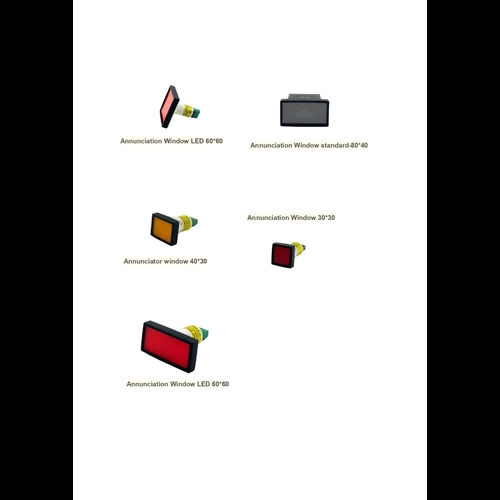
An Annunciation Window is a visual display element used in an annunciator arrangement to identify specific alarms. Selecting the right type involves considering visibility, dimensions, labelling, electrical compatibility, and the conditions in which the panel will operate. A suitable selection can make the complete display easier to read and operate.
Start by Understanding the Application
Before comparing display components, identify what the annunciator panel is expected to monitor. A small panel used for a few equipment alarms may have different requirements from a control-room annunciator designed to monitor dozens of inputs.
Consider the following questions:
- How many alarm points need to be displayed?
- Will operators view the panel from a short or long distance?
- Is the panel installed indoors or in a demanding industrial environment?
- Does the system require illuminated windows only or additional alarm functions?
- Are acknowledgement, reset, or test facilities part of the design?
- What electrical supply and input arrangement does the annunciator use?
Answering these questions provides a practical starting point for choosing compatible components.
Important Selection Factors
1. Window Dimensions
The display area should be appropriate for the information shown on it. A window that is too small may make labels difficult to read, while an unnecessarily large display can consume valuable panel space.
Check the manufacturer’s dimensions and required panel cut-out before finalising the layout.
2. Visibility and Illumination
The indication should be recognisable under the lighting conditions of the installation. Consider the viewing angle, ambient brightness, possible glare, and distance between the operator and the panel.
Where several windows are installed together, their illumination should be consistent and easy to distinguish.
3. Label Arrangement
Labels provide the information that connects a visual indication to a specific alarm condition. Use simple wording that matches the equipment naming convention used in electrical drawings and plant documentation.
For example, a window could be labelled “Pump-02 Overload” or “Incoming Supply Fail.” The wording should be short enough to fit the display while remaining meaningful to the operator.
4. Colour and Alarm Meaning
Different colours may be used to distinguish alarm categories, but their meaning should be defined by the site’s approved signalling philosophy and applicable standards. Consistency is essential. Operators should not have to guess whether a particular colour represents a warning, trip, or normal condition.
5. Electrical Compatibility
The display component must be suitable for the annunciator’s electrical design. Confirm the rated voltage, input type, wiring arrangement, and any relevant interface requirements.
Do not assume that two visually similar windows have identical electrical characteristics.
6. Environmental Suitability
Industrial panels may be exposed to dust, moisture, vibration, heat, or other environmental influences. Review the manufacturer’s stated operating limits and enclosure requirements before selecting the component.
If the complete panel is installed in a demanding location, its enclosure and protection arrangements should also be considered.
Planning the Annunciator Panel Layout
A good layout allows operators to locate an alarm quickly. Begin by grouping indications according to the equipment or area they represent.
For example, a facility may arrange its display into sections for:
- Power supply and distribution
- Motor and drive systems
- Pumps and compressors
- Temperature and process alarms
- Utility equipment
- Communication and control supply conditions
The grouping should reflect the way the facility operates. Avoid placing unrelated alarms together simply because they are connected to the same control circuit.
Leave adequate space for labels and ensure that the display can be inspected without obstruction. The panel should also provide practical access for maintenance.
Understanding the Complete Annunciator System
An annunciation window is one part of a larger alarm display arrangement. Depending on the design, the system may include input modules, relays, a controller, an audible alarm, acknowledgement buttons, test facilities, and reset controls.
When selecting a window, confirm how it connects to the rest of the system. The display must be compatible with the annunciator architecture and the intended alarm sequence.
It is also useful to prepare an alarm schedule before installation. This document can list each input, its label, its source, and the intended indication behaviour. Such records help during commissioning, troubleshooting, and future modifications.
Common Selection Mistakes to Avoid
Some problems arise when display components are selected without considering the complete panel design.
Choosing by appearance alone: Similar-looking products may have different electrical ratings or mounting requirements.
Using unclear labels: Generic wording can make it difficult to identify the affected equipment.
Ignoring viewing distance: A display that looks clear during assembly may be difficult to read from the normal operator position.
Overcrowding the panel: Too many indications in a poorly planned layout can make alarm identification confusing.
Skipping compatibility checks: Incorrect voltage or input arrangements may prevent the display from operating as intended.
Not planning maintenance access: Components should be arranged so that inspection and replacement can be carried out safely.
Commissioning and Ongoing Inspection
After installation, test each alarm input according to the approved commissioning procedure. Confirm that the correct window illuminates and that the displayed label matches the intended alarm source.
Where applicable, test the audible indication, acknowledgement, reset, and lamp-test functions. Record any changes made during commissioning and update the relevant drawings and alarm schedules.
Routine inspection should include checking the display surface, illumination, terminal connections, and overall panel condition. Follow the manufacturer’s instructions for cleaning and replacement.
Conclusion
Selecting the right Annunciation Window requires a clear understanding of the panel’s monitoring purpose and operating environment. Dimensions, visibility, labelling, colour conventions, electrical compatibility, and maintenance access all influence the final choice.
A carefully planned annunciator arrangement makes alarm information easier to interpret and supports consistent communication between operators and maintenance teams. Reviewing the complete system before purchasing individual components can help avoid compatibility and layout problems later.
Relevant Blogs
Beseye StoryOne: A Dive into Advanced Home Security

Prepare High-Quality Reports with Professional KA02 Assessment Help

The Best Ways to Store Holiday Decorations and Seasonal Household Items

Fracture Doctor Ambikapur for Fracture Evaluation and Care

Best Liver Transplant Hospital in Noida for Liver Care

Diabetic Retina Screening in India: What Patients Should Know

Rani No Hajiro in Ahmedabad: A Complete Guide to History, Shopping & Hidden Secrets

How to Get Promoted Faster at Work: Smart Career Growth Tips

Digital Marketing for Beginners: Step-by-Step Guide to Start and Succeed in 2026

Dublin City University: Everything You Need to Know Before Applying in 2026








