
Business
Step-By-Step Guide on Moving a Fridge


Moving a fridge is one of the most physically demanding and logistically tricky parts of any home relocation. Fridges are heavy, awkward to grip, and surprisingly easy to damage if handled incorrectly both the appliance itself and the floors, doorways, and walls around it. Whether you’re shifting to a new home or simply rearranging your kitchen, following the right process will protect your fridge, your property, and your back.
Here’s a clear, step-by-step guide to moving a fridge safely and efficiently.
Step 1: Prepare at Least 24 Hours in Advance
Moving a fridge isn’t something you do on the spot. You need to start preparation at least 24 hours before the move, ideally 48 hours for larger models.
Begin by emptying the fridge completely. Remove all food, condiments, shelves, and drawers. Shelving and drawers should be wrapped separately and transported on their own to prevent them from shifting and cracking inside the unit during the move.
Once emptied, switch the fridge off and allow it to defrost fully. Attempting to move a fridge that still has ice build-up or pooling water is messy at best and potentially damaging at worst. Leave the doors open while it defrests to speed up the process and prevent mould from forming inside.
Step 2: Clean and Dry the Interior
Once defrosted, wipe down the interior thoroughly with a dry cloth. Pay particular attention to the base and the crisper drawer area where water tends to pool. Any residual moisture left inside can lead to mould growth or unpleasant odours by the time you arrive at your new destination and plug the unit back in.
Give the exterior a wipe down as well, particularly around the door seals and the back vents where dust and grime tend to accumulate.
Step 3: Secure the Doors and Power Cord
Before the fridge moves an inch, secure the doors so they can’t swing open unexpectedly during transit. Use removalist tape or sturdy packing straps to keep both the fridge and freezer doors firmly closed. Avoid using tape that leaves adhesive residue directly on the appliance surface – apply it over a layer of protective wrapping instead.
Coil the power cord and secure it to the back of the fridge with tape or a cable tie so it doesn’t drag along the floor or catch on doorframes during the move.
Step 4: Gather the Right Equipment
Moving a fridge by hand without equipment is how injuries and damage happen. At minimum, you’ll need:
- An appliance trolley (sack truck) — essential for tilting and wheeling the fridge safely
- Moving straps or furniture belts — to secure the fridge to the trolley and provide better grip
- Furniture sliders — useful for moving the fridge across tiled or timber floors without scratching
- Protective blankets or moving pads — to wrap the exterior and protect doorframes
If you don’t have access to this equipment, hiring a professional team is strongly recommended. Removalists Innisfail residents rely on regularly understanding the terrain, the logistics, and the right tools for the job and a fridge is one item where professional help often pays for itself in avoiding damage.
Step 5: Plan Your Path
Before you start moving the fridge, walk the full route from its current position to the removal vehicle. Measure any narrow doorways or tight corners to confirm the fridge will fit through. Remove any rugs, door mats, or obstacles along the path.
If there are stairs involved, consider whether you need additional help. Carrying a fridge up or down stairs with only two people is genuinely dangerous without the right technique and equipment. This is one of the key reasons homeowners turn to professional Removalists Innisfail having experienced hands on a heavy appliance through a difficult route dramatically reduces the risk of injury or property damage.
Step 6: Move It Upright — Always
This is the most critical rule when it comes to transporting a fridge: keep it upright wherever possible. Fridges contain compressor oil that circulates through the cooling system. When a fridge is laid on its side, that oil can migrate into the refrigerant lines and if you plug the unit in before the oil has drained back, you risk permanently damaging the compressor.
If the fridge absolutely must be tilted to navigate a tight corner or fit it into a vehicle, tilt it as little as possible and for the shortest time possible. Once at your destination, stand it upright and wait at least 4 hours (preferably 24) before switching it back on.
Step 7: Reinstall and Test
Once the fridge is in its new position, give it adequate ventilation space typically at least 5cm on each side and at the back. Reinstall the shelves and drawers, plug it in, and allow it to reach operating temperature before loading it with food.
Leave It to the Experts
Moving a fridge correctly takes time for preparation, using the right equipment, and physical confidence. If you’re not comfortable managing it yourself long distances or multiple large appliances, it’s worth calling in professional movers for help.
Butler’s Removals & Storage offers experienced, fully equipped removal teams who handle heavy and awkward items like fridges every day. From careful preparation through to safe reinstallation, it takes the stress out of moving, so you can focus on settling into your new home.




About Price Capital Group
Price Capital Group is a private real estate investment and asset management firm based in South Florida. The company focuses on acquiring, structuring, and managing real estate assets with strong fundamentals and long term potential.
Our investment focus includes commercial real estate, multifamily properties, industrial and warehouse facilities, office buildings, retail plazas, and NNN lease assets. We evaluate each opportunity based on its location, financial performance, market conditions, operational needs, and potential for long term value.
Our Purpose
Our purpose is simple. We identify quality real estate opportunities, develop the right investment structure, and execute each transaction with discipline.
We believe good real estate investing starts with understanding the asset. A strong property can create value when it is purchased at the right terms, managed properly, and supported by a clear long term strategy.
Our Investment Approach
At Price Capital Group, we take a disciplined approach to real estate investment. Our process includes careful underwriting, detailed property analysis, thoughtful deal structuring, and active asset management.
We focus on the fundamentals behind each opportunity rather than making decisions based only on short term market movements. This approach allows us to evaluate potential risks and opportunities before committing capital.
Our Real Estate Focus
We invest across several commercial property sectors. Our focus includes multifamily communities, industrial and warehouse properties, office buildings, retail plazas, and NNN lease assets.
This diversified approach allows us to evaluate different types of real estate opportunities while remaining focused on properties that fit our investment criteria.
Hands On Asset Management
Our involvement does not stop after an acquisition. Property management is handled internally, giving us greater oversight of day to day operations and asset performance.
A hands on management approach helps us identify operational improvements, respond to property needs, and maintain the quality of our assets. We believe active management plays an important role in protecting and creating long term value.
Working With Industry Partners
Real estate is built on strong relationships. We work with property owners, sellers, brokers, capital partners, and other professionals throughout the investment process.
These relationships help us identify opportunities, understand local markets, and develop structures that support successful transactions. We value clear communication, professionalism, and a straightforward approach when working with our partners.
Our Market
Price Capital Group is focused on South Florida and nearby markets. We look for opportunities where property fundamentals, market conditions, location, and long term potential align with our investment strategy.
Our local market focus allows us to stay close to the properties and markets we invest in while maintaining a practical approach to acquisition and asset management.
Building Long Term Value
Our goal is not simply to acquire real estate. We aim to build and manage a portfolio of quality assets that can create sustainable long term value.
Every investment decision is made with discipline and a focus on the asset. From initial underwriting to property management, we remain focused on responsible execution and long term results.
Connect With Price Capital Group
Price Capital Group welcomes conversations with property owners, brokers, investors, and capital partners who are exploring real estate opportunities in South Florida.
If you have a property or investment opportunity that may align with our strategy, our team is available to discuss the details and determine whether there is a potential fit.
Price Capital Group
1509 North State Rd 7, Suite G
Margate, FL 33063
(754) 547-5214
support@pricecapitalgroup.com


A rep hands over a keyword like manufacturing and expects something usable back. Instead, they get a mixed bag: equipment makers, packaging plants, food processors, and a handful of companies that mention manufacturing somewhere in their description.
Sorting through that by hand eats up most of an afternoon. Some companies get dropped right away; the mismatch is obvious at a glance. Others need a second look: a quick visit to the website, a guess at whether they even belong on the list. By the time you finish sorting, half the day you set aside for outreach is already gone.
A B2B database built around structured industry data skips most of that manual work and returns a list already organized by sector, not one that still needs sorting afterward. The point isn’t just getting a list. It’s getting a list that actually reflects the industry you sell into, not every business that happens to share a loosely related keyword.
People Also Ask
Why should industry be the first filter in a B2B prospect search?
Industry defines what makes a company relevant in the first place, so filtering by industry first keeps every other criteria applied afterward meaningful.
What is the difference between a keyword search and a NAICS code search?
A keyword search depends on how a business describes itself, while a NAICS code search relies on a standardized classification, which is more consistent across similar companies.
Why Industry Filtering Comes Before Everything Else
Sales teams should usually apply industry first, before location, company size, or any other criteria.
That order matters because industry shapes what else is relevant. A manufacturer and a professional services firm buy differently, structure their teams differently, and use different language to describe what they do. Narrowing by industry first means every filter applied afterward, like region or employee count, applies to companies that are already a plausible fit.
Skipping this step and filtering by location or size first tends to produce the opposite problem: a large number of companies that fit geographically or by size but have nothing to do with the industry a sales team actually serves. Reversing that order later, once the list already exists, usually means starting over rather than simply adding a filter on top of what you’ve already pulled.
How NAICS Codes Improve Industry-Based Searching
A plain keyword search for an industry name runs into a pretty basic problem: businesses don’t describe themselves consistently.
Keyword search: Returns results based on how a business happens to describe itself
NAICS code search: Returns results based on a standardized government classification, regardless of self-description
One company calls itself a manufacturer, another calls itself a fabricator, and another calls itself a production facility, even though all three might fall under the same industry classification. A keyword search catches some of these and misses others entirely, depending on whatever words that business happened to pick. A NAICS code search sidesteps that problem by relying on a standardized classification instead of self-description, so searching a specific manufacturing code actually returns the companies that belong to it.
This matters most in industries where the terminology overlaps. A keyword approach can either miss relevant companies or pull in businesses that only share a surface-level description with what you’re looking for.
Searching Across Related and Adjacent Industries
Not every sales team sells into a single industry, and a search built around one rigid category can miss companies that are still a reasonable fit.
For example, a business selling industrial safety equipment may have customers across manufacturing, warehousing, and construction, three categories that look separate on paper but share overlapping operational needs. Searching each relevant NAICS code individually, rather than relying on one umbrella keyword, lets a team build a combined list that reflects how it actually sells, instead of forcing every prospect into a single industry label that may not fit any of them precisely.
This is also where sub-sector detail matters. A team selling to food manufacturers specifically does not need every company under a broad manufacturing code, and searching at the sub-sector level avoids pulling in adjacent businesses that technically qualify but rarely convert.
Common Industry Search Mistakes That Waste Sales Time
A few habits show up often when a sales team’s industry-based searches aren’t producing a usable list:
- Relying on a single broad keyword, such as manufacturing, instead of narrowing to the specific sub-sector or NAICS code that actually matches what the sales team sells.
- Skipping industry filtering altogether and relying on location or company size as the primary filter, which produces a list spread across unrelated sectors.
- Assuming every result labeled under an industry is equally relevant, without checking whether the company’s actual operations match what the sales team sells into.
- Searching only one industry code when a product or service realistically serves several adjacent sectors can leave good prospects out of the list entirely.
Each of these adds manual review time back into a process that structured filtering is supposed to remove.
Combining Industry Filters With Other Criteria
Industry filtering works best as the first step in a sequence, not the only step.
Once you narrow a list to the right industry, layering in location, employee count, or revenue range turns a broad sector list into something closer to an actual target account list. A team selling industrial equipment, for example, might filter manufacturing down by province, then by facility size, before a single prospect ever reaches a rep’s desk. The order matters here too. Applying location or size filters before industry tends to cut the list numerically without necessarily improving relevance, while applying them after industry filtering narrows an already reasonable pool.
Getting the industry filter right first makes every subsequent criterion more useful, since the team refines a relevant pool rather than cutting down an unrelated one.
How Scott’s Directories Supports Industry-Based Prospecting
Scott’s Directories lets sales teams search by NAICS code and industry classification directly, rather than relying on keyword matching alone.
Filtering spans more than 40 data fields, so industry can be combined with location, employee count, and other criteria in a single search. Coverage runs across more than 900,000 Canadian companies, with records compiled and verified on a quarterly basis, so an industry-based search reflects current business classifications rather than outdated listings. For a closer look at how a full business database works, including industry filtering, see What Is a B2B Business Database and How Does It Work.
That structure gives sales teams an industry-filtered starting point instead of a list that still needs manual sorting. It also means a team can adjust its target market, whether expanding into a new sub-sector or narrowing its focus within one it already serves, and rerun the search instead of rebuilding the list from scratch.
Build Your Industry-Specific Prospect List
Finding companies by industry shouldn’t eat up an afternoon of manually sorting through loosely matched search results, and it doesn’t have to.
Filtering by NAICS code and industry classification first, then layering in location, size, or other criteria, separates a list that already reflects your sector from one that still needs cleanup. Get that first step right, and every filter you apply after it makes the list sharper, not just smaller.
Scott’s Directories supports structured industry search directly across more than 900,000 Canadian companies, giving sales teams a focused starting point instead of a list built on keyword guesswork. Contact Scott’s Directories to see how an industry-specific search would work for your own target market.
Frequently Asked Questions
How do I find companies in a specific industry for B2B sales?
Use a database that supports NAICS code or industry classification search, rather than relying on keyword matching, to get a more consistent and complete list.
Can industry filtering be combined with location or company size?
Yes. Industry filtering works best as the first step, with location, employee count, or revenue range applied afterward to further narrow the list.
Does Scott’s Directories support industry specific searches?
Yes. Scott’s Directories allows searches by NAICS code and industry classification across more than 900,000 Canadian companies.

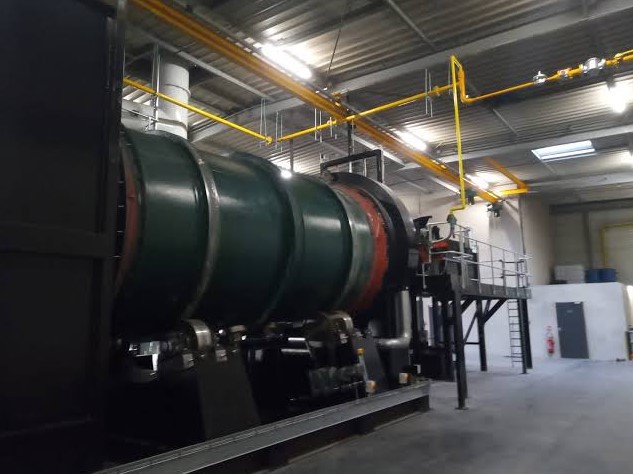
Incineration is a waste treatment method used to reduce waste volume and destroy combustible materials under controlled conditions. Different systems are designed for different waste types, quantities, and operating environments. A Rotary kiln incinerator and a portable incinerator serve different operational needs, so understanding their features helps facilities choose equipment.
What Is a Rotary Kiln Incinerator?
A Rotary kiln incinerator uses a slowly rotating cylindrical chamber to move, mix, and expose waste to heat. This design supports continuous or semi-continuous processing, depending on the installation. Rotary kiln systems are commonly considered for industrial and hazardous waste streams that require robust treatment and carefully controlled combustion conditions.
What Is a Portable Incinerator?
A portable incinerator is a compact unit designed to be transported and operated at different sites. It can support facilities that need waste treatment or lack access to a permanent plant. Its capacity, chamber design, fuel system, and suitable waste types vary between models, so specifications should always be checked.
Key Design Differences Between Both Incinerators
The main design difference is the combustion chamber arrangement. Rotary kiln equipment uses a rotating drum, which tumbles and advances waste through the primary chamber. Portable units generally use a stationary chamber and compact layout, although designs differ. Portability describes how equipment is deployed, not necessarily a combustion technology alone.
Waste Processing Capacity and Performance
Capacity is another important difference. Rotary kiln systems are often selected for larger and more varied industrial waste loads, while portable units are generally intended for smaller or location-specific waste quantities. Throughput depends on waste composition, moisture, heating value, operating hours, and equipment specifications rather than the equipment name alone.
Working Process of Rotary Kiln and Portable Incinerators
Operating methods can also differ. Rotary kiln installations may use controlled feeding to support steady processing, followed by secondary combustion and exhaust-gas treatment. Portable incinerators may be loaded in batches and operated through defined burn cycles. Operators must follow the manufacturer’s instructions, loading limits, and approved site-specific operating procedures and safeguards.
Installation and Portability Requirements
Mobility and installation requirements strongly influence selection. Rotary kiln systems are usually installed as fixed industrial plants and need suitable foundations, utilities, trained operators, and supporting pollution-control equipment. A portable incinerator is designed for relocation, but still requires a prepared, safe operating area, utilities, on-site maintenance access, and exhaust treatment.
Environmental Protection and Emission Control
Environmental performance should be evaluated for either option. Efficient combustion alone does not guarantee compliant emissions. Buyers should assess secondary-chamber design, temperature monitoring, residence time, particulate control, gas cleaning, stack monitoring, and applicable permits. Waste segregation and correct operating practices are also essential for responsible incineration and effective pollution prevention.
Maintenance and Operating Costs
Maintenance needs depend on system complexity and operating conditions. Rotary kiln plants have moving components, refractory linings, drives, seals, and extensive gas-treatment equipment that require planned inspection. Portable units may be simpler to relocate, but still need refractory checks, burner servicing, cleaning, and regular inspection of safety and emission-control components.
How to Choose the Right Incinerator?
The right choice depends on waste quantity, composition, site conditions, and legal requirements. A fixed facility handling substantial, diverse waste streams may evaluate a rotary kiln system. A remote or temporary site with limited waste volumes may consider a portable unit. A qualified technical assessment should confirm suitability before procurement.
Conclusion
A Rotary kiln incinerator is generally suited to demanding, higher-volume industrial applications, while a portable incinerator offers flexibility for smaller or remote operations. The best option depends on waste characteristics, capacity, emissions control, site requirements, operating costs, and regulatory approval. Always compare verified technical specifications before selecting and purchasing equipment.

About Price Capital Group | South Florida Real Estate

How Can GPS-Based Ride Sharing App Development Improve Real-Time Ride Tracking?

Embrace Yoga, Wellness, and New Experiences in Rishikesh

Common MBA Project Writing Mistakes and How to Avoid Them

Choosing the Right Dental Office in Maitland for Your Oral Health

Rani No Hajiro in Ahmedabad: A Complete Guide to History, Shopping & Hidden Secrets

How to Get Promoted Faster at Work: Smart Career Growth Tips

Dublin City University: Everything You Need to Know Before Applying in 2026

Why Amazon Listing Services Are a Game-Changer for New Sellers in 2026








