Real Estate
Everything You Need to Know to Sell Property in Dubai



Selling property in Dubai is not the same as selling a home in most other parts of the world. The city runs on its own legal framework, its own paperwork requirements, and its own buyer expectations. If you go in without understanding how the process actually works, you can end up losing money on price, wasting months on delays, or getting stuck with documentation issues at the last stage of the sale.
This guide walks you through everything a property owner needs to know before listing their unit for sale in Dubai, from preparing the paperwork to closing the deal at the Dubai Land Department.
Understanding the Dubai Property Market Before You Sell

Dubai’s real estate market is largely freehold in designated zones, which means foreign nationals and residents alike can own property outright and sell it without restriction, as long as it falls within an approved freehold area. Demand in the city tends to be driven by a mix of end users looking for a home and investors looking for rental yield or capital appreciation, so the buyer you attract will depend heavily on the type of property, its location, and its price point.
Before you decide to sell, it helps to understand where your property sits in the current market. A villa in a family-oriented community will attract a different buyer profile than a studio apartment in a high-rise tower near a business district. Knowing this early shapes how you price, market, and present the property.
Step 1: Get Your Documents in Order

The single biggest cause of delay in Dubai property sales is missing or incomplete paperwork. Before you even think about listing your property, gather the following:
– Original title deed
– Passport copy and Emirates ID (for residents)
– No Objection Certificate (NOC) request from the developer, confirming there are no outstanding service charges or dues
– Ejari copy and tenancy contract details if the property is currently rented out
– Mortgage clearance letter from your bank, if the property has an existing loan against it
Having these ready from day one means you are not scrambling for documents once a serious buyer shows interest, which is often when deals fall apart due to delays.
Step 2: Price the Property Correctly

Overpricing is one of the most common mistakes sellers make in Dubai. Because so much transaction data is publicly available through the Dubai Land Department, buyers today are well informed and will quickly compare your asking price against recent sales in the same building or community.
A realistic valuation should factor in recent comparable sales, the current condition of the unit, floor level, view, and any upgrades or renovations. It is worth getting a professional valuation or at least a detailed market comparison rather than relying on guesswork, since a property priced even slightly above market tends to sit unsold for far longer, which can make buyers assume something is wrong with it.
Step 3: Choose a RERA-Certified Real Estate Agency

Working with a licensed, RERA-certified agency protects you legally and commercially throughout the sale. RERA registration means the agency and its agents are authorized to handle property transactions in Dubai under the regulations set by the Dubai Land Department, which reduces the risk of fraud, mispricing, or contractual issues.
Takween AlDar is a RERA-certified real estate agency based in Dubai that works with sellers to manage the full process, from valuation and marketing through to final transfer at the DLD trustee office. Working with an agency that understands local regulations and current buyer behavior can significantly shorten the time your property spends on the market, since pricing, presentation, and negotiation are handled by people who do this daily rather than occasionally.
Step 4: Market the Property the Right Way

Presentation matters more in Dubai’s competitive market than many sellers expect. Professional photography, a clear floor plan, and an honest, well-written listing description all influence how quickly a property attracts serious inquiries rather than casual browsing.
A few things that consistently make a difference:
– High-quality daylight photography of every room
– A short walkthrough video for online listings
– Accurate square footage and layout details
– Highlighting nearby schools, transport links, and community amenities relevant to the target buyer
Sellers who skip proper marketing often end up negotiating from a weaker position, simply because their listing does not stand out enough to create competition among interested buyers.
Step 5: Understand the Legal Transfer Process

Once you have a buyer and have agreed on price and terms, the transaction moves through a fairly structured legal process:
– Memorandum of Understanding (MOU) / Form F – Both parties sign this document through a registered agency, outlining the agreed price, deposit amount, and transfer date.
– Deposit payment – The buyer typically pays a deposit, often held in an escrow or trust arrangement, to secure the transaction.
– NOC issuance – The developer issues a formal NOC confirming there are no outstanding service charges or liabilities on the unit.
– Mortgage clearance (if applicable) – If there is a mortgage, the seller’s bank must issue a liability letter and the loan must be settled, often on the same day as transfer.
– Final transfer at the DLD trustee office – Both parties, or their authorized representatives, attend the Dubai Land Department trustee office to complete the transfer, pay the transfer fee, and register the new title deed in the buyer’s name.
This entire process typically takes a few weeks from signed MOU to final transfer, though timelines can shift depending on mortgage clearance and NOC processing at the developer’s end.
Step 6: Avoid These Common Mistakes

Ignoring the NOC timeline. Some developers take longer than others to issue an NOC, and starting this process late can delay the whole sale.
Underestimating transfer costs. Sellers should budget for agency commission and any outstanding charges before agreeing on a final net figure.
Skipping a written agreement before accepting a deposit. Verbal agreements offer no protection if a buyer changes their mind.
Not verifying buyer seriousness. A signed MOU and deposit are what separate a genuine buyer from someone who is simply exploring options.
Why Working With Experienced Professionals Matters

Selling property is rarely just about finding a buyer. It involves pricing strategy, legal compliance, negotiation, and coordination between developers, banks, and the Dubai Land Department. A single missed step, such as a delayed NOC or an unclear mortgage clearance, can push back a transfer by weeks.
This is where working with a team that handles these transactions regularly makes a measurable difference. Takween AlDar’s RERA-certified agents manage each stage of the sale on the seller’s behalf, from initial valuation to the final signature at the trustee office, which removes much of the guesswork and stress that first-time sellers often experience.
Frequently Asked Questions
Q1. How long does it take to sell property in Dubai?
It varies by location, price, and market demand, but once a serious buyer is found, the legal transfer process from signed MOU to final registration usually takes two to four weeks.
Q2. Do I need a NOC to sell my property?
Yes. Every developer requires an NOC confirming there are no outstanding service charges before a property can be transferred to a new owner.
Q3. Can I sell a mortgaged property in Dubai?
Yes, but the outstanding loan must be cleared, often on the day of transfer, using part of the sale proceeds or the buyer’s payment, coordinated between the seller’s bank and the DLD trustee office.
Q4. What fees should I expect as a seller?
Sellers typically pay agency commission and may need to cover outstanding service charges. The Dubai Land Department transfer fee is usually paid by the buyer, though this can be negotiated between both parties.
Q5. Do I need a real estate agent to sell property in Dubai?
It is not legally required, but working with a RERA-certified agency significantly reduces the risk of legal or financial issues and typically results in a faster, better-priced sale.
Q6. What is the difference between freehold and leasehold when selling?
Freehold properties can be sold outright to any eligible buyer, while leasehold properties come with restrictions tied to the lease term, which can affect the pool of interested buyers and the sale process.
Q7. Is a rented property harder to sell?
Not necessarily, but the tenancy status needs to be clearly disclosed, and any existing lease terms should be factored into the sale agreement, especially if the buyer intends to occupy the property themselves.
Final Thoughts
Selling property in Dubai comes down to preparation, accurate pricing, and understanding the legal steps involved from MOU to final transfer. Sellers who prepare their documents early, price realistically, and work with a licensed agency tend to close faster and with fewer complications.
If you are planning to sell property in Dubai and want the process handled by a RERA-certified team that manages every stage from valuation to transfer, Takween AlDar can guide you through the sale from start to finish.
Thanks for reading this blog! We hope it provided valuable insights into Dubai’s real estate market. If you’re exploring DIFC Villas for sale, Takween AlDar offers expert guidance, verified property listings, and personalized support to help you find the ideal home or investment with confidence and long-term value.
Read more articles




Dubai has become one of the most popular property markets in the world. With modern infrastructure, a strong economy, excellent lifestyle options, and a wide range of residential communities, the city attracts buyers from many different countries. Whether you are looking for a home, a holiday property, or a long-term investment, buying an apartment in Dubai can be an attractive option.
However, purchasing property is a major decision. It is important to understand the market, choose the right location, set a realistic budget, and learn about the buying process before making a commitment. This guide explains the key things you should know if you plan to buy apartment in Dubai.
Why Buy an Apartment in Dubai?
Dubai offers a combination of lifestyle and investment opportunities that makes its property market appealing to both residents and international buyers.
One major advantage is the variety of apartments available. Buyers can find compact studios, one-bedroom apartments, family-sized homes, and luxury residences. Properties are available in different communities and price ranges, making it easier to find an option that matches your needs.
Dubai also has excellent roads, public transport, shopping centers, restaurants, schools, hospitals, and entertainment facilities. Many residential developments are designed as complete communities, with gyms, swimming pools, parks, and other amenities available to residents.
For investors, rental demand in many parts of the city can also make apartments worth considering. However, rental income and property values can change depending on location, market conditions, property type, and other factors.
Choose the Right Location
Location is one of the most important factors when purchasing property in Dubai. Different areas offer different lifestyles, prices, facilities, and investment opportunities.
Popular residential areas include Downtown Dubai, Dubai Marina, Business Bay, Jumeirah Village Circle, Dubai Hills Estate, and Dubai Creek Harbour. Each location has its own advantages.
For example, Downtown Dubai is known for its central location and attractions, while Dubai Marina offers a waterfront lifestyle. Jumeirah Village Circle is popular among buyers looking for a wider selection of relatively affordable apartments. Dubai Hills Estate attracts people who prefer a modern community with green spaces and family-friendly facilities.
Before choosing an area, consider your daily routine and long-term plans. Think about access to work, schools, public transportation, major roads, shopping, and other facilities.
Set a Realistic Property Budget
Before you start viewing apartments, decide how much you can comfortably spend. Your budget should include more than just the advertised property price.
Additional costs may include registration charges, agency fees, mortgage-related expenses, service charges, and other transaction costs. The exact amount depends on the property and the details of the transaction.
If you are financing your purchase with a mortgage, compare available options and understand the interest rate, down payment requirements, repayment period, and other conditions.
Having a clear budget can help you avoid properties that are outside your financial range and make the buying process more straightforward.
Understand Freehold Property
Foreign buyers can purchase property in designated areas of Dubai. These include freehold developments where eligible buyers can own the property under the applicable regulations.
If you are an international buyer, it is important to confirm whether the apartment you are considering is located in an area where you are permitted to purchase property. A qualified real estate professional can help you understand the ownership structure and relevant requirements.
You should also check the property’s title information and make sure all ownership details are clear before completing the transaction.
New or Ready Apartments?
Another important decision is whether to purchase a ready property or an off-plan apartment.
Ready apartments allow buyers to inspect the actual property before completing the purchase. Depending on the situation, the apartment may also be available for immediate occupation or rental.
Off-plan properties are purchased before construction is completed. Developers may offer different payment plans, and buyers may have access to newer developments and facilities. However, completion timelines and market conditions should be carefully considered.
There is no single option that is best for everyone. Your choice should depend on your budget, investment goals, preferred location, and timeframe.
Check the Property Carefully
Never make a property purchase based only on photographs or advertisements. If possible, visit the apartment and inspect its condition.
Look at the quality of construction, room sizes, natural light, views, storage space, parking, and available facilities. You should also consider the condition of common areas and the overall quality of the building.
For an investment property, research rental demand in the area and compare similar apartments. This can help you form a more realistic expectation about potential rental returns.
It is also useful to understand the building’s service charges and maintenance arrangements before buying.
Work With a Reliable Real Estate Professional
The Dubai property market offers many choices, but navigating listings, paperwork, negotiations, and regulations can be challenging for first-time buyers.
A reputable real estate professional can help you identify suitable properties, arrange viewings, negotiate with sellers, and guide you through the transaction.
Always verify the credentials of the agent or agency you work with. Avoid making payments without understanding what you are paying for and why. Important documents should also be reviewed carefully before you sign anything.
Understand the Buying Process
The property buying process can vary depending on the type of property and transaction. Generally, the buyer first selects a property and agrees on the terms with the seller.
The parties then complete the required documentation and arrangements. If financing is involved, the mortgage process may need to be completed before the transaction can proceed.
The final stage involves transferring ownership through the appropriate authorities and receiving the relevant ownership documentation.
Because requirements can change, buyers should confirm the latest procedures and fees with the relevant authorities or a qualified property professional.
Consider Your Long-Term Goals
Before you buy apartment in Dubai, think about why you are purchasing the property.
If you are buying a home, focus on factors such as location, space, facilities, commute, and lifestyle. If you are purchasing as an investment, consider rental demand, potential expenses, resale prospects, and the type of tenants likely to be interested in the property.
A property that suits your personal lifestyle may not necessarily be the best investment, and an investment property may not meet your family’s needs. Defining your main goal can make the decision easier.
Final Thoughts
Dubai offers a diverse property market with apartments for different budgets, lifestyles, and investment objectives. From modern city-center residences to family-friendly communities, buyers have many options to explore.
If you plan to buy apartment in Dubai, start by defining your budget and preferred location. Research the market, compare properties, check all additional costs, and review the legal and ownership details carefully. Taking time to make an informed decision can help you choose a property that fits your financial and personal goals.
Buying a property is a long-term commitment, so avoid rushing the process. Good research and professional guidance can make your Dubai property journey smoother and more confident.
Frequently Asked Questions
1. Can foreigners buy apartments in Dubai?
Yes. Foreign buyers can purchase property in designated areas of Dubai where ownership is permitted under the applicable regulations. Buyers should confirm the ownership rules for the specific property before proceeding.
2. How much does an apartment cost in Dubai?
Apartment prices vary significantly depending on the location, size, building, facilities, property condition, and market conditions. Buyers should compare several properties in their preferred area to understand current prices.
3. Is buying an apartment in Dubai a good investment?
It can be, but the potential return depends on factors such as location, purchase price, rental demand, operating costs, and market conditions. Buyers should research the property carefully rather than relying on expected returns alone.
4. Should I buy a ready or off-plan apartment?
Both options have advantages. A ready apartment can be inspected before purchase, while an off-plan property may offer developer payment plans and access to a new development. The right choice depends on your budget, goals, and preferred timeline.
5. What should I check before buying an apartment in Dubai?
Check the property’s ownership details, purchase price, additional fees, service charges, building condition, location, facilities, and potential rental or resale demand. It is also advisable to have important documents reviewed by an appropriate professional.


Buying a home is one of the biggest financial commitments most people will ever make. While many buyers focus on securing financing, finding the right neighborhood, and negotiating the best price, the home inspection often becomes the final layer of protection before closing. A professional inspection is certainly one of the most important steps in the home buying process, but many buyers make the mistake of assuming it will reveal everything they need to know about a property. The reality is that inspectors have limitations, and there are many important factors that may never appear in an inspection report.
For buyers exploring Homes for Sale in Glendale AZ, understanding what a home inspector does and does not evaluate can help prevent surprises after moving in. A successful purchase requires looking beyond the inspection report and considering additional factors that influence the property’s long-term value, livability, and future maintenance costs.
Understanding the Purpose of a Home Inspection
A home inspection is designed to evaluate the visible condition of a property at a specific point in time. Inspectors assess major systems such as roofing, plumbing, electrical components, HVAC equipment, insulation, foundations, and structural elements. Their goal is to identify observable defects or areas that may require further evaluation.
However, an inspection is not a guarantee that every issue will be discovered. Inspectors cannot see through walls, predict future failures, or evaluate conditions that are hidden from view. Buyers searching for Homes for Sale in Glendale AZ should view the inspection as one important piece of the decision-making process rather than the final answer regarding a property’s condition.
Inspectors Cannot Predict Future Repairs
One of the biggest misconceptions among homebuyers is believing that an inspection report can predict how long every component of a home will last. While inspectors may comment on the apparent age and condition of major systems, they cannot accurately determine when a water heater, air conditioning unit, roof, or appliance will ultimately fail.
This is especially important in Arizona, where extreme summer temperatures place significant stress on cooling systems. A home inspector may report that an HVAC system is functioning properly during the inspection, but that does not guarantee it will continue operating efficiently during future heat waves.
When evaluating Homes for Sale in Glendale AZ, buyers should consider the age of major systems and budget for eventual replacement costs even if those systems appear to be functioning normally during the inspection period.
Neighborhood Changes Are Not Included
A home inspector focuses on the property itself, not the surrounding community. They do not evaluate future development plans, traffic patterns, neighborhood growth, or nearby construction projects that could affect property values.
A home may appear perfect today, but future developments could significantly impact the surrounding area. New commercial projects, road expansions, residential construction, or zoning changes can alter neighborhood dynamics over time.
Buyers should conduct independent research on Glendale’s growth plans and future development projects. Understanding the direction of a neighborhood can be just as important as understanding the condition of the home itself.
The Inspection Does Not Measure Lifestyle Fit
A home inspector cannot determine whether a property matches your lifestyle needs. They do not evaluate commute times, proximity to schools, shopping convenience, neighborhood culture, or access to recreational amenities.
Two buyers may view the exact same home differently depending on their priorities. A property that works perfectly for a retired couple may not meet the needs of a growing family or a remote professional.
Individuals searching for Homes for Sale in Glendale AZ should spend time exploring neighborhoods, visiting local businesses, and understanding community characteristics before making a final decision. These personal factors often influence satisfaction far more than minor maintenance issues identified during an inspection.
Cosmetic Concerns Often Receive Limited Attention
Home inspections primarily focus on functionality and safety rather than cosmetic appearance. Small cosmetic issues such as paint quality, outdated finishes, flooring styles, cabinet appearance, and decorative elements may not receive significant attention in the report.
However, cosmetic improvements can become expensive after purchase. Buyers sometimes underestimate renovation costs because they focus entirely on structural and mechanical concerns identified during the inspection.
A home may pass inspection with minimal concerns while still requiring thousands of dollars in cosmetic upgrades to meet a buyer’s preferences. Evaluating both functional condition and aesthetic appeal helps create a more realistic picture of future expenses.
Inspectors Cannot Evaluate Market Value
Many first-time buyers mistakenly assume that a clean inspection report means the property is worth the asking price. In reality, home inspectors do not determine market value.
A property can be in excellent condition and still be overpriced relative to comparable homes in the area. Market value depends on location, demand, neighborhood trends, lot size, amenities, and recent sales activity rather than inspection findings.
When reviewing Homes for Sale in Glendale AZ, buyers should analyze local market conditions and comparable sales alongside the inspection report. Understanding value is just as important as understanding condition.
Hidden Water Damage Can Be Difficult to Detect
Water damage remains one of the most expensive issues homeowners face. While inspectors look for visible signs of leaks and moisture problems, some damage may remain concealed behind walls, under flooring, or within inaccessible areas.
Previous repairs can sometimes mask underlying issues that may not become apparent until months after closing. This is why buyers should pay close attention to any indications of past water intrusion, even if active problems are not currently visible.
Asking detailed questions about previous repairs and maintenance history can provide valuable context that extends beyond the inspection findings.
Seller Maintenance Habits Matter
A home inspector evaluates the property’s current condition but cannot fully assess how consistently the home has been maintained throughout its history. Regular maintenance often has a significant impact on long-term property performance.
Two homes of the same age may have dramatically different maintenance histories. One owner may have routinely serviced HVAC systems, replaced worn components, and addressed small problems before they became major issues. Another owner may have postponed maintenance for years.
Buyers exploring Homes for Sale in Glendale AZ should request maintenance records whenever possible. Documentation of regular upkeep can provide additional confidence in the overall condition of the property.
Future Renovation Challenges Are Not Addressed
Many buyers purchase homes with plans for future remodeling or expansion. However, home inspectors generally do not evaluate whether planned renovations will be practical, affordable, or permitted under local regulations.
A buyer may envision adding a home office, expanding living space, or redesigning a kitchen without realizing the challenges involved. Structural limitations, zoning restrictions, utility configurations, and permit requirements can significantly affect renovation plans.
Researching future improvement possibilities before purchasing can help buyers avoid disappointment after closing.
Noise Levels and Community Activity Change Over Time
A home inspection typically occurs during a brief visit that captures only a small snapshot of daily life. Inspectors do not evaluate neighborhood noise patterns, traffic congestion, or seasonal activity levels.
A quiet street during a weekday morning may experience significantly different conditions during evenings, weekends, or special events. Buyers should visit properties at multiple times to gain a more complete understanding of the surrounding environment.
This extra research can reveal factors that may never appear in an inspection report but greatly influence long-term satisfaction.
Long-Term Ownership Costs Are Often Overlooked
Even when a property receives a favorable inspection report, buyers should remember that homeownership involves ongoing expenses. Landscaping, roof maintenance, appliance replacement, HVAC servicing, and general repairs are unavoidable aspects of owning a home.
A home inspector may identify current conditions, but they cannot fully estimate future ownership costs over the next decade. Creating a realistic maintenance budget helps buyers prepare for the responsibilities that come with homeownership.
For buyers considering Homes for Sale in Glendale AZ, planning beyond the purchase price can lead to a more financially comfortable ownership experience.
Final Thoughts
A professional home inspection remains one of the most valuable tools available to homebuyers, but it should never be viewed as the only source of information when evaluating a property. Inspectors provide important insight into visible conditions and potential concerns, yet many factors that influence long-term satisfaction fall outside the scope of a standard inspection.
Buyers searching for Homes for Sale in Glendale AZ should combine inspection findings with neighborhood research, market analysis, maintenance history reviews, and future planning considerations. By looking beyond the inspection report and taking a more comprehensive approach to property evaluation, homebuyers can make smarter decisions, avoid unexpected surprises, and invest in a home that supports their goals for years to come.


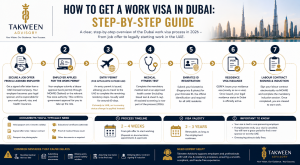
Every year, thousands of professionals move to Dubai for tax-free salaries, a fast-growing job market, and a lifestyle that’s hard to match elsewhere. But before any of that starts, there’s one requirement that determines whether you can legally work in the city at all: a valid employment visa tied to a licensed UAE sponsor. The process has become considerably faster and more digital in recent years, but it still runs through several distinct government touchpoints – and missing a step, or missing the timing window on one, is where most delays happen.
This guide walks through exactly how the Dubai work visa process works in 2026, from the job offer stage through to legally starting work.
What a Dubai Work Visa Actually Covers

A Dubai work visa – more formally an employment visa – is a residence permit tied to a specific employer. It’s issued in two linked parts: a work permit from the Ministry of Human Resources and Emiratisation (MOHRE), which grants the legal right to work, and a residence visa from the General Directorate of Residency and Foreigners Affairs (GDRFA), which grants the right to live in the country. You need both to be fully compliant – one without the other doesn’t authorize you to work or reside legally.
It’s worth noting this is different from self-sponsored options like the Golden Visa or Green Visa, which allow residency without an employer attached. Those follow separate eligibility tracks and are worth exploring if you qualify, but the standard employer-sponsored route remains the most common path into the UAE workforce, and it’s the one this guide focuses on.
Step 1: Secure a Job Offer From a Licensed Employer

The process can only begin once you have a signed offer letter from a company holding an active UAE trade license, whether mainland or free zone. The employer becomes your legal sponsor and takes on responsibility for your work permit, visa, and – in most cases – your health insurance for the duration of employment. A company with unresolved MOHRE violations or an inactive license cannot sponsor a new hire, so it’s worth confirming the employer’s standing is clean before signing anything.
Step 2: Employer Applies for the Work Permit
Once the offer is accepted, the employer files a labour approval – commonly called the work permit – through MOHRE’s Tasheel platform (or the relevant free zone authority if the role sits within a free zone company). This step confirms the government has no objection to the specific individual taking up the specific role. Under recent digital reforms, permit approval itself can move quickly, sometimes within days, though the full visa journey involves several more stages after this point.
Step 3: Entry Permit (For Applicants Outside the UAE)
If you’re applying from abroad, an entry permit is issued next, allowing you to travel into the UAE specifically to complete the remaining residency steps. This permit typically carries a validity window – commonly around 60 days – within which you must complete your medical test, Emirates ID registration, and visa formalities. Missing that window can trigger fines or require the process to restart, so timing matters more at this stage than almost any other.
If you’re already inside the UAE on a different visa category, this step is replaced by an in-country status change instead, which carries its own processing fee and timeline.
Step 4: Medical Fitness Test
Every employment visa applicant must complete a medical fitness test at an approved health centre, covering basic screening including a chest X-ray and blood test. As of mid-2026, Dubai’s health authority introduced an additional AI-assisted screening layer as part of this standard medical process, applying across employment, Green, and Golden Visa categories. The test itself is usually processed within a couple of days, and a failed result – most commonly linked to specific communicable diseases – can affect visa eligibility, so it’s worth booking early rather than leaving it to the last days of your entry permit window.
Step 5: Emirates ID Registration
Alongside or shortly after the medical test, you’ll register biometric data – fingerprints and a photograph – for your Emirates ID, the identification card that every UAE resident is required to hold. This step has become tightly linked to the visa process itself in recent years; since passport stamping requirements were relaxed, the Emirates ID has effectively become the primary proof of your legal residence status day to day.
Step 6: Residence Visa Issuance
With the medical clearance and Emirates ID application in motion, GDRFA issues the residence visa itself. Many visas today are processed as e-visas rather than requiring a physical passport stamp, though this can vary slightly depending on your specific case and emirate. Once issued, your residence status is officially active.
Step 7: Labour Contract Signing and Induction
The final step is signing your official labour contract electronically through MOHRE’s system, followed – for most employment categories – by a short mandatory induction session covering UAE labour rights and obligations. Only once this induction is complete are you formally cleared to begin work. Skipping or delaying this step is a surprisingly common bottleneck, since it’s easy to assume the process ends once the visa is stamped.
Documents You’ll Typically Need
Requirements can vary slightly by employer and free zone, but most applicants should have ready:
- A valid passport with at least six months’ remaining validity
- The signed offer letter or labour contract
- Recent passport-style photographs meeting UAE specifications
- Educational certificates, attested where the role requires it
- Proof of a clean medical fitness result
Having attested documents ready in advance is one of the biggest time-savers in the entire process – attestation for foreign-issued degrees in particular can take weeks if it’s only started once the visa process is already underway.
How Long Does the Whole Process Take?
End to end, most standard cases run somewhere between two and four weeks from offer letter to being fully cleared to start work, though this depends heavily on appointment availability for medical tests and biometrics, and on how quickly documentation is submitted correctly the first time. Visa validity for the standard employment route is generally two to three years, renewable as long as the employment relationship continues.
What Happens If Employment Ends
If your sponsoring employer relationship ends – whether by resignation or termination – your residence visa is cancelled, and you’re typically given a grace period of several weeks to either secure a new sponsor or exit the country. Overstaying past that window carries daily fines, so it’s not a deadline worth treating loosely.
Common Mistakes That Cause Delays
The biggest source of delay isn’t usually the government process itself – it’s poor sequencing on the applicant or employer side. Booking a medical test too close to the entry permit expiry, submitting uncertified documents that later need to be redone, or assuming the visa stamp marks the finish line when the labour contract and induction are still outstanding: these account for the majority of avoidable holdups. Employers hiring at scale, or individuals relocating for the first time, benefit significantly from having each step planned before the process begins rather than reacting stage by stage.
Frequently Asked Questions
How long is a Dubai work visa valid for?
Standard employment visas are typically valid for two to three years, renewable as long as you remain with the sponsoring employer.
Can I work for a second employer on the same visa?
Generally no. Your employment visa is tied to one sponsoring employer unless MOHRE separately issues a part-time or temporary permit covering additional work.
What happens if I lose my job?
Your residence visa is cancelled, and you typically have a grace period of several weeks to find a new sponsor or leave the UAE before fines apply.
Do I need to be in the UAE to start the visa process?
No. The employer can begin the work permit application while you’re still abroad; you’ll then receive an entry permit to travel in and complete the remaining steps.
Is the medical test the same for every visa type?
The core medical fitness test is broadly similar across employment, Green, and Golden Visa categories, though additional screening requirements have been introduced for all three as of mid-2026.
Conclusion
The work visa Dubai process isn’t difficult, but it is sequential – each stage depends on the one before it, and small timing mistakes early on tend to compound later. Understanding the full sequence before you start, rather than reacting stage by stage, is what separates a smooth relocation from a stressful one.
For employers managing visa quotas or individuals who’d rather have the entire sequence handled correctly the first time, Takween Advisory supports businesses and professionals through UAE visa and residency processes alongside its core company formation work, helping keep documentation, timing, and compliance aligned from the first filing to the final approval.
Гарніри з овочів до м’яса та риби: 10 ідей на будні
Чим цікавий сайт zabudovnik.kr.ua

NPI Number Search: How to Find and Verify a National Provider Identifier

Natural Herbal Products by Ecoxent – Simple Care Inspired by Nature

Bracknell Airport Transfer: A Convenient Way to Travel to and From the Airport

Do Electric Cars Have Transmissions?

What You Need to Know About Cup Size Before Buying Your First Bra

Rani No Hajiro in Ahmedabad: A Complete Guide to History, Shopping & Hidden Secrets

Digital Marketing for Beginners: Step-by-Step Guide to Start and Succeed in 2026