Digital Marketing
Spring Cleanout Season Scaling Junk Removal PPC for Peak Demand

For junk removal companies, spring is often the most profitable season of the year. As temperatures rise and homeowners begin cleaning garages, basements, attics, storage sheds, and outdoor spaces, demand for junk removal services increases significantly. Property managers schedule cleanouts between tenant turnovers, contractors begin renovation projects, and businesses take advantage of the season to clear out unwanted equipment and inventory. For many hauling companies, spring represents a major opportunity to generate revenue and acquire new customers.
However, increased demand also creates increased competition. More junk removal businesses invest in advertising during this period, causing competition within Google Ads to become more intense. Companies that fail to prepare their campaigns often find themselves paying higher costs per click while struggling to capture enough leads to maximize seasonal opportunities.
This is why scaling PPC campaigns before and during spring cleanout season is so important. The goal is not simply to spend more money on advertising. The objective is to strategically increase visibility, attract qualified leads, and convert seasonal demand into profitable bookings. Experienced Junk Removal PPC Specialists understand that peak season success depends on preparation, optimization, and a clear understanding of customer behavior.
Understanding Why Spring Demand Increases
Before adjusting PPC campaigns, it is important to understand why spring creates such strong demand for junk removal services.
Many homeowners use spring as an opportunity to declutter their homes after winter. Garages become overcrowded with unused items, attics accumulate years of storage, and outdoor areas often require cleanup after months of harsh weather. Spring also aligns with home improvement projects, landscaping work, and moving activity, all of which generate additional junk removal needs.
Commercial properties experience similar patterns. Businesses frequently use spring to reorganize offices, remove outdated equipment, and prepare facilities for increased activity during warmer months.
Because these needs are often immediate, customers turn to Google to find local service providers. This creates a surge in high-intent searches that can generate valuable leads for prepared businesses.
Start Planning Before Demand Peaks
One of the biggest mistakes hauling companies make is waiting until demand arrives before making campaign adjustments.
By the time spring searches begin increasing, competitors may already be aggressively targeting seasonal keywords and expanding advertising budgets. Businesses that delay preparation often find themselves reacting rather than leading.
Successful PPC scaling begins weeks before peak demand arrives. Historical campaign data can provide valuable insights into seasonal trends, helping businesses identify when search volume typically increases within their service areas.
Experienced Junk Removal PPC Specialists review past performance data, analyze seasonal patterns, and begin making adjustments before competition intensifies. This proactive approach allows campaigns to gain momentum as demand starts rising.
Expand Seasonal Keyword Coverage
Customer search behavior often changes during spring cleanout season. While year-round service keywords remain important, seasonal searches become much more common.
Users may search for terms related to spring cleaning, garage cleanouts, attic cleanups, yard debris removal, shed cleanouts, moving preparation, and property cleanups. These searches represent opportunities to connect with customers who may not normally require junk removal services.
Expanding keyword coverage allows businesses to capture a broader range of seasonal demand. However, relevance remains critical. Every keyword should align with services the company actually provides and the needs of potential customers.
Well-structured seasonal keyword strategies help increase visibility without sacrificing lead quality.
Create Dedicated Spring Campaigns
Many businesses attempt to handle seasonal demand within existing campaign structures. While this approach can work, dedicated spring campaigns often provide greater flexibility and control.
Creating separate campaigns allows advertisers to develop customized messaging, budgets, targeting settings, and landing pages specifically for seasonal audiences.
For example, homeowners conducting spring cleaning projects may respond differently to advertising than customers seeking emergency debris removal. Seasonal campaigns make it easier to tailor messaging around customer motivations and current needs.
Dedicated campaigns also simplify performance tracking, making it easier to measure seasonal advertising success.
Increase Budgets Strategically
One of the most obvious aspects of scaling PPC campaigns is increasing advertising budgets. However, simply spending more money does not guarantee better results.
The most effective approach involves identifying high-performing campaigns and allocating additional resources where they are most likely to generate profitable leads.
Businesses should closely monitor metrics such as conversion rates, cost per lead, and booking volume when increasing budgets. Campaigns that consistently generate strong results deserve greater investment during peak season.
Experienced Junk Removal PPC Specialists focus on scaling successful strategies rather than increasing spending across every campaign indiscriminately.
Optimize for Mobile Searches
Spring cleanout customers frequently search for services while actively working on projects. Many users browse on smartphones while cleaning garages, sorting storage spaces, or managing outdoor cleanup tasks.
This behavior makes mobile optimization especially important during peak season.
Advertisements should emphasize immediate solutions and clear calls to action. Landing pages should load quickly, display properly on mobile devices, and provide simple ways for customers to request estimates or contact the business.
Click-to-call functionality becomes particularly valuable during busy periods when customers prefer speaking directly with service providers.
Companies that deliver strong mobile experiences often convert more seasonal traffic into booked jobs.
Highlight Fast Response Times
Spring demand often creates urgency among customers. Many people want unwanted items removed immediately so they can continue home improvement projects, complete moves, or reclaim usable space.
Advertising that emphasizes rapid response times can be highly effective during this period.
Messages highlighting same-day service, next-day appointments, fast estimates, and flexible scheduling help attract customers who need immediate assistance.
This approach aligns with the mindset of many seasonal searchers and can significantly improve conversion rates.
Customers are often willing to contact the company that appears most capable of solving their problem quickly.
Use Location Based Targeting More Aggressively
Not all service areas perform equally during peak demand periods. Certain neighborhoods, communities, and cities may generate significantly more spring cleanout activity than others.
Businesses should analyze historical performance data to identify high-value geographic areas. Budget increases can then be concentrated within locations that consistently produce profitable leads.
Localized advertising also improves relevance by aligning campaigns with community-specific demand patterns.
Many Junk Removal PPC Specialists use advanced geographic targeting strategies to maximize seasonal lead generation while controlling costs.
Build Seasonal Landing Pages
Landing pages play a major role in converting visitors into leads. During spring cleanout season, generic service pages may not fully address customer motivations.
Dedicated spring-themed landing pages can create stronger connections with visitors by focusing on seasonal challenges and solutions.
Content may highlight garage cleanouts, attic organization, yard waste removal, post-winter cleanup services, and decluttering projects. These pages should clearly explain services, emphasize convenience, and provide straightforward contact options.
A relevant landing page experience helps improve both conversion rates and overall campaign performance.
Leverage Remarketing Throughout the Season
Not every visitor converts during their first interaction with a business. Many customers compare providers, evaluate pricing, and revisit options before making a decision.
Remarketing campaigns allow businesses to remain visible throughout this decision-making process.
By targeting previous website visitors with relevant advertisements, companies can increase brand recognition and encourage prospects to return when they are ready to schedule services.
Remarketing becomes particularly valuable during spring when search activity is elevated and competition is intense.
It provides a cost-effective method for capturing opportunities that might otherwise be lost.
Monitor Performance Daily
Peak season advertising requires more active management than slower periods.
Search behavior, competition levels, and campaign performance can change quickly during high-demand months. Businesses that review data infrequently may miss valuable optimization opportunities.
Regular monitoring allows advertisers to identify emerging trends, adjust bids, refine targeting, and reallocate budgets as needed.
Experienced Junk Removal PPC Specialists often increase campaign oversight during spring to ensure every advertising dollar is producing maximum value.
Small adjustments made consistently can create substantial improvements in overall performance.
Prepare Operations for Increased Lead Volume
Advertising success creates operational challenges if businesses are not prepared for increased demand.
Generating more leads only benefits the company if inquiries are handled efficiently. Slow response times, missed calls, and scheduling delays can undermine even the strongest PPC campaigns.
Before scaling advertising efforts, companies should ensure they have adequate staffing, scheduling capacity, and lead management systems in place.
The ability to respond quickly and provide excellent customer experiences becomes a significant competitive advantage during peak season.
Advertising and operations should work together to support growth.
Conclusion
Spring cleanout season presents one of the best revenue opportunities available to junk removal businesses. Increased consumer demand, home improvement activity, moving projects, and property cleanouts create a surge in search traffic that can generate substantial lead volume for prepared companies.
Successfully scaling PPC campaigns during this period requires more than increasing budgets. Businesses must expand keyword strategies, create seasonal campaigns, optimize mobile experiences, improve landing pages, leverage remarketing, and closely monitor performance throughout the season.
The most successful companies approach spring demand strategically, using data-driven decisions to maximize visibility and capture qualified leads. This is why many growing businesses rely on experienced Junk Removal PPC Specialists to guide seasonal campaign management and ensure advertising investments produce measurable results.
When planned and executed correctly, spring PPC campaigns can help junk removal companies fill schedules, increase revenue, strengthen market presence, and create momentum that supports business growth well beyond the seasonal peak.




Guest blogging can look deceptively simple. Find a website, write an article, add a link, and wait for the results. In reality, successful guest blogging requires considerably more thought.
The websites you choose, the topics you pitch, the quality of your content, and the relevance of the audience can all determine whether a guest post becomes a valuable marketing asset or simply another published article that receives little attention.
A good guest blogging strategy is not about publishing as many articles as possible. It is about getting your expertise in front of the right people, on the right websites, with the right content.
For businesses, marketers, consultants, and independent writers, that shift in approach can make guest blogging far more useful.
Start With a Clear Goal
Before looking for websites that accept guest posts, decide what you want the activity to achieve.
Different goals require different approaches.
If your primary objective is brand awareness, you may want to contribute to publications with a strong and relevant readership. If you want referral traffic, the audience and engagement of a website become particularly important. If your objective is establishing expertise, publications respected within your industry may be more valuable than general-interest websites.
Guest blogging can support several goals at the same time, but having a primary objective makes it easier to judge opportunities.
A simple question can help:
If this article performs well, what would I like to happen next?
The answer might be more people discovering your brand, visiting your website, subscribing to your content, contacting your business, or simply becoming familiar with your expertise.
Choose Relevance Over Volume
One of the biggest mistakes in guest blogging is treating every publishing opportunity as equally valuable.
It is not.
A website with a large audience is only useful if at least some of that audience is relevant to what you offer. A smaller specialist publication can sometimes deliver more meaningful exposure because its readers are already interested in your subject.
When researching potential websites, examine their recent articles rather than relying only on domain metrics or claims about traffic.
Ask yourself:
- Who appears to be reading this content?
- Are the topics relevant to my expertise?
- Is the content genuinely edited and maintained?
- Do published articles provide useful information?
- Would I be proud to have my name associated with this publication?
If the answer to the last question is no, the opportunity probably isn’t worth pursuing.
Research Before You Pitch
A generic guest post pitch is easy to ignore.
Editors receive plenty of messages that begin with vague statements about providing “high-quality content” without explaining what the proposed article would actually offer readers.
Good outreach starts with research.
Read several recent articles from the publication. Look for subjects they have covered repeatedly and identify areas where a fresh perspective could add something new. You can also examine comments, frequently discussed questions, or related articles to understand what readers appear to care about.
Your pitch should demonstrate that you understand the publication rather than simply wanting access to its website.
Instead of thinking, What article can I get published?, think:
What useful article would make sense for this audience right now?
That small change in perspective can significantly improve the quality of your outreach.
Choose Topics That Solve Specific Problems
Broad topics are often difficult to make interesting.
For example, “Why Digital Marketing Is Important” gives a writer very little direction. It is also a subject readers have encountered countless times.
A more focused topic such as “How Small Businesses Can Identify Which Digital Marketing Channels Deserve Their Budget” creates a clearer purpose.
Specific topics make it easier to provide practical advice, examples, comparisons, and actionable information.
A strong guest post should ideally leave the reader with something they can use. That might be a process, checklist, framework, decision-making method, or a better understanding of a complicated issue.
The goal is not to demonstrate how much the writer knows. The goal is to make the reader more informed than they were before reading the article.
Write for the Publication, Not Your Own Website
A common mistake is treating guest content as an extension of a company’s blog.
That usually results in an article filled with references to the business, its services, or its products.
Guest content should work independently.
Readers should be able to read the article without feeling that they have been placed inside a sales funnel. If the content is genuinely useful, readers who are interested in the author or business can naturally seek out more information.
This also makes the article more credible.
A practical rule is simple: remove anything that exists only to promote yourself unless it genuinely improves the reader’s experience.
Use Links Naturally
Links can be useful in a guest article, but they should have a legitimate purpose.
If an external source supports a statistic, definition, research finding, or additional explanation, linking to it can improve the article. Similarly, a relevant link to the contributor’s own resource may be appropriate when it provides information that would otherwise interrupt the flow of the article.
Problems arise when links become the central objective.
Excessive keyword-rich links, irrelevant references, and forced anchor text can make an article appear designed for search engines rather than readers.
A useful test is to remove the link mentally and ask whether the paragraph still makes sense.
If it does, the link is more likely to be natural. If the entire paragraph exists only to accommodate the link, the content probably needs to be reconsidered.
Measure More Than Backlinks
Guest blogging results should not be measured by link counts alone.
A successful contribution can create value in several ways, including:
| Measure | What It Can Tell You |
|---|---|
| Referral visits | Whether readers are clicking through to your website |
| Engagement | Whether the article attracts meaningful attention |
| Brand mentions | Whether your visibility is expanding beyond your own channels |
| Enquiries | Whether the content reaches commercially relevant readers |
| Audience quality | Whether visitors match your target audience |
| Relationships | Whether publication leads to further industry opportunities |
Not every guest article will generate immediate leads. Some contributions are primarily useful for visibility and authority.
That is why evaluating guest blogging over time is more useful than judging a single article in isolation.
Build Relationships, Not Just Placements
The best guest blogging opportunities can become ongoing relationships.
An editor who appreciates your work may invite you to contribute again. A publication may introduce you to another writer or industry professional. Your article may lead to interviews, collaborations, speaking opportunities, or other forms of exposure.
That is much more valuable than treating every publisher as a one-time link opportunity.
Professional communication matters here. Meet deadlines, follow editorial requirements, respond to feedback constructively, and make revisions when necessary.
Good contributors are remembered.
Quality Should Scale Before Quantity
Once a guest blogging process starts producing results, there can be a temptation to increase publishing volume quickly.
That is where quality often begins to decline.
Writing five thoughtful articles for highly relevant publications can be more valuable than producing twenty generic articles simply to increase the number of placements.
A sustainable strategy gives each contribution enough attention to research the topic, understand the audience, develop a useful structure, and edit the final piece properly.
Guest blogging rewards consistency, but consistency does not mean repetition.
Make Guest Blogging Part of a Larger Content Strategy
Guest blogging works best when it is connected to your broader content efforts.
A question explored in a guest article can lead to a more detailed guide on your own website. A recurring topic from your industry can become a series of articles. Reader questions can provide ideas for future content.
This creates a useful relationship between external publishing and your own website.
Instead of producing isolated guest posts, you gradually build a network of related expertise across different publications and your own content channels.
Final Takeaway
A successful guest blogging strategy starts long before the article is published.
It begins with understanding your objective, identifying relevant audiences, researching suitable publications, choosing useful topics, and creating content that deserves attention.
The strongest guest bloggers do not ask only, “Where can I get my article published?”
They ask, “Where can my expertise genuinely help the right audience?”
That mindset produces better pitches, stronger articles, more valuable relationships, and a guest blogging strategy built for the long term.
For Venture Blogging, that is the approach worth promoting: not guest blogging for the sake of another link or another published URL, but guest blogging as a thoughtful way to share expertise, build credibility, and connect useful ideas with the people who need them.


For an online retailer, getting a product in front of the right customer at the right time can make a significant difference to sales. Australian shoppers often compare products, prices, reviews and delivery options before deciding where to buy. Search advertising can help retailers reach these customers while they are actively looking for products.
A google shopping ads agency can help ecommerce businesses manage this process by combining product feed optimisation, campaign strategy, audience targeting, conversion tracking and ongoing performance analysis.
Unlike traditional text-based search advertising, Shopping ads are built around product information. They can show details such as a product image, title, price and store name, giving shoppers useful information before they click.
For Australian retailers, this makes product advertising a valuable part of a broader ecommerce marketing strategy.
What Are Shopping Ads?
Shopping ads are designed specifically for retailers selling products online or through eligible local stores.
Rather than creating an individual text advertisement for every product, businesses provide product information through Google Merchant Center. Google can then use that information to match products with relevant searches and create eligible advertisements.
A product listing may include:
- Product image
- Product name
- Price
- Store name
- Availability
- Other relevant product information
This visual format allows shoppers to assess a product before visiting the website.
For example, someone searching for “women’s running shoes Australia” may see several products from different retailers, including images and prices. The shopper can compare options before choosing which website to visit.
Why Product Advertising Matters for Australian Retailers
Australian ecommerce is highly competitive. Customers can compare local retailers with national chains and international websites within seconds.
This creates a challenge for smaller and mid-sized businesses.
A well-structured shopping campaign can help retailers compete for high-intent searches without relying entirely on organic rankings.
Product advertising can be particularly useful for:
- Fashion retailers
- Electronics stores
- Homeware businesses
- Sporting goods retailers
- Beauty brands
- Furniture companies
- Jewellery stores
- Children’s products
- Specialty ecommerce businesses
The objective should not simply be to generate more clicks. The goal is to attract shoppers who are genuinely interested in the products being advertised.
Product Data Is the Foundation
One of the most important parts of Shopping advertising happens before a customer ever sees an ad.
Google uses product information submitted through Merchant Center to understand what a retailer sells. Unlike traditional Search campaigns, Shopping and Performance Max campaigns rely heavily on product attributes rather than a list of manually selected keywords.
Important information can include:
- Product title
- Description
- Price
- Availability
- Brand
- GTIN
- Product category
- Product type
- Image
- Landing page URL
If this information is incomplete, outdated or inaccurate, campaign performance can suffer.
For Australian retailers, price and stock information also need to reflect what customers actually see on the website.
Optimising Product Titles
Product titles deserve particular attention because they help Google understand the product and give shoppers important information.
Google recommends placing important product attributes towards the beginning of titles because titles may be truncated in some advertising formats. Depending on the product, useful information may include brand, product type, size, colour or other important attributes.
For example, instead of:
“Classic Shoes”
a retailer might provide a more informative title such as:
“Nike Air Max Men’s Running Shoes Black Size 10”
The second title gives both Google and the customer considerably more context.
However, businesses should avoid stuffing titles with unnecessary keywords. Product information should remain accurate and natural.
High-Quality Product Images Matter
Shopping advertising is highly visual.
A customer may notice the product image before reading anything else.
Poor-quality photographs can make an otherwise excellent product look unappealing.
Retailers should aim for:
- Clear product photography
- High-resolution images
- Accurate product representation
- Consistent presentation
- Appropriate image backgrounds
- Multiple images where useful
Google recommends using high-quality images and avoiding placeholder images or promotional text and logos over the main product image.
For Australian ecommerce brands, professional product photography can therefore support both advertising performance and overall website credibility.
Campaign Structure Should Reflect the Business
A large product catalogue can quickly become difficult to manage.
A retailer selling thousands of products should not necessarily treat every item in exactly the same way.
Products can be grouped according to factors such as:
- Product category
- Brand
- Profit margin
- Seasonal demand
- Stock availability
- Sales performance
- Price range
- Best-selling status
This allows businesses to allocate attention and budget where it can have the greatest commercial impact.
Google also provides product-level reporting and tools for identifying products with issues, missing attributes and competitive opportunities.
Performance Max and Shopping Campaigns
Google provides different ways for retailers to promote products.
Traditional Shopping campaigns remain an option, while Performance Max campaigns can use Merchant Center product feeds and access multiple Google advertising channels.
Performance Max uses campaign inputs such as budgets, product information and assets to optimise towards defined business goals.
The right campaign structure depends on the retailer’s goals, catalogue size, data quality and advertising strategy.
Rather than automatically choosing the newest campaign type, businesses should consider how each approach fits their commercial objectives.
Australian Targeting Requires Local Understanding
A campaign designed for Australia should reflect the Australian market.
Businesses may need to consider:
- Australian dollars
- GST-inclusive pricing
- Shipping costs
- Delivery regions
- Local stock
- Seasonal shopping patterns
- Australian spelling
- Public holidays
- Local customer expectations
For example, an Australian retailer may need different promotional strategies around EOFY, Black Friday, Christmas, Boxing Day and other significant retail periods.
Seasonality can also vary between industries.
A fashion retailer, home improvement business and sporting goods store may experience very different demand patterns.
Landing Pages Are Just as Important as Ads
A customer clicking on a product advertisement should arrive on a page that matches what they expected.
If the advertisement shows a particular colour and size, the landing page should make it easy to find that exact product variation.
Google recommends matching product data with landing pages and ensuring that important details such as price, colour and product variants are consistent.
A strong ecommerce landing page should provide:
- Clear product information
- High-quality images
- Accurate pricing
- Stock availability
- Shipping information
- Returns information
- Customer reviews
- Easy checkout
- Mobile-friendly navigation
Even an excellent advertising campaign can struggle if the website creates friction during the purchasing process.
Mobile Shopping Cannot Be Ignored
Australian consumers frequently browse and shop using smartphones.
This means retailers need to ensure their entire purchasing journey works well on smaller screens.
Important considerations include:
- Fast page loading
- Easy product navigation
- Large, clear buttons
- Simple checkout
- Mobile payment options
- Easy access to delivery information
- Clear product images
The advertisement may win the click, but the website needs to win the customer.
Measuring More Than Clicks
Clicks and impressions provide useful information, but they do not tell the complete story.
Retailers should monitor metrics such as:
- Conversion rate
- Cost per conversion
- Revenue
- Return on advertising spend
- Average order value
- Product-level performance
- Shopping campaign spend
- Profitability
For example, a product may receive hundreds of clicks but generate few purchases.
Another product may receive less traffic but consistently convert at a strong rate.
The second product could represent the better opportunity.
This is why performance marketing should connect advertising data with real commercial outcomes.
Feed Management Should Be Ongoing
Product feeds are not something retailers should set up once and forget.
Inventory, prices and product details change regularly.
Google recommends keeping product data updated, particularly when stock or pricing changes. Incorrect information can lead to disapprovals or create a poor shopping experience.
Regular feed management can help identify:
- Disapproved products
- Missing attributes
- Incorrect prices
- Out-of-stock products
- Broken landing pages
- Image problems
- Product categorisation issues
Keeping the feed healthy gives campaigns a more reliable foundation.
How AI Is Changing Ecommerce Advertising
Artificial intelligence is becoming increasingly important in digital advertising.
AI can assist with:
- Bid optimisation
- Product analysis
- Audience signals
- Campaign insights
- Creative generation
- Performance forecasting
- Budget optimisation
Google’s current advertising systems also use AI-driven optimisation within Performance Max campaigns.
However, automation does not eliminate the need for strategy.
Retailers still need to decide which products to promote, how much they can afford to spend, which products are profitable and what makes their offer attractive to Australian shoppers.
Choosing the Right Advertising Partner
Retailers considering professional support should look beyond promises of cheap clicks or immediate sales.
A capable ecommerce advertising partner should understand:
- Merchant Center
- Product feed optimisation
- Shopping campaigns
- Performance Max
- Conversion tracking
- Product categorisation
- Landing page optimisation
- Ecommerce analytics
- Budget management
They should also provide clear reporting.
A business should be able to understand which products are performing, where advertising money is being spent and what actions are being taken to improve results.
Final Thoughts
Product advertising can give Australian retailers an effective way to connect with shoppers who are already searching for products.
But successful campaigns involve much more than switching on advertisements.
Accurate product data, strong images, informative titles, sensible campaign structure, relevant landing pages and reliable conversion tracking all contribute to better performance.
Retailers should also treat optimisation as an ongoing process. Products change, customer behaviour changes, competitors adjust their pricing and advertising platforms continue to evolve.
The businesses that regularly analyse their data and improve their product experience are better positioned to make their advertising budget work harder.
Digital Marketing
Minishortner.Com What Is Site Map For SEO and Why It Matters for Google Indexing in 2026

In today’s fast-evolving digital landscape, search engine optimization (SEO) is no longer optional—it’s essential. As we step into 2026, websites are becoming more complex, content-heavy, and dynamic. With billions of web pages competing for visibility, ensuring your website is properly indexed by search engines is crucial. One of the most powerful yet often overlooked tools in SEO is the sitemap.
If you’ve been searching for clarity around Minishortner.Com What Is Site Map For SEO, you’re in the right place. This comprehensive guide will break down everything you need to know—from basics to advanced strategies—so you can boost your website’s indexing and rankings effectively.
Minishortner.Com What Is Site Map For SEO? (Beginner-Friendly Explanation)
Let’s start with the basics.
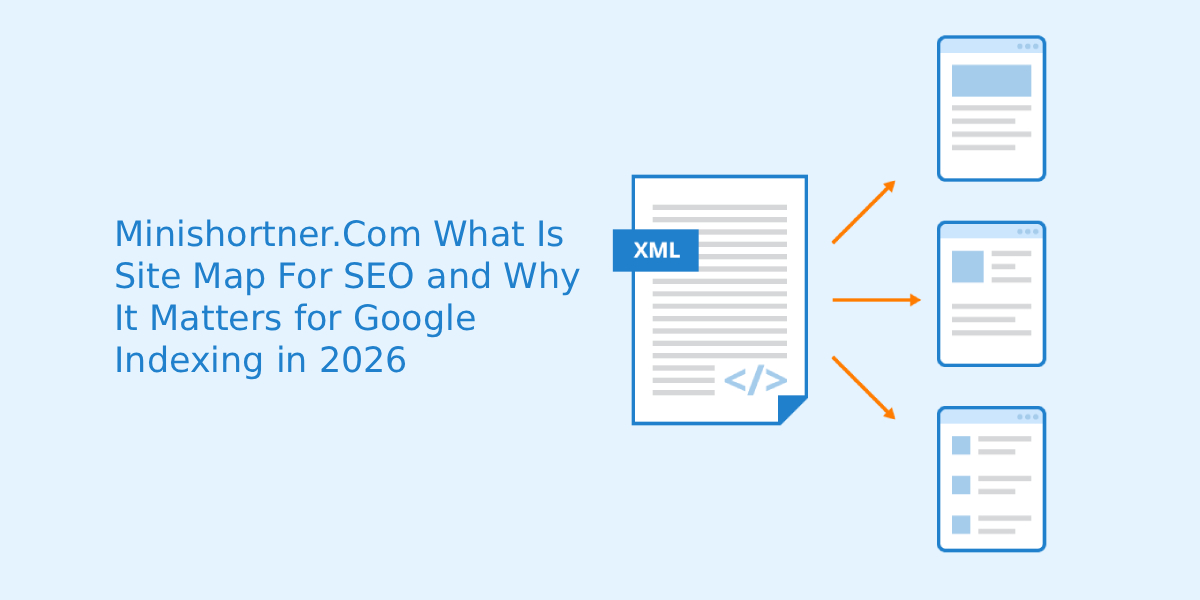
A sitemap is a structured file (usually in XML format) that lists all the important pages of your website. It acts like a roadmap for search engines, helping them discover, crawl, and index your content efficiently.
When discussing Minishortner.Com What Is Site Map For SEO, think of a sitemap as a communication bridge between your website and search engines. It tells search engine bots:
- Which pages exist on your site
- How often they are updated
- Which pages are most important
- When the last update occurred
Without a sitemap, search engines rely solely on internal linking, which may not always lead them to all your pages—especially if your site is large or newly created.
Types of Sitemaps You Should Know
Understanding different types of sitemaps is key when exploring Minishortner.Com What Is Site Map For SEO.
1. XML Sitemap (Most Important for SEO)
- Designed specifically for search engines
- Lists URLs with metadata (last modified, priority, frequency)
- Helps search engines crawl your website efficiently
2. HTML Sitemap
- Designed for users, not search engines
- Displays a clickable list of pages
- Improves user navigation and experience
3. Image Sitemap
- Helps search engines discover images
- Important for image SEO and visual content-heavy sites
4. Video Sitemap
- Used for indexing video content
- Includes details like duration, category, and thumbnail
5. News Sitemap
- Helps news websites appear in Google News
- Prioritizes fresh and trending content
Why Sitemaps Matter for Google Indexing in 2026
The importance of Minishortner.Com What Is Site Map For SEO becomes even clearer when you understand how search engines work today.
1. Faster Indexing
Search engines like Google use bots (crawlers) to discover pages. A sitemap ensures that all your important pages are found quickly—even if they’re not heavily linked.
2. Improved Crawl Efficiency
Websites now have:
- Dynamic pages
- JavaScript-heavy structures
- Large content libraries
Sitemaps help search engines prioritize which pages to crawl first.
3. Better Coverage for New Websites
If your website is new, it may not have backlinks or strong internal links. A sitemap ensures search engines can still discover your pages.
4. Helps Index Deep Pages
Pages buried deep within your site (e.g., blog archives, product pages) might be missed without a sitemap.
5. Supports AI-Based Crawling
In 2026, search engines use advanced AI to understand content. A sitemap provides structured data that improves this process.
How Search Engines Use Sitemaps
When you submit a sitemap, search engines:
- Read the file
- Extract URLs
- Prioritize crawling based on metadata
- Index relevant pages
However, submitting a sitemap does not guarantee indexing. It simply improves your chances.
Minishortner.Com What Is Site Map For SEO in Technical Terms
For a more advanced understanding:
An XML sitemap typically looks like this:
<loc>https://example.com/page1</loc>
<lastmod>2026-04-01</lastmod>
<changefreq>weekly</changefreq>
<priority>0.8</priority>
</url>
Key Elements:
- loc – Page URL
- lastmod – Last update date
- changefreq – Update frequency
- priority – Importance level
These elements guide search engines in crawling your site more intelligently.
How to Create a Sitemap (Step-by-Step Guide)
1. Use Sitemap Generators
Popular tools include:
- Online sitemap generators
- CMS plugins (WordPress, Shopify)
2. Create Automatically via CMS
If you use WordPress:
- Install SEO plugins like Yoast or Rank Math
- Sitemap is generated automatically
3. Manual Creation
For developers:
- Create XML file manually
- Follow sitemap protocol guidelines
4. Validate Your Sitemap
Before submitting, ensure:
- No broken links
- Proper formatting
- Valid XML structure
How to Submit Sitemap to Search Engines
Google Search Console
- Log in
- Go to “Sitemaps” section
- Enter sitemap URL
- Click submit
Bing Webmaster Tools
- Similar process as Google
Submitting your sitemap ensures faster discovery and indexing.
Best Practices for Sitemap Optimization in 2026
To fully leverage Minishortner.Com What Is Site Map For SEO, follow these best practices:
1. Keep It Clean
- Include only important pages
- Avoid duplicate or low-quality URLs
2. Use Canonical URLs
Ensure URLs in sitemap match canonical versions.
3. Limit URLs per Sitemap
- Max: 50,000 URLs per sitemap
- Split into multiple sitemaps if needed
4. Update Regularly
- Automatically update when new content is added
5. Use Sitemap Index File
For large sites, create a sitemap index linking multiple sitemaps.
Common Sitemap Mistakes to Avoid
Understanding mistakes is crucial when learning Minishortner.Com What Is Site Map For SEO.
❌ Including Broken Links
❌ Adding Noindex Pages
❌ Not Updating Sitemap
❌ Using Incorrect URLs
❌ Ignoring Mobile Pages
Fixing these errors can significantly improve indexing.
Sitemap vs Robots.txt (Key Differences)
| Feature | Sitemap | Robots.txt |
|---|---|---|
| Purpose | Helps crawling & indexing | Controls crawler access |
| Type | XML/HTML | Text file |
| Function | Lists URLs | Blocks or allows URLs |
| SEO Impact | Positive | Can be positive or negative |
Both work together but serve different roles.
How Sitemaps Impact SEO Rankings
While sitemaps are not a direct ranking factor, they indirectly influence SEO by:
- Improving crawlability
- Ensuring full content indexing
- Enhancing visibility
In short, better indexing = better ranking opportunities.
Advanced Sitemap Strategies for 2026
1. Dynamic Sitemaps
Automatically update based on new content.
2. Priority-Based Structuring
Assign higher priority to:
- Homepage
- High-traffic pages
- Revenue pages
3. AI Optimization
Use AI tools to:
- Identify important pages
- Optimize crawl budget
4. Mobile-First Sitemaps
Ensure mobile URLs are included and optimized.
Minishortner.Com What Is Site Map For SEO for Bloggers
If you run a blog:
- Include all posts and categories
- Exclude thin content
- Update sitemap after publishing
This ensures your blog posts get indexed quickly.
Minishortner.Com What Is Site Map For SEO for E-commerce Websites
For e-commerce:
- Include product pages
- Add category pages
- Remove out-of-stock products (if permanently unavailable)
This improves product visibility in search results.
Tools to Generate and Manage Sitemaps
Here are some popular tools:
- Yoast SEO
- Rank Math
- Screaming Frog
- XML Sitemap Generator
These tools simplify sitemap creation and management.
Future of Sitemaps in SEO (2026 and Beyond)
Sitemaps are evolving with technology:
- Integration with AI crawling systems
- Better handling of dynamic content
- Enhanced metadata usage
Despite advancements, the core purpose remains the same—helping search engines understand your website structure.
FAQs: Minishortner.Com What Is Site Map For SEO
What is a sitemap in SEO?
A sitemap is a file that lists all important pages of your website to help search engines crawl and index them efficiently.
Why is a sitemap important for Google indexing?
It ensures search engines can discover all your pages quickly, improving indexing speed and coverage.
Is sitemap necessary for small websites?
Not mandatory, but highly recommended—especially if your site has poor internal linking.
How often should I update my sitemap?
Whenever you add or remove pages. Automatic updates are ideal.
Can a sitemap improve rankings?
Indirectly, yes. Better indexing leads to better chances of ranking.
What is the difference between XML and HTML sitemap?
XML is for search engines, while HTML is for users.
How many URLs can a sitemap contain?
Up to 50,000 URLs per sitemap file.
Conclusion
Understanding Minishortner.Com What Is Site Map For SEO is essential for anyone looking to succeed in SEO in 2026. A sitemap may seem like a simple file, but its impact on indexing, crawl efficiency, and overall SEO performance is significant.
Whether you’re running a blog, business website, or e-commerce store, implementing and optimizing your sitemap can make a huge difference in how search engines perceive and rank your content.
If you want faster indexing, better visibility, and improved SEO results, don’t ignore your sitemap—it’s one of the most powerful tools in your SEO toolkit.
Гарніри з овочів до м’яса та риби: 10 ідей на будні
Чим цікавий сайт zabudovnik.kr.ua

NPI Number Search: How to Find and Verify a National Provider Identifier

Natural Herbal Products by Ecoxent – Simple Care Inspired by Nature

Bracknell Airport Transfer: A Convenient Way to Travel to and From the Airport

The Cortado: A Perfect Blend of Espresso and Milk

A New Culinary Haven Emerges: The News Café

Are Nut Thins Healthy? Unveiling the Nutritional Pros and Cons

A Step-by-Step Guide to Cleaning Your Nike Air Max Shoes