Blog
A2551 2.0Amp: Understanding and Choosing the Right Charger

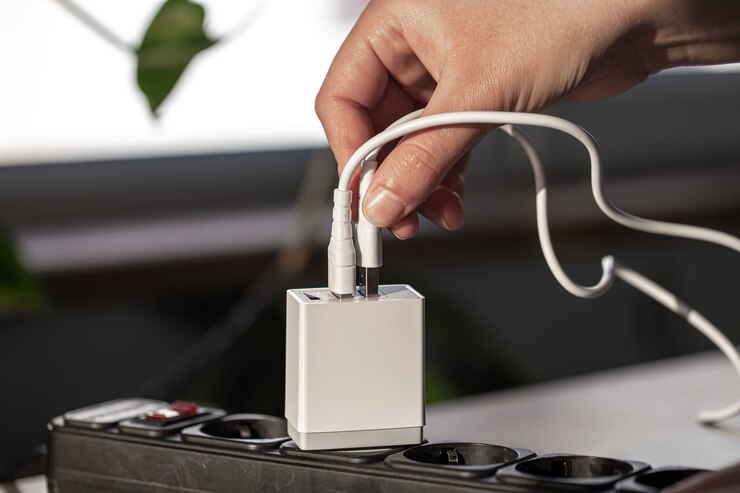
Chargers are everywhere, powering everything from smartphones to tools. However, not all chargers are the same. Among the range, the A2551 2.0Amp charger stands out for its efficiency and reliability in meeting daily power needs. Whether you’re searching for a high-performance replacement or simply need more information on this model, this guide will cover everything you need to know.
What is the A2551 2.0Amp Charger?
The A2551 2.0Amp charger is a versatile charging device capable of delivering a steady 2.0 amps of current. This output is optimal for a range of small to medium electronic devices, making it suitable for phones, tablets, and small appliances. The charger is designed for quick, efficient charging without risking overheating.
Why Choose a 2.0Amp Charger?
Selecting a 2.0Amp charger like the A2551 can be ideal if you want faster charging without damaging your devices. Lower amp chargers, such as 1.0Amp, may charge too slowly, while higher amps can stress devices that aren’t designed to handle it. With a 2.0Amp charger, you get a balanced and safe level of current for many modern devices.
Features of the A2551 2.0Amp Charger
Reliable Current Output: It provides a stable 2.0Amp output that’s ideal for safely charging most electronics.
Compact Design: The A2551 is built to be portable, making it easy to carry on trips or in a daily bag.
Durability: With solid construction, this charger is meant to last, even with frequent use.
Overheating Protection: Designed to prevent overheating, it protects your device from damage during charging.
Advantages of Using the A2551 2.0Amp Charger
The A2551 offers a reliable option for users looking for an efficient and steady power source. Its current output is especially beneficial for devices that support 2.0Amp charging, providing a safe and effective way to recharge without harming the battery. Plus, the compact design is perfect for users on the go.
Compatibility with Devices
The A2551 2.0Amp charger is compatible with a wide range of devices, including:
Smartphones
Tablets
Power banks
Small gadgets and electronics
Many gadgets fall into the range that can safely handle a 2.0Amp charger, making this a versatile tool for everyday use.
Charging Speed: What to Expect?
When using the A2551, expect a moderate charging speed, quicker than a standard 1.0Amp charger but safer for devices not designed for rapid charging. This makes it an excellent choice for those needing a faster charge without opting for high-speed chargers that may degrade battery health over time.
Understanding the 2.0Amp Output: Is It Enough?
The 2.0Amp output is suitable for most daily charging needs. Many devices, such as smartphones and smaller tablets, work best with a steady 2.0Amp current, as it provides a balance between speed and safety. Higher amps are typically reserved for larger devices or fast-charging models.
Safety Features of the A2551 2.0Amp Charger
Safety is a priority for the A2551, with features like:
Overheating Prevention: The charger monitors temperature, reducing the risk of overheating.
Short-Circuit Protection: Designed to detect faults and prevent potential electrical hazards.
Voltage Regulation: Helps ensure stable voltage for safe and efficient charging.
Portability and Design
The compact and durable design makes the A2551 easy to pack and travel with, fitting comfortably in small bags or pockets. For users who frequently move around or travel, this portability factor can be highly convenient.
Durability and Build Quality
Made with sturdy materials, the A2551 charger is built to withstand regular use without breaking or losing its functionality. The robust design can handle the wear and tear of daily life, making it a dependable charging solution.
How to Properly Use the A2551 Charger
To get the most out of the A2551 charger, follow these steps:
Connect to a Compatible Device: Ensure the device supports a 2.0Amp charge to avoid overloading.
Use in a Cool Environment: Avoid high temperatures to protect the device and charger.
Unplug When Fully Charged: This extends the battery life of your device and maintains charger efficiency.
Pricing and Value
For its features, the A2551 2.0Amp charger is a budget-friendly option. It combines quality with affordability, making it an excellent choice for users who want reliable charging without overspending.
Where to Buy the A2551 2.0Amp Charger
You can find the A2551 2.0Amp charger through a variety of electronics retailers and online stores. Always ensure you’re purchasing from a reputable seller to avoid counterfeit products that may lack proper safety features.
Comparing A2551 2.0Amp with Other Chargers
Compared to lower-amp chargers, the A2551 offers faster charging, while it’s also a safer alternative than high-amp chargers. Its output is balanced to meet the needs of most everyday devices, distinguishing it as a versatile option among various chargers.
Troubleshooting Common Issues
Slow Charging: Ensure your device supports 2.0Amp charging.
Overheating: Check the charger and environment; avoid high-temperature settings.
Connection Problems: Verify that the cable and device port are clean and properly connected.
Tips for Extending Charger Lifespan
To make the A2551 2.0Amp charger last, keep it in a safe, dry place and avoid leaving it plugged in when not in use. Regular cleaning of the charging port and checking the cables for wear also prolongs its life.
Conclusion
The A2551 2.0Amp charger is a practical, reliable choice for users seeking a steady and efficient charge. With safety features, portability, and a stable output, it offers the performance needed for everyday devices. Whether for personal use or as a backup, this charger is an affordable option that ensures devices are ready to go when you need them.
FAQs
Can the A2551 2.0Amp charger be used for fast charging?
The A2551 is faster than a standard 1.0Amp charger but does not offer high-speed fast charging.
Is the A2551 charger compatible with all devices?
It’s compatible with most devices that support a 2.0Amp input. Check your device’s specifications before use.
Does the A2551 come with a cable?
This depends on the retailer, so check product details to see if a cable is included.
How can I prevent my A2551 from overheating?
Use it in a cool environment and avoid covering it while charging.
What should I do if my charger stops working?
Check for visible damage or try using a different cable. If issues persist, it may need replacing.




A nose job, medically known as rhinoplasty, is a surgical procedure designed to improve the shape, size, proportion, or function of the nose. It can be performed for cosmetic reasons, to correct structural concerns, or to improve breathing difficulties caused by issues within the nasal structure.
If you are considering Nose Job surgery in Chandigarh, understanding the procedure, recovery process, and expected results can help you make an informed decision. Rhinoplasty is a highly individualised procedure, and the treatment plan depends on your facial features, nasal anatomy, concerns, and desired outcome.
What Is Nose Job Surgery?
Nose job surgery, or rhinoplasty, involves reshaping the bone, cartilage, skin, or a combination of these structures to improve the appearance or function of the nose.
People may consider rhinoplasty to address concerns such as:
- A prominent bump or hump on the bridge
- A wide or asymmetrical nose
- A drooping or enlarged nasal tip
- Nostrils that appear too wide
- Nasal asymmetry
- A nose that seems out of proportion with other facial features
- Breathing difficulties caused by structural concerns
The goal is not simply to create a smaller or differently shaped nose. A successful procedure should aim for balance between the nose and the rest of the facial features while preserving or improving nasal function where possible.
The Nose Job Surgery Procedure
Before surgery, patients usually attend a detailed consultation. The surgeon evaluates the structure of the nose, skin quality, facial proportions, medical history, and treatment goals. Photographs may also be taken as part of the surgical planning process.
The procedure itself may vary depending on the changes required.
Open Rhinoplasty
In open rhinoplasty, a small incision is made across the tissue between the nostrils. This allows the surgeon greater visibility and access to the underlying nasal structures.
This technique may be recommended when significant reshaping or structural correction is required.
Closed Rhinoplasty
Closed rhinoplasty involves incisions made inside the nostrils, meaning there is no external incision across the columella.
It may be suitable for selected patients who require less extensive changes. The most appropriate technique depends on the individual’s anatomy and surgical requirements.
During the procedure, the surgeon may reshape bone or cartilage, refine the nasal tip, adjust the bridge, or correct structural issues. In some cases, cartilage grafts may be used to provide support or achieve the desired shape.
The surgery is generally performed under appropriate anaesthesia, and the exact duration varies depending on the complexity of the procedure.
What Happens During Recovery?
Recovery after rhinoplasty is gradual, and patience is important. While some initial changes may be visible after the first few weeks, the nose continues to heal and refine over several months.
The First Week
Swelling and bruising around the nose and eyes are common during the initial recovery period. Patients may have a nasal splint or dressing to protect the nose and support the healing process.
It is important to follow all post-operative instructions carefully. Resting with the head elevated may help manage swelling, and patients should avoid activities that could place pressure on the nose.
Weeks Two to Four
Bruising usually improves significantly during this period, while swelling gradually begins to reduce. Many patients may feel comfortable returning to work or social activities, depending on their recovery and the nature of their job.
However, the nose is still healing, and strenuous exercise or activities that could cause injury should generally be avoided until cleared by the surgeon.
The Following Months
Residual swelling, particularly around the nasal tip, can take several months to settle. The final result may not be immediately visible, as the tissues continue to heal and adapt.
Your surgeon will provide guidance about follow-up appointments and when you can safely return to normal activities.
What Results Can You Expect?
The results of nose job surgery depend on several factors, including the patient’s original nasal anatomy, skin thickness, healing response, and the type of correction performed.
Rhinoplasty may help improve:
- Nasal balance and facial harmony
- The shape of the bridge or nasal tip
- The appearance of asymmetry
- The proportion of the nose in relation to other facial features
- Certain structural concerns affecting breathing
It is important to have realistic expectations. Even when surgery is performed successfully, no nose can be perfectly symmetrical, and the healing process can affect the final outcome.
A detailed consultation gives patients an opportunity to discuss what may be realistically achievable based on their individual facial structure.
Important Things to Consider Before Rhinoplasty
Rhinoplasty is a significant surgical procedure, so careful planning is essential. Before choosing surgery, consider the following:
Choose an Experienced Surgeon
Your choice of surgeon is one of the most important decisions in the process. Look for appropriate qualifications, experience, and a clear approach to patient safety and personalised treatment planning.
Discuss Your Goals Clearly
Be open about the changes you would like to achieve, but also listen carefully to professional advice. A surgeon can explain which changes may be suitable for your anatomy and which expectations may not be realistic.
Understand the Recovery Process
Recovery takes time. Although you may return to many daily activities within a few weeks, complete healing and refinement of the final result can take considerably longer.
Be Aware of Potential Risks
As with any surgical procedure, rhinoplasty carries potential risks and complications. These can include bleeding, infection, changes in sensation, breathing difficulties, asymmetry, scarring, or the possibility of revision surgery. Your surgeon should discuss the relevant risks with you before treatment.
Considering Nose Job Surgery in Chandigarh
For individuals exploring Nose Job surgery in Chandigarh, a detailed consultation is the first step toward understanding whether rhinoplasty is suitable for their needs. A personalised assessment can help determine the appropriate surgical approach and provide realistic expectations regarding recovery and results.
At Dr Aggarwal Aesthetics, patients can discuss their aesthetic concerns and treatment goals with a focus on individual facial proportions and personalised surgical planning. Every rhinoplasty procedure should be tailored to the patient’s anatomy rather than following a one-size-fits-all approach.
Final Thoughts
Nose job surgery can be a transformative procedure for people seeking to improve the appearance, proportion, or function of their nose. However, achieving a satisfying result requires careful planning, realistic expectations, and patience throughout the recovery process.
Understanding the procedure, allowing adequate time for healing, and discussing your concerns openly during a consultation can help you make an informed decision. If you are considering rhinoplasty, seek professional medical advice to understand your suitability, the potential benefits and risks, and what results may realistically be achieved for your individual anatomy.

Australia continues to attract international students with its universities, vocational institutions, and diverse study options. If you are planning to study in Australia in 2026, getting your Student visa (Subclass 500) is one of the most important steps.
However, meeting the Australia student visa requirements involves more than simply receiving an admission offer. Applicants may need to demonstrate genuine study intentions, financial capacity, English language ability, health and character requirements, and appropriate enrolment documentation.
This guide explains the key requirements you should understand before applying.
What Is the Australian Student Visa?
The Student visa (Subclass 500) allows eligible international students to study in Australia. Depending on the course and visa conditions, it may also allow eligible students to work while studying.
The visa is designed for people who genuinely intend to study in Australia. The Department of Home Affairs assesses several aspects of an applicant’s circumstances before deciding whether the visa requirements are satisfied.
1. Enrol in a Registered Course
One of the first steps is choosing an eligible course and education provider.
You generally need to be enrolled in a course registered on the Commonwealth Register of Institutions and Courses for Overseas Students (CRICOS). After enrolling, your education provider will generally issue a Confirmation of Enrolment (CoE), which is an important document for your visa application.
If you are planning a package of courses, the principal course is relevant when determining the education provider details for your application.
2. Meet the Genuine Student Requirement
The Genuine Student (GS) requirement is an important part of the student visa process.
Applicants must demonstrate that they genuinely intend to enter and stay in Australia as students and understand that studying is the primary reason for applying for the visa.
The application includes questions about your current circumstances, why you selected your course and education provider, how the course will benefit you, and other relevant information. Each response has a limit of 150 words and must be written in English. Supporting evidence should also be provided where relevant.
Your education history, employment background, family circumstances, financial situation, and reasons for choosing Australia may all be relevant when preparing your application.
3. Demonstrate English Language Ability
Depending on your circumstances, you may need to provide evidence that you meet the Student visa English language requirement.
For tests taken on or after 7 August 2025, approved options include IELTS Academic or General Training, PTE Academic, TOEFL iBT, C1 Advanced, CELPIP General, LANGUAGECERT Academic, MET, and OET, subject to the applicable requirements.
For example, the standard minimum overall score listed for IELTS is 6.0, while certain packaged courses involving ELICOS or eligible pathway programs can have lower thresholds.
Not every applicant needs to provide an English test. Certain exemptions apply, including specific passport holders and applicants who meet particular education or course-related exemptions.
It is important to check the approved test requirements before booking an examination because some fully online or at-home tests are not accepted for Australian visa purposes.
4. Show Financial Capacity
Applicants may need to demonstrate that they have sufficient funds to support themselves during their stay in Australia.
Financial evidence may cover expenses such as travel, living costs, tuition fees, and other relevant expenses. The required financial amount can depend on the applicant’s circumstances, including whether family members are included in the application.
Because financial capacity thresholds and evidence requirements can change, applicants should check the latest Department of Home Affairs requirements before submitting their application. The Department’s document checklist also indicates whether financial evidence must be attached before submission.
5. Provide Your Confirmation of Enrolment
A Confirmation of Enrolment, commonly called a CoE, confirms that you have been accepted into a registered Australian course.
The CoE is an important part of the Student visa application and should be included as required by the application process.
Make sure the information on your CoE matches the details provided in your visa application. Differences in course information or personal details should be addressed before submission.
6. Meet Health and Character Requirements
Applicants may also need to satisfy Australian health and character requirements.
Depending on your circumstances, you could be asked to complete health examinations or provide police certificates and other character-related documents.
The requirements can vary depending on factors such as your age, intended stay, country of residence, previous travel history, and individual circumstances.
7. Prepare the Required Documents
Having complete and accurate documents is essential.
Depending on your circumstances, your application may require:
- Valid passport and identity documents
- Confirmation of Enrolment (CoE)
- English language evidence, if required
- Financial capacity evidence, if required
- Genuine Student supporting documents
- Health examination results, where requested
- Character or police documents, where required
- Evidence relating to dependants, if included
- Any additional documents listed in your ImmiAccount checklist
The Department advises applicants that the document checklist provides an indication of the evidence required, and additional evidence may be requested.
8. Pay the Visa Application Charge
A Student visa application requires payment of the applicable visa application charge unless an exemption applies.
The Australian Government changed Student visa application charges from 1 July 2026, with lower costs applying in certain circumstances and for certain eligible applicants.
Because visa fees can change, check the current official fee information immediately before lodging your application rather than relying on older articles or websites.
9. Apply Through ImmiAccount
Once your documents are prepared, the Student visa application is generally submitted online through ImmiAccount.
Before submitting, carefully review your information and ensure all documents requested at that stage are attached. The Department warns that where financial or English evidence is listed as mandatory, failing to attach it before submission may result in refusal.
Should You Seek Professional Assistance?
The Australian Student visa process can involve several requirements, particularly when an applicant has complicated education history, previous visa refusals, financial documentation concerns, or unusual circumstances.
An experienced education visa consultant can help you understand the application requirements, prepare supporting documents, and identify areas that may need additional evidence. Professional assistance does not guarantee visa approval, as the final decision is made by the Australian Department of Home Affairs.
Final Thoughts
Understanding the Australia student visa requirements before applying can help you prepare a stronger and more complete application. From obtaining a CoE and meeting the Genuine Student requirement to demonstrating English proficiency, financial capacity, and health and character requirements, each part of the application matters.
Requirements and fees can change, so always verify the latest information through the Department of Home Affairs before lodging your application. With careful preparation and accurate documentation, you can approach your Australian study journey with greater confidence.

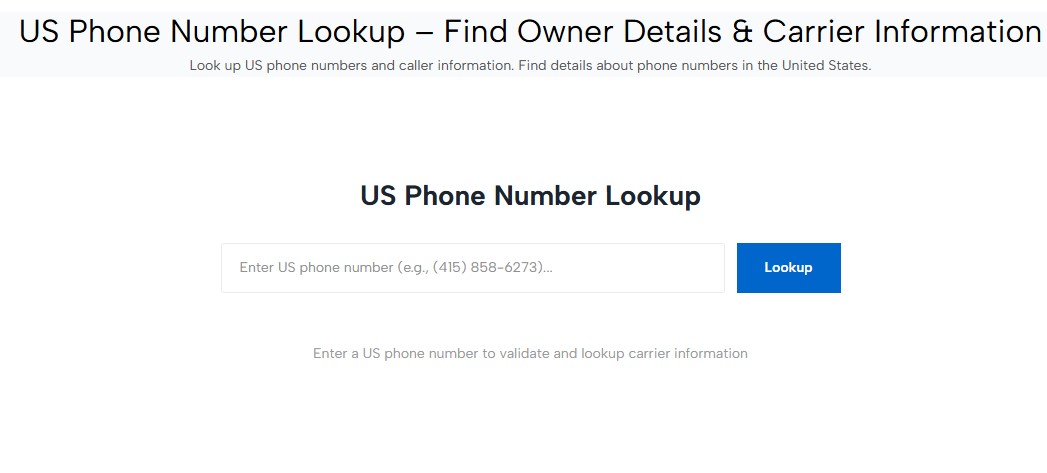
Getting a call from an unfamiliar number can be frustrating. Sometimes it is simply a new customer, a delivery service, or someone who has changed their phone number. In other cases, an unknown caller may be trying to sell something, collect information, or make a fraudulent offer.
This is where a US phone number lookup can be useful. Instead of guessing who is behind an unfamiliar number, users can search available information associated with a phone number and make a more informed decision about whether to return the call.
What Is a US Phone Number Lookup?
A US phone number lookup is a search process that helps users learn more about an American phone number. Depending on the available data, a lookup may provide information such as the phone number’s location, area code, carrier, phone type, or other publicly available details.
It is important to understand that lookup results can vary. Mobile numbers, landlines, VoIP numbers, and business numbers may have different levels of publicly available information.
For example, someone who receives a call from an unfamiliar number with a particular US area code can use a lookup tool to determine whether the number is associated with a particular geographic region. That information can provide useful context before responding.
Why Do People Use Phone Number Lookup Tools?
Unknown calls are common, especially as businesses and individuals increasingly communicate through mobile devices. A phone number lookup tool can help users investigate numbers without immediately calling them back.
1. Identifying Unknown Callers
One of the most common reasons people search a phone number is simply to find out who might be calling.
If a number repeatedly appears on your phone but you do not recognize it, a lookup can provide additional information that may help determine whether the call appears legitimate.
2. Checking Business Numbers
Businesses often receive calls from customers, suppliers, sales representatives, and service providers. A lookup can help provide additional context about an unfamiliar business number.
This can be especially useful when a company receives multiple calls from numbers it does not recognize.
3. Understanding Area Codes
US phone numbers are generally associated with three-digit area codes. Although mobile users can keep their numbers when moving to another location, area codes can still provide useful geographic information.
For instance, someone researching an unfamiliar number may want to know which state or region the area code originally represented.
4. Screening Suspicious Calls
Not every unknown call is dangerous, but unexpected calls should be approached carefully. Searching a number can be one step in deciding whether a call deserves a response.
A lookup should not be treated as definitive proof that a caller is trustworthy or fraudulent. Instead, it can be used as part of a broader verification process.
check related: Business Potential with Advisory Services
How Does a US Phone Number Lookup Work?
The process is usually straightforward.
First, the user enters a US phone number into a lookup service. The system then checks its available databases or public information sources and attempts to return relevant details.
Depending on the service and the number being searched, the results may include:
- Area code and geographic information
- Phone type
- Carrier information
- Business-related information
- Possible public records
- Other available details associated with the number
The amount of information available can differ significantly from one number to another. Privacy settings, number portability, unlisted numbers, and VoIP services can all affect the results.
What Information Can You Learn From a Phone Number?
A phone number does not automatically reveal every detail about its owner. However, certain information may be available depending on the number and the lookup service.
Area Code
The area code can provide an initial indication of where a number was originally assigned.
Carrier
Some lookup services can identify the telecommunications carrier associated with a number. This may help determine whether it is a mobile, landline, or VoIP number.
Phone Type
Knowing whether a number is mobile, landline, or VoIP can provide additional context when evaluating an unfamiliar call.
Business Information
Business numbers may sometimes be connected with publicly listed company information. This can help users distinguish legitimate business communication from unexpected marketing calls.
US Phone Number Lookup vs. Reverse Phone Lookup
The terms US phone number lookup and reverse phone lookup are often used interchangeably, but they can describe slightly different search approaches.
A phone number lookup generally focuses on finding information associated with a particular number. Reverse phone lookup specifically refers to starting with a phone number and attempting to identify the person, business, or other information connected with it.
Both approaches have the same basic purpose: helping users understand an unfamiliar phone number.
How to Use a Phone Lookup Responsibly
Phone lookup tools can be useful, but responsible use is important. Information obtained through a lookup should not automatically be treated as verified personal information.
Users should avoid using lookup results to harass, threaten, impersonate, or invade another person’s privacy.
It is also wise to verify important information through independent sources. For example, if someone claims to represent a bank or government agency, do not rely solely on information associated with their phone number. Instead, find the organization’s official contact information and contact it directly.
Tips for Dealing With Unknown US Numbers
A lookup is only one part of handling an unfamiliar call. Consider these additional precautions:
Don’t share sensitive information immediately. Avoid providing passwords, verification codes, banking details, or other confidential information to an unexpected caller.
Verify unexpected claims. If a caller says they represent a company, independently find that company’s official contact information.
Be cautious with urgent requests. Scammers often use urgency to pressure people into making quick decisions.
Check repeated calls. If the same unfamiliar number repeatedly contacts you, researching it may help you determine whether it is a legitimate business or unwanted caller.
Block unwanted numbers. If a number is clearly unwanted, your phone’s blocking features can prevent future calls.
Are Phone Lookup Results Always Accurate?
No. Phone number lookup results should be viewed as informational rather than guaranteed identification.
People change carriers, move between states, use VoIP services, and transfer numbers between providers. Businesses can also change phone systems without changing their public contact information immediately.
For these reasons, a lookup result may not always represent the current user of a number.
This is particularly important when making decisions involving financial transactions, employment, legal matters, or personal safety. In such situations, additional verification should always be performed.
When Is a US Phone Number Lookup Most Useful?
There are many everyday situations where searching an unfamiliar number can save time.
A freelancer might receive an unexpected call from a potential client. A small business could receive a call from an unknown supplier. A consumer might want to investigate a number that has called several times without leaving a message.
In each situation, a quick lookup can provide useful background information before deciding what to do next.
Final Thoughts
Unknown phone calls are now a normal part of everyday communication, but that does not mean every unfamiliar number should be ignored—or trusted immediately. A US phone number lookup can provide useful context about an unfamiliar number and help users make more informed decisions.
The best approach is to combine lookup information with common-sense verification. Never assume that a phone number alone proves someone’s identity, and avoid sharing sensitive information with unexpected callers.
Used responsibly, phone lookup tools can be a practical way to understand unfamiliar US numbers while maintaining a cautious and informed approach to phone communication.

How Australian Online Stores Can Get More From Product Advertising

How Boston Businesses Can Build a Stronger Digital Presence

Nose Job Surgery Explained: Procedure, Recovery and Results

What Are the Australia Student Visa Requirements in 2026?

US Phone Number Lookup: A Practical Guide to Identifying Unknown Calls

The Cortado: A Perfect Blend of Espresso and Milk

A New Culinary Haven Emerges: The News Café

A Step-by-Step Guide to Cleaning Your Nike Air Max Shoes

Are Nut Thins Healthy? Unveiling the Nutritional Pros and Cons