Technology
How to Hire a Dedicated Development Team


Finding skilled software developers has become increasingly challenging as businesses compete for top talent while trying to keep development costs under control. Whether you’re a startup building an MVP or an enterprise expanding your engineering capacity, hiring and retaining an in-house team isn’t always the most practical solution.
A dedicated development team offers an effective alternative. Instead of recruiting individual developers, you work with a specialized software development partner that provides a team of professionals focused exclusively on your project. This model combines flexibility, scalability, and access to global expertise, making it a popular choice for companies developing web, mobile, cloud, and enterprise applications.
In this guide, you’ll learn how a dedicated development team works, its advantages, potential challenges, cost considerations, and how to select the right partner for your business.
What Is a Dedicated Development Team?
A dedicated development team is a group of software professionals assigned exclusively to your project for a specific period. Unlike freelancers or project-based outsourcing, these experts work as an extension of your internal team, following your goals, processes, and priorities.
A typical dedicated team may include:
- Software Developers
- UI/UX Designers
- QA Engineers
- DevOps Engineers
- Business Analysts
- Project Managers
- Scrum Masters
- Solution Architects
The team collaborates closely with your stakeholders through regular meetings, sprint planning, code reviews, and progress updates to ensure the project stays aligned with your business objectives.
How Does a Dedicated Development Team Work?
The dedicated team model is designed for long-term collaboration rather than one-time project delivery.
The process generally follows these steps:
- Requirement Discovery
The development partner understands your business goals, technical requirements, expected timeline, and team size.
- Team Formation
Based on your project, specialists with relevant technical expertise are selected. You can also participate in interviews to ensure the team matches your expectations.
- Project Onboarding
The team gains access to documentation, repositories, communication channels, and development tools. Workflows and sprint schedules are established.
- Agile Development
Most dedicated teams follow Agile or Scrum methodologies with sprint planning, daily stand-ups, sprint reviews, and retrospectives.
- Continuous Scaling
As your product grows, developers, QA engineers, designers, or DevOps specialists can be added without restarting the hiring process.
When Should You Hire a Dedicated Development Team?
A dedicated development team is particularly valuable in the following situations:
Long-Term Software Development
If your project will continue evolving for months or years, maintaining a consistent team improves productivity and product knowledge.
Startup Product Development
Startups often need experienced developers without investing months in recruitment. A dedicated team enables faster product launches.
Limited Internal Resources
Businesses with small engineering departments can quickly expand development capacity without hiring permanent employees.
Digital Transformation Projects
Organizations modernizing legacy systems or building new digital platforms benefit from specialized expertise that may not exist internally.
Rapid Business Growth
When development needs change frequently, a dedicated team offers the flexibility to scale resources as required.
Benefits of Hiring a Dedicated Development Team
Access to Global Talent
Instead of limiting recruitment to your local market, you gain access to experienced professionals from around the world with expertise in modern technologies and frameworks.
Faster Hiring
Recruiting developers can take weeks or even months. A dedicated development partner can assemble a qualified team much faster, helping projects begin sooner.
Cost Efficiency
Hiring full-time employees involves salaries, benefits, office space, equipment, training, and recruitment expenses. A dedicated team eliminates many of these overhead costs while providing predictable monthly billing.
Scalability
As project requirements evolve, you can increase or reduce the team size without going through lengthy hiring or termination processes.
Better Focus
Unlike freelancers working on multiple projects simultaneously, dedicated developers focus entirely on your product, resulting in improved productivity and stronger collaboration.
Access to Specialized Skills
Need expertise in AI, cloud computing, cybersecurity, DevOps, or mobile development? Dedicated teams make it easier to access specialists without long-term hiring commitments.
Improved Product Quality
Established software development companies follow coding standards, automated testing, peer reviews, and quality assurance practices that contribute to more reliable software.
Challenges of the Dedicated Team Model
While the model offers many benefits, it’s important to understand potential challenges.
Communication Across Time Zones
Working with an offshore team may require overlapping working hours and well-defined communication processes.
Knowledge Transfer
Clear documentation and onboarding are essential to ensure developers understand business requirements and project goals.
Vendor Selection
Not all development partners provide the same level of expertise. Reviewing portfolios, technical capabilities, and client references is critical.
Project Management
Without proper planning and stakeholder involvement, even highly skilled teams can experience delays or changing priorities.
Fortunately, these challenges can be minimized through transparent communication, Agile practices, and choosing an experienced technology partner.
Dedicated Development Team vs Other Engagement Models
| Feature | Dedicated Team | Fixed Price | Staff Augmentation |
| Best For | Long-term projects | Small defined projects | Temporary skill gaps |
| Flexibility | High | Low | Medium |
| Team Control | High | Limited | High |
| Scope Changes | Easy | Difficult | Moderate |
| Scalability | Excellent | Limited | Good |
| Cost Predictability | High | High | Medium |
A dedicated team is generally the best choice for businesses developing products that require continuous improvement, feature expansion, and ongoing maintenance.
How Much Does a Dedicated Development Team Cost?
The cost depends on several factors rather than a fixed price.
These include:
- Team size
- Developer experience
- Technology stack
- Project complexity
- Engagement duration
- Location of the development team
For example, hiring senior engineers with expertise in AI or cloud architecture typically costs more than general web development.
Businesses should focus on overall value instead of hourly rates alone. An experienced team often delivers better software, reduces technical debt, and shortens development timelines, leading to lower total project costs.
When requesting proposals, ask vendors for a transparent breakdown of services, team composition, communication processes, and ongoing support.
How to Choose the Right Dedicated Development Partner
Selecting the right software development partner significantly impacts project success.
Consider the following factors:
Technical Expertise
Review the company’s experience with technologies relevant to your project, including programming languages, frameworks, cloud platforms, and development methodologies.
Industry Experience
A partner familiar with your industry understands common challenges, compliance requirements, and user expectations.
Portfolio and Case Studies
Examine previous projects to evaluate technical quality, design standards, scalability, and business outcomes.
Client Reviews
Independent reviews and testimonials provide valuable insight into communication, reliability, and project delivery.
Development Process
Look for partners using Agile methodologies, regular reporting, sprint planning, and transparent communication.
Security Standards
Ensure the company follows secure coding practices, signs NDAs, protects intellectual property, and complies with relevant data protection regulations.
Scalability
Your technology partner should be able to increase or decrease team size as business requirements change.
How to Collaborate Effectively with a Dedicated Development Team
To maximize project success:
- Define clear business goals.
- Assign a product owner or project stakeholder.
- Schedule regular sprint reviews.
- Use project management tools for transparency.
- Maintain clear documentation.
- Encourage continuous feedback.
- Measure performance using KPIs.
- Build long-term collaboration instead of treating the team as an external vendor.
Strong communication and shared objectives create a productive working relationship that benefits both parties.
Frequently Asked Questions
Is a dedicated development team suitable for startups?
Yes. Startups benefit from faster hiring, reduced recruitment costs, and access to experienced developers without building a large in-house engineering department.
How is a dedicated team different from outsourcing?
Traditional outsourcing focuses on delivering a predefined project, while a dedicated team works as an extension of your business with ongoing collaboration and greater control over priorities.
Can I scale the team later?
Yes. One of the biggest advantages of this model is the ability to add or reduce developers, designers, QA engineers, or DevOps specialists as project requirements change.
Who owns the source code?
Ownership should be clearly defined in the contract. Reputable software development companies transfer intellectual property and source code ownership to the client upon project completion or according to the agreement.
Which industries use dedicated development teams?
Dedicated teams are widely used in SaaS, healthcare, fintech, eCommerce, education, logistics, manufacturing, travel, and enterprise software development.
Conclusion
A dedicated development team is an excellent choice for organizations seeking long-term software development expertise without the complexity of building and managing a large in-house team. It offers access to skilled professionals, flexible scaling, predictable costs, and faster product delivery while allowing businesses to maintain greater control over development priorities.
Whether you’re launching a new digital product, modernizing existing software, or expanding engineering capacity, choosing the right development partner can significantly improve project outcomes. Evaluate technical expertise, communication practices, industry experience, and scalability before making your decision.
By treating your dedicated team as a true extension of your organization, you can build high-quality software, accelerate innovation, and achieve sustainable business growth.



Introduction
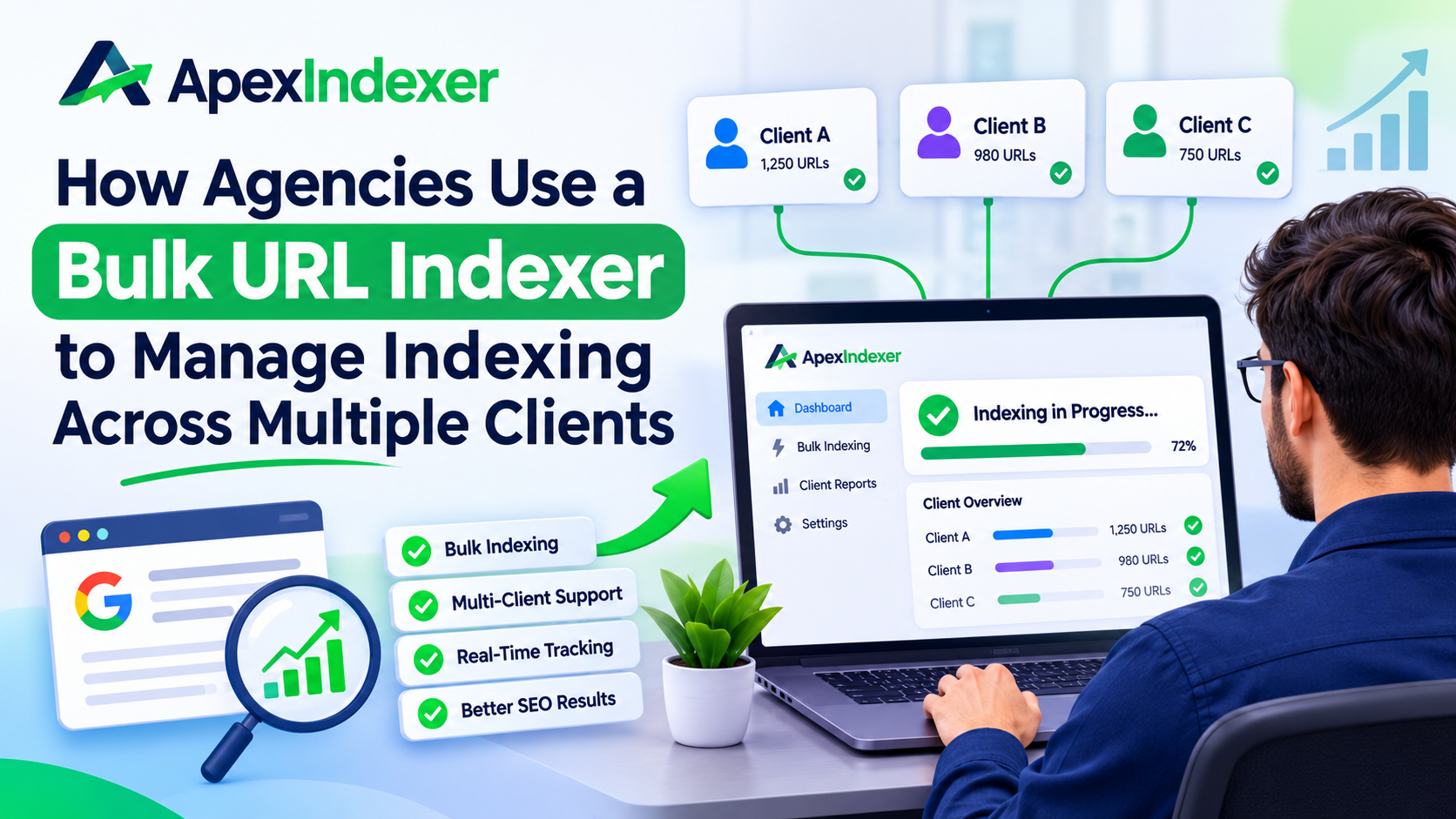
Managing SEO for one website is already challenging. Managing dozens or even hundreds of client websites is an entirely different game. Every day, agencies publish new blog posts, update service pages, fix technical SEO issues, and launch landing pages that need to be discovered by search engines quickly.
This is where a bulk URL indexer becomes an essential tool. Instead of manually submitting URLs one by one, agencies can automate the indexing process, monitor results, and ensure their clients’ important pages are discovered faster.
In this guide, we’ll explain how agencies use a bulk URL indexer, why it’s important, and the best practices for managing indexing across multiple clients.
What Is a Bulk URL Indexer?
A bulk URL indexer is an SEO tool designed to submit multiple URLs to search engines for crawling and indexing simultaneously. Instead of handling each page individually, users can upload hundreds or even thousands of URLs in one batch.
For agencies managing multiple websites, this saves hours of manual work while making indexing management more organized and scalable.
A quality bulk URL indexer often includes:
- Batch URL submission
- Automatic scheduling
- Indexing reports
- Crawl status monitoring
- API integrations
- CSV upload support
- Team management features
These capabilities allow agencies to streamline their SEO workflow without sacrificing efficiency.
Why Agencies Need a Bulk URL Indexer
SEO agencies constantly create new pages for different clients.
Examples include:
- Blog posts
- Service pages
- Product pages
- Location pages
- Press releases
- Landing pages
Submitting each page manually becomes impossible as the number of clients grows.
Using a bulk URL indexer allows agencies to:
- Save significant time
- Reduce repetitive manual tasks
- Manage multiple websites from one dashboard
- Speed up search engine discovery
- Improve workflow consistency
- Track indexing progress more efficiently
This makes large-scale SEO campaigns much easier to manage.
Common Agency Challenges With Indexing
Many agencies struggle with indexing because search engines don’t automatically crawl every new page immediately.
Some common issues include:
Large Volume of URLs
An agency may publish hundreds of pages every week. Manual submissions simply don’t scale.
Multiple Client Campaigns
Every client has different publishing schedules, priorities, and SEO goals.
Time Constraints
SEO specialists already spend time on:
- Content optimization
- Technical audits
- Link building
- Reporting
- Keyword research
Adding manual indexing slows productivity.
Tracking Index Status
Without proper tools, agencies often don’t know:
- Which pages are indexed
- Which pages failed
- Which pages need resubmission
A bulk URL indexer helps solve these challenges with centralized management.
How Agencies Use a Bulk URL Indexer in Their Workflow
Most agencies integrate a bulk URL indexer directly into their SEO process.
1. Collect New URLs
Whenever content is published, URLs are automatically added to a spreadsheet, CMS, or project management tool.
Examples include:
- New blog articles
- Updated service pages
- Product listings
- Seasonal landing pages
2. Upload URLs in Bulk
Instead of submitting pages individually, agencies upload large batches into the bulk URL indexer.
Many tools support:
- CSV files
- XML sitemaps
- API integrations
- Direct URL lists
This reduces manual work significantly.
3. Prioritize Important Page
Not every page has equal importance.
Agencies often prioritize:
- Money pages
- High-converting landing pages
- New service pages
- Product launches
- Local SEO pages
Submitting these pages first improves visibility where it matters most.
4. Monitor Indexing Results
After submission, agencies monitor reports showing:
- Successfully indexed pages
- Pending pages
- Failed submissions
- Crawl status
This allows SEO teams to identify problems quickly.
5. Resubmit When Necessary
Sometimes pages aren’t indexed immediately.
Instead of waiting weeks, agencies use the bulk URL indexer to resubmit important pages after making improvements.
Benefits of Using a Bulk URL Indexer for Multiple Clients
A professional bulk URL indexer offers numerous advantages for SEO agencies.
Saves Time
Batch processing hundreds of URLs eliminates repetitive manual submissions.
Teams can focus on strategy instead of administrative work.
Better Workflow Organization
Everything stays centralized.
Instead of switching between dozens of client accounts, agencies manage indexing from one dashboard.
Faster Discovery
Submitting URLs promptly helps search engines discover new content sooner.
While submission doesn’t guarantee indexing, it can improve crawl efficiency.
Improved Reporting
Most agencies need monthly SEO reports.
A bulk URL indexer provides indexing data that can easily be included in client reports.
Higher Productivity
Automation allows SEO specialists to spend more time on:
- Content creation
- Technical optimization
- Link acquisition
- Client communication
Features Agencies Should Look For
Not every indexing tool is built for agencies.
When choosing a bulk URL indexer, consider the following features.
Bulk Submission
The ability to upload hundreds or thousands of URLs at once is essential.
Multiple Project Management
Separate dashboards for different clients keep campaigns organized.
API Access
Agencies handling enterprise clients often automate submissions through APIs.
Scheduled Indexing
Automatic submissions reduce manual intervention.
Progress Tracking
Clear reports help identify indexed, pending, and failed URLs.
Team Collaboration
Multi-user access improves workflow for larger SEO teams.
Best Practices for Managing Client Indexing
Simply using a bulk URL indexer isn’t enough.
Agencies should also follow proven SEO practices.
Publish High-Quality Content
Search engines prioritize valuable, original, and helpful content.
Poor-quality pages may still struggle to get indexed.
Maintain Strong Internal Linking
Pages connected through internal links are easier for crawlers to discover.
Keep XML Sitemaps Updated
Fresh sitemaps help search engines understand website structure.
Avoid Duplicate Content
Duplicate pages reduce indexing efficiency and may confuse search engines.
Monitor Crawl Errors
Regular technical audits ensure pages remain accessible.
Optimize Page Speed
Faster websites improve crawling efficiency and user experience.
Mistakes Agencies Should Avoid
Even experienced SEO teams sometimes make indexing mistakes.
Avoid these common issues.
Submitting Low-Quality Pages
Indexing thin or duplicate content wastes crawl budget.
Ignoring Technical Problems
Broken links, server errors, and blocked pages prevent successful indexing.
Overlooking Client Priorities
Focus first on pages that generate traffic, leads, or revenue.
Failing to Monitor Results
Submission alone isn’t enough.
Always verify whether pages actually appear in search results.
Not Updating Existing Pages
Major content updates also deserve indexing attention, not just newly published pages.
How a Bulk URL Indexer Supports SEO Growth
As agencies grow, manual SEO processes become bottlenecks.
A bulk URL indexer helps agencies scale by creating consistent workflows across dozens or hundreds of client websites.
Benefits include:
- Easier campaign management
- Better resource allocation
- Faster indexing management
- Improved reporting
- More efficient SEO operations
- Reduced manual workload
This operational efficiency allows agencies to take on more clients without dramatically increasing administrative effort.
Frequently Asked Questions
Does a bulk URL indexer guarantee indexing?
No. A bulk URL indexer helps submit URLs for crawling, but search engines ultimately decide whether a page will be indexed based on quality, relevance, and technical factors.
How many URLs can agencies submit at once?
The number depends on the tool being used. Many agency-focused platforms support hundreds or even thousands of URLs in a single batch.
Should agencies resubmit URLs regularly?
Only when necessary. Pages that have been significantly updated or were previously not indexed may benefit from resubmission after improvements.
Can a bulk URL indexer help with large websites?
Yes. Websites with thousands of pages benefit the most because manual submission becomes impractical at scale.
Is a bulk URL indexer suitable for local SEO campaigns?
Absolutely. Agencies managing multiple local businesses often use a bulk URL indexer to submit new location pages, service pages, and local content more efficiently.
Conclusion
Managing indexing across multiple client websites requires organization, automation, and consistency. A bulk URL indexer enables agencies to submit large batches of URLs, monitor indexing progress, prioritize important pages, and streamline SEO workflows without spending countless hours on manual tasks.
While no indexing tool can guarantee that every page will appear in search results, combining a bulk URL indexer with high-quality content, solid technical SEO, and effective internal linking creates a far more efficient indexing strategy. For growing agencies, this approach saves time, improves reporting, and supports scalable SEO operations that can handle an expanding client portfolio with confidence.


Customer relationship management software often includes multiple features for managing contacts, tracking sales opportunities, monitoring customer interactions, and generating reports. However, when users struggle to find these features, even a powerful CRM platform can become frustrating. Investing in professional crm ui ux design helps businesses create organized navigation systems that make information easier to access and everyday tasks simpler to complete.
CRM navigation design determines how users move between different sections of an application. A well-planned structure reduces confusion, supports productivity, and helps employees complete their responsibilities with fewer unnecessary steps.
Here are nine ways better CRM navigation design can improve the overall user experience.
1. Organizes Features Into Logical Categories
A CRM platform may contain dozens of features, including contact management, lead tracking, sales pipelines, customer support, reporting, and administrative settings.
Placing these features randomly in a menu makes the interface difficult to understand. Users may spend unnecessary time searching for tools they need regularly.
A logical navigation structure groups related features into meaningful categories.
For example:
- Contacts: Customer profiles and communication history.
- Sales: Leads, opportunities, and sales pipelines.
- Tasks: Follow-ups, reminders, and scheduled activities.
- Reports: Performance metrics and business analytics.
- Settings: User permissions and account preferences.
This organization creates a predictable structure and helps employees locate important functions more quickly.
2. Reduces the Number of Steps Needed to Complete Tasks
Employees frequently perform repetitive activities in CRM software. They may need to update customer records, assign leads, schedule meetings, or review sales information throughout the day.
If completing these tasks requires navigating through several unrelated screens, productivity can suffer.
Good navigation design reduces unnecessary steps by placing frequently used actions in accessible locations.
For instance, users could access customer details directly from a contact list instead of opening several menus to locate the relevant record.
Designers can also introduce shortcuts, quick-action menus, and contextual navigation where appropriate.
The goal is to make common workflows straightforward without overcrowding the interface.
3. Makes Important Features Easier to Discover
Some CRM applications contain useful features that employees rarely use because they do not know where to find them.
A clear navigation system improves feature discoverability by presenting available options in an understandable way.
Use descriptive menu labels instead of vague terms that require users to guess their meaning. Keep related tools together and provide visual indicators where they help users understand available actions.
For example, a reporting section should clearly communicate that it contains sales performance data, customer activity summaries, and other analytical resources.
Better discoverability helps employees understand the platform’s capabilities and use its features more effectively.
4. Creates a Consistent Experience Across Different Screens
Inconsistent navigation can make CRM software difficult to learn. If menus, buttons, and page layouts change unexpectedly between sections, users may struggle to understand how the application works.
Consistency helps employees develop familiarity with the interface.
Maintain predictable placement for primary navigation, account settings, search tools, and common actions. Use consistent labels and visual styles across different sections.
A reusable design system can support this process by defining standard navigation components and interaction patterns.
When the interface behaves consistently, employees spend less time learning how each screen works and more time completing their tasks.
5. Improves Access to Customer Information
Customer information is one of the most important parts of a CRM platform. Employees need to locate contact details, previous conversations, purchase history, and ongoing activities without unnecessary delays.
A well-organized navigation structure makes this information easier to access.
For example, a customer profile could provide clearly arranged sections for:
- Personal and business contact details
- Previous interactions
- Sales opportunities
- Support requests
- Assigned team members
- Upcoming follow-up activities
Search filters and related links can further improve information discovery.
This approach helps employees understand customer histories and access relevant details when communicating with clients.
6. Supports Role-Based Navigation
Different employees use CRM software for different purposes. A sales representative may focus on lead management, while a customer support agent needs quick access to service requests and communication histories.
Showing every available feature to every user can create unnecessary complexity.
Role-based navigation presents relevant tools according to an employee’s responsibilities and access permissions.
For example:
- Sales representatives can prioritize leads and opportunities.
- Managers can access team dashboards and performance reports.
- Support agents can focus on customer requests and service histories.
- Administrators can manage settings and user permissions.
This creates a more relevant interface for each user group while helping keep navigation organized.
7. Makes CRM Software Easier to Use on Mobile Devices
Many employees access business applications while traveling, attending meetings, or working away from their desks.
If CRM navigation is designed only for desktop screens, users may struggle to find features on smartphones and tablets.
Responsive navigation adapts the interface to different screen sizes without removing access to important functions.
Useful design approaches include:
- Collapsible navigation menus
- Touch-friendly buttons
- Simplified mobile layouts
- Clear icons supported by text labels
- Easily accessible search functions
- Consistent navigation patterns across devices
A professional UI UX designer considers these requirements when planning navigation rather than treating mobile usability as a separate afterthought.
8. Reduces User Errors and Navigation Confusion
Poor navigation can lead employees to open the wrong sections, select incorrect actions, or update unintended records.
Clear labels, logical grouping, and consistent interaction patterns help reduce these problems.
For example, placing destructive actions such as deleting a customer record away from common navigation controls can prevent accidental selections.
Designers should also use clear confirmation messages for important actions and provide visible indicators showing users where they are within the application.
Breadcrumb navigation can be useful in CRM platforms with multiple levels of pages because it helps users understand their current location and return to previous sections.
These details make navigation more predictable and reduce unnecessary mistakes.
9. Uses User Feedback to Improve Navigation Over Time
Navigation design should evolve as business requirements and user behavior change.
A structure that works well for a small team may become difficult to manage when a CRM platform introduces additional features or supports more departments.
Regular usability testing helps identify navigation problems before they affect a larger number of employees.
Businesses can evaluate:
- Which sections users visit most frequently
- Where employees struggle to find features
- Which navigation paths take too many steps
- What menu labels create confusion
- Which features are difficult to discover
Gather feedback from different user groups and use it to improve the interface.
Testing real workflows provides more useful insights than relying entirely on assumptions about how employees should use the software.
Best Practices for Designing Better CRM Navigation
Businesses planning a new CRM interface or redesign should focus on usability rather than adding unnecessary navigation options.
Consider these best practices:
- Keep the main navigation simple and organized.
- Use clear labels that communicate each section’s purpose.
- Prioritize frequently used features.
- Maintain consistent navigation across screens.
- Provide useful search and filtering options.
- Consider the needs of different user roles.
- Test navigation on desktop and mobile devices.
- Review user feedback and improve confusing areas.
The most effective navigation system is one that helps employees find what they need naturally, without requiring extensive training or repeated instructions.
Conclusion
CRM navigation design has a direct influence on how employees interact with business software. A well-organized structure makes important features easier to discover, reduces unnecessary steps, improves access to customer information, and creates a more consistent experience across devices. Businesses should treat navigation as an essential part of product usability rather than simply a collection of menus and links. Companies looking to improve their CRM interfaces and create more intuitive digital experiences can contact Soft-korner to discuss their UI/UX design requirements.
Frequently Asked Questions
1. What is CRM navigation design?
CRM navigation design refers to how menus, links, buttons, and interface sections are organized within customer relationship management software. Its purpose is to help users find information and access features efficiently.
2. Why is navigation important in CRM software?
Navigation helps employees move between different CRM features and complete daily tasks. Clear navigation reduces confusion, improves feature discoverability, and supports a more productive user experience.
3. What makes CRM navigation user-friendly?
User-friendly CRM navigation includes logical categories, descriptive labels, consistent layouts, accessible menus, and easy-to-find features. It should also accommodate different user roles and devices.
4. How does role-based navigation improve CRM usability?
Role-based navigation displays relevant features according to user responsibilities and permissions. This reduces unnecessary options and helps employees focus on the tools they need for their work.
5. How often should CRM navigation be reviewed?
Businesses should review navigation whenever new features are introduced, workflows change, or users report difficulties. Regular usability testing and feedback collection help maintain an effective navigation structure.


Pixel blades are popular for good reason. They’re visually impressive, dynamic, and turn a simple igniter into a mini show. However, they can be overwhelming when you’re starting out in this hobby. There is a lot of variation in price and specs across different products. Everyone says they have the best product. This article by BM Lightsabers will clear up any confusion and help you understand what they are and how to find the best Neopixel lightsaber for YOU!
What Are Neopixel Sabers and How Do They Work?
Traditional lightsabers have just a single color that lights from the base of the weapon. A Neopixel saber uses a strip of small LEDs inside the blade so each segment can be controlled individually. This allows for many effects.
You can achieve many effects by changing the colors in the saber blade. When turning it on the light can smoothly transition from the base to the tip. When retracting, it can transition back the other way. Effects can include flickering blades to simulate instability, bright flashes when two blades come together. Ripples when deflecting blasts and glowing marks when dragging the saber’s tip. Many designs let you change the colors via a setting or app.
Neopixel is a brand name for individually addressable LEDs. The term is widely used in the hobby to describe this type of blade.
What Makes the Best Neopixel Lightsaber?
There’s no single winner, because the best choice depends on how you’ll use it. But a few qualities separate a great pixel saber from a disappointing one.
Start with the blade, because it’s the star of the show. A well-made blade has a diffuser that blends the individual LEDs into a smooth, even glow. A poor one shows visible dots or uneven patches. Higher LED density generally means smoother animations, though it can affect battery use. Check how the strip is mounted, because a loose strip leads to flickering or dead spots.
Next comes the electronics. The board controls the effects, sounds and responses, so look for a reliable system with good swing sensitivity and a decent selection of sound fonts. A strong rechargeable battery with a convenient charging port makes everyday ownership easier. Finally, look at the build quality of the hilt, the fit of the parts and the clarity of the warranty.
Most important of all is knowing your purpose. A saber for display, cosplay or photography can prioritize looks and effects. A saber for sparring needs a sturdier build, and it’s wise to read the seller’s guidance on contact because pixel blades are more delicate than basic ones.
The best neopixel lightsaber for one person may be a plain display piece for another, so think about your needs first. Videos are your best friend, and BM Lightsabers suggests asking for them if a listing doesn’t include any. A short clip of a saber igniting, swinging and clashing reveals more than any photograph.
How to Find a Budget Neopixel Lightsaber Without Regret
Buying a budget neopixel lightsaber can be a great idea, but you should know where to save money and where not to. There are good reasons why prices can be cheaper. Some of these will not cause any issues, but others will.
You can usually save money on any extra cosmetic features (such as nice finish on the hilt, extra accessories or a big sound font library you don’t need). However it is not wise to save on the blade quality, battery, board quality or warranty. If your cheap saber breaks after a month it will cost you more than a fair priced one that will last years.
If you’re looking to buy a budget neopixel lightsaber try to compare at least 3 different options. Consider how much it will cost overall. Can you get an extra blade? How much will it cost? Is a charger included? A cheap price can be less appealing once you factor in the extra things you’ll need.
Avoid any deals that look too good to be true. If there are vague details, no proper videos and unclear returns this could be a warning sign. A seller who can answer your questions clearly is worth more than saving a few dollars.
Start with a basic saber. If its well made and has a good quality board then you’ll have a great experience. You can always upgrade later once you know what you want.
Neopixal Lightsaber or Neopixel? Sorting Out the Spelling
You’ll sometimes see people searching for a neopixal lightsaber. A neopixal lightsaber and a neopixel one are, in practice, the same product. The spelling varies, but they’re almost always looking for the same thing: a pixel-blade saber with individually controlled LEDs. When you’re shopping, look for descriptions that explain the blade and electronics clearly, rather than relying on a spelling or a brand name alone.
Setup and Everyday Care
Ensure the battery is fully charged before first use, and read the manual to learn how to operate the controls. Ensure all effects work correctly in a dark room. Neopixel sabers should be treated carefully, especially the blade area. Try to avoid knocking the saber.
Wipe the blade with a soft cloth, place into the case and keep away from any heat or moisture. If anything feels odd (e.g. flashing or strange noise) then please consult the manual and contact the seller before opening the hilt.
Final Thoughts
If you like animated, colorful, and/or musical blades, then these can all make for a great addition to your collection! Just take your time when watching the demo videos and find the right saber for you.
BM Lightsabers has a range of neopixel sabers available to try out. This is a great way to see all the different styles, features, and prices. Find what suits your style and enjoy the glowing blades for years!

How Agencies Use a Bulk URL Indexer to Manage Indexing Across Multiple Clients

Car Service Bergen County NJ for Airport Transfers and Business Travel

Professional Skin Care Services: Complete Care for Different Skin Needs

Is Your Manhattan Business Outgrowing Its Commercial Space?

The Role of Protective Relays in Modern Substations

Rani No Hajiro in Ahmedabad: A Complete Guide to History, Shopping & Hidden Secrets

How to Get Promoted Faster at Work: Smart Career Growth Tips

Dublin City University: Everything You Need to Know Before Applying in 2026

Digital Marketing for Beginners: Step-by-Step Guide to Start and Succeed in 2026