
Technology
Payroll Software in Delhi: How to Choose the Right Solution

Running a business involves more than managing customers, sales, and daily operations. Business owners also need to ensure that employees receive their salaries on time and that all payroll records are properly maintained. As a company grows, handling these responsibilities manually becomes increasingly difficult.
Delhi has a diverse business environment, with IT companies, retail businesses, manufacturing units, startups, and service providers operating across the city. Each organisation has different workforce requirements, but accurate salary processing remains important for all of them.
Traditional payroll methods often involve spreadsheets, paperwork, and repeated calculations. These methods may work for a small team, but they can create problems when employee numbers increase. This is one reason why companies are exploring Payroll software in Delhi to simplify their salary management activities.
The Changing Payroll Requirements of Modern Companies
Employee expectations have changed over the years. People want their salaries to be credited on time, payslips to be available without delays, and salary-related questions to be resolved quickly.
At the same time, businesses need to manage multiple salary components, including basic pay, allowances, bonuses, incentives, overtime, reimbursements, and deductions. Any change in an employee’s salary structure must also be reflected correctly in payroll records.
Managing all these details manually requires regular attention from HR and finance teams. A small mistake can result in incorrect salary calculations or additional work during payroll verification.
Digital payroll systems help businesses organise these activities and maintain employee salary information in one place. They also make it easier to review previous payroll records whenever required.
Major Payroll Problems That Businesses Want to Avoid
Many organisations experience similar difficulties while managing monthly payroll. Understanding these problems can help companies decide when it is time to move towards automation.
1. Repeated manual calculations
HR professionals often spend considerable time calculating salaries, deductions, overtime, and other components. Repeating these calculations every month increases the possibility of human error.
2. Attendance-related confusion
Employee attendance directly affects salary calculations in many organisations. Late arrivals, unpaid leaves, overtime, and shift changes need to be considered before payroll is finalised. Collecting this information manually can delay the process.
3. Managing statutory deductions
Businesses must maintain applicable payroll-related compliance requirements, including PF, ESI, and TDS. Keeping track of calculations, records, and relevant deadlines requires proper documentation and regular attention.
4. Delayed payslip preparation
Employees sometimes need payslips for loan applications, financial records, or personal documentation. Preparing these documents individually can create unnecessary work for HR departments.
5. Difficulty maintaining records
As employee numbers increase, maintaining salary histories, deduction details, and payroll reports becomes more complicated. A centralised system makes this information easier to organise and access.
How Payroll Automation Helps Businesses Save Time
Payroll automation can make monthly salary processing more organised by reducing repetitive manual activities. Once employee information and salary structures are configured, the software can use available data to perform calculations.
For example, when attendance and leave information are connected with payroll, HR teams can review the relevant details without collecting everything from separate spreadsheets. This helps reduce duplicate work and makes the payroll process easier to manage.
Another advantage is automatic payslip generation. Instead of preparing salary statements individually, businesses can generate digital payslips through the system. Employees can access their salary information whenever they need it, depending on the software’s available features.
Companies searching for payroll software in Delhi should consider solutions that support the complete salary processing cycle rather than focusing only on basic salary calculations.
Features That Make Payroll Management More Efficient
Selecting payroll software requires understanding what a business actually needs. A company should not choose a platform simply because it offers a long list of features. The important thing is whether those features solve existing payroll problems.
Some useful features include:
- Salary calculation: Calculates employee salaries using configured earnings, deductions, and salary structures.
- Attendance integration: Connects working hours, attendance, and approved leave information with payroll.
- Tax and deduction management: Helps manage applicable TDS, PF, ESI, and other payroll-related deductions.
- Digital payslips: Generates salary statements that employees can access online.
- Payroll reports: Helps HR and finance teams review salary expenses and deduction records.
- Employee information management: Keeps employee salary details and related records organised.
- Reimbursement management: Helps track eligible employee expense claims and reimbursements.
- Data security: Provides access controls to protect confidential employee information.
These features can help organisations reduce administrative pressure while maintaining better control over payroll activities.
Why Integrated HRMS and Payroll Software Is Useful
Managing payroll separately from other HR activities can create unnecessary complications. Employee information, attendance records, leave approvals, and salary changes are closely connected.
For instance, when an employee receives a salary revision, the updated details need to be reflected in payroll. Similarly, approved leave and overtime information may affect monthly salary calculations.
An integrated HRMS connects different employee management activities through a common platform. This reduces the need to maintain multiple records and makes information sharing between HR and finance teams easier.
For growing organisations, payroll software in Delhi that works alongside attendance and other HR functions can offer better control over everyday workforce operations.
How Superworks Supports Business Payroll Management
Superworks offers an all-in-one business management platform with HRMS and payroll capabilities to help organisations manage their workforce activities.
Its payroll solution helps businesses manage salary calculations, deductions, payslips, reimbursements, and payroll records. It also supports connections with important HR activities such as attendance and leave management.
This can be useful for companies that want to reduce their dependence on manual spreadsheets and manage employee information through a centralised system.
Superworks also provides other HRMS modules that support activities such as recruitment, performance management, employee records, and workforce management. Businesses can explore the available solutions according to their operational requirements.
Companies evaluating payroll software in Delhi can consider Superworks as an option and compare its features, pricing, and support with their existing payroll requirements.
What Should Businesses Check Before Selecting Payroll Software?
Choosing the right payroll platform requires more than comparing prices. Businesses should first understand their workforce size, salary structures, compliance requirements, and existing HR processes.
It is also important to check whether the software is easy for HR professionals to use. Complicated systems can create additional training requirements and slow down implementation.
Companies should review the following points before making a decision:
- Does the platform support the company’s salary structure?
- Can it connect with attendance and leave management?
- Does it provide the required payroll reports?
- Are employee records protected through suitable security controls?
- Can the system support future employee growth?
- Is customer support available when payroll-related issues arise?
Taking time to compare these factors can help businesses avoid selecting a platform that does not meet their actual requirements.
Conclusion
Payroll management plays an important role in maintaining employee satisfaction and keeping business operations organised. As companies expand, handling salary calculations, attendance records, deductions, and payslips manually can consume valuable time.
Adopting suitable payroll software in Delhi can help organisations simplify these activities, improve record management, and reduce repetitive administrative work. With proper implementation and regular monitoring, businesses can build a more reliable payroll process.
Whether it is a growing startup or an established organisation, investing in the right payroll technology can make everyday HR operations easier and allow teams to focus on more important business priorities.



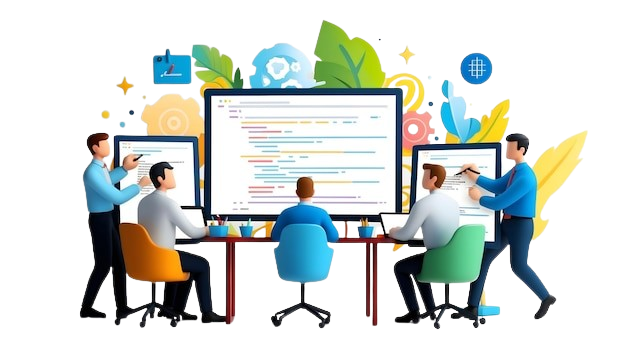
In the current digital environment businesses require Web applications which deliver both strength and scalability and user-friendly interfaces. The full stack development company provides essential development services for this requirement. Full stack development delivers complete system operation through its front-end design and back-end system development.
The process of selecting a suitable service provider becomes challenging when multiple options exist. Let’s explore everything you need to know.
What is a Full Stack Development Company?
A full-stack development company provides complete software development services which include creating both the client-side and server-side components of software products. The companies develop products which range from basic websites to complex enterprise-grade applications.
The developers usually use these technologies for their work:
- Front-end: ReactJS, Angular, Vue.js
- Back-end: NodeJS, Python, PHP
- Database: MySQL, MongoDB
- DevOps & Cloud: AWS, Azure
The full stack companies provide complete solutions which remove the requirement for multiple teams to work on projects. This approach leads to faster project completion times while improving team collaboration.
Why Businesses Prefer Full Stack Development Services
- End-to-End Development
Full stack developers handle every stage of a project which includes planning design development testing and deployment.
- Faster Time to Market
The single team which handles all system components allows for better communication which leads to quicker project completion.
- Cost-Effective Solutions
The expenses of hiring a full stack development company prove to be more economical compared to operating two distinct teams for front-end and back-end development.
- Scalable Applications
These companies create systems which can expand according to your business requirements.
Key Services Offered by a Full Stack Development Company
A professional full stack development company typically offers:
✔ Custom Web Application Development
The company develops base solutions which they modify to meet their clients’ distinct business needs.
✔ Front-End Development
The team creates user interfaces which work on all devices by using current frameworks such as ReactJS.
✔ Back-End Development
The system developers construct strong server-side systems which include application programming interfaces to enable full operational performance.
✔ UI/UX Design
The designers create user interfaces which provide users with a smooth and interactive experience.
✔ API Integration
Full Stack Development Company: Why “End-to-End” Isn’t Enough Anymore
The common expectation for full stack development companies arises from businesses which seek them. The clients want all services which include front-end work and back-end work to be managed by the company. The reality shows that complete development services now serve as the fundamental requirement for business operations.
The current worth of a full stack partner depends on their ability to understand business goals and their capacity to speed up product development and their services which minimize technical decision-making exhaustion.
The process of selecting an appropriate development partner requires examination of essential factors which need evaluation.
The Shift: From Coding to Problem-Solving
The development companies of the past dedicated their efforts to code creation. The current full stack development services work to address business challenges through their solutions.
For example:
- The process of developing ReactJS interfaces requires more than interface development to achieve its goals.
- The process of developing an experience requires design work that turns visitors into customers.
- The system functions through APIs
- The system needs to develop scalable capabilities that maintain stability during expansion.
Top companies today combine:
UI/UX thinking + engineering + business logic.
What Top Full Stack Development Companies Do Differently
After analysing leading service providers, a clear pattern emerges.
- They Don’t Just Build — They Guide
The best teams don’t wait for instructions.
They help you:
- Choose the right tech stack
- Avoid over-engineering
- Focus on MVP-first execution
This reduces wasted time and budget.
- They Prioritize Speed Without Compromising Quality
Speed is no longer optional.
Modern workflows include:
- Agile development cycles
- Rapid prototyping
- Continuous testing & deployment
This means you can go from:
Idea → Working product in weeks, not months
- They Build for Scale from Day One
A good full stack development company doesn’t just build for today.
They ensure:
- Clean architecture
- Modular code
- Cloud-ready infrastructure
So, your product can grow without major rebuilds.
- They Combine Front-End Experience with Back-End Power
Great products don’t just work—they feel smooth.
That’s why top companies focus on:
- Fast-loading interfaces (ReactJS, Vue)
- Strong backend systems (NodeJS, APIs)
- Seamless integration between both
Core Services You Should Expect
A modern full stack development company should offer:
✔ Custom Web & App Development
Not templates—solutions built around your business model.
✔ UI/UX-Driven Development
Design that improves engagement, not just aesthetics.
✔ API & System Integration
Connecting tools, platforms, and services smoothly.
✔ Agile Development Process
Iterative development with continuous improvements.
✔ Industry-Specific Solutions
Tailored builds for sectors like healthcare, fintech, eCommerce, etc.
The Hidden Factor: Developer Quality vs Process
Here’s something most businesses overlook:
Tools and technologies don’t build great products—people do.
Top companies invest heavily in:
- Skilled full stack developers
- Strict talent screening
- Real-world project experience
This directly impacts:
- Code quality
- Project speed
- Long-term maintainability
Why Agile Methodology Is a Game-Changer
Both high-performing companies emphasize agile development, and for good reason.
Agile ensures:
- Faster feedback loops
- Better collaboration
- Continuous improvement
Instead of waiting months, you see progress every week.
Benefits of Hiring the Right Full Stack Development Company
Choosing the right partner gives you:
Faster Product Launch
Quick turnaround from concept to deployment
Cost Efficiency
One team instead of multiple vendors
Flexibility
Easy changes during development
Scalable Growth
Systems built to handle future expansion
Common Mistakes to Avoid
Many businesses make these mistakes:
Choosing based on price only
Ignoring communication and process
Overlooking scalability
Not validating technical expertise
Result: Delays, poor performance, and rebuild costs
How to Find the Best Full Stack Development Company
Before finalizing, ask:
- Do they understand your business goals?
- Can they suggest improvements (not just follow instructions)?
- Do they follow agile practices?
- Do they have proven experience across industries?
The right partner will challenge your ideas—not just execute them.
The Future of Full Stack Development
The role of a full stack development company is evolving rapidly.
Future trends include:
- AI-assisted development
- Faster no-code + full-code hybrid models
- More focus on performance and UX
- Increased demand for scalable SaaS products
The companies that adapt fastest will lead the market.
Conclusion:
A full stack development company has developed into a complete strategic partnership which extends beyond its previous role as a technical service provider.
The difference between a good and great company is simple:
One builds what you ask the other builds what your business actually needs.
The most important choice you will make for your organization is selecting a development partner which will drive your company towards faster growth and improved products and permanent success.

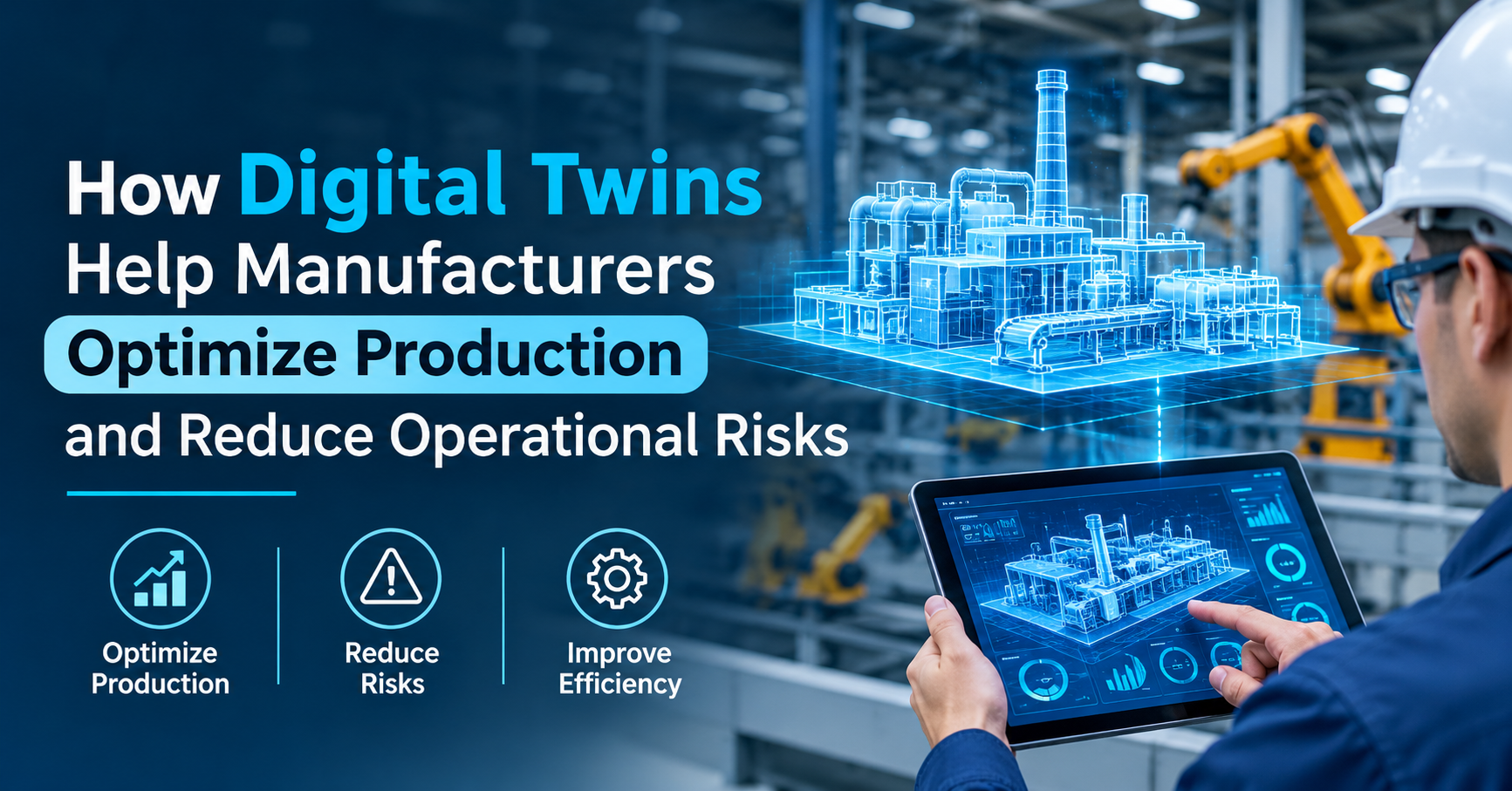
Manufacturing industries are increasingly adopting advanced technologies to improve production efficiency, reduce operational costs, and maintain consistent product quality. However, challenges such as production bottlenecks, unexpected equipment failures, inefficient process testing, and limited visibility into machine performance continue to affect manufacturing operations. Traditional monitoring and maintenance approaches often struggle to address these challenges because they rely on historical data and manual processes.
Digital twin technology is changing how manufacturers manage their production environments. By creating virtual representations of physical machines, production lines, and entire manufacturing facilities, digital twins allow businesses to monitor operations, simulate different scenarios, and make informed decisions using real-time data.
The growing adoption of digital twins in manufacturing is helping organizations move toward smarter, more connected, and data-driven production systems. From identifying process inefficiencies to predicting equipment failures, digital twins provide manufacturers with valuable insights that support operational optimization and risk reduction.
Let’s explore how digital twin technology is transforming manufacturing operations and helping businesses build more resilient production environments.
1. Understanding Digital Twins in Manufacturing
A digital twin is a virtual representation of a physical asset, process, or system that uses real-time and historical data to reflect the behavior and performance of its physical counterpart.
In manufacturing, digital twins can represent individual machines, production equipment, assembly lines, warehouse operations, or complete factory environments.
These virtual models are connected to physical assets through technologies such as:
- Internet of Things (IoT) sensors.
- Industrial automation systems.
- Cloud computing platforms.
- Artificial intelligence (AI) and machine learning.
- Data analytics and visualization tools.
Sensors installed on physical equipment collect information such as temperature, vibration, pressure, operating speed, and energy consumption. This data is transferred to the digital twin, allowing manufacturers to understand equipment conditions and production performance.
Unlike static simulations, connected digital twins can continuously reflect changes in physical operations, helping manufacturers make decisions based on current operational conditions.
2. Identifying Production Bottlenecks and Improving Workflow Efficiency
Production bottlenecks can significantly affect manufacturing productivity. When one machine or process operates slower than others, it can create delays throughout the production line, resulting in missed deadlines, increased operational expenses, and reduced output.
Digital twins help manufacturers identify these bottlenecks by providing a comprehensive view of production activities.
By analyzing real-time operational data, manufacturers can understand how machines interact, identify delays, and determine which production stages are limiting overall output.
For example, a digital twin of an automotive assembly line can reveal that a particular workstation requires more processing time than other stations. Managers can use this information to adjust workflows, redistribute workloads, or improve equipment utilization.
Key benefits include:
- Real-time production monitoring.
- Identification of underperforming processes.
- Improved resource allocation.
- Reduced production cycle times.
- Better coordination between manufacturing stages.
This data-driven approach helps businesses improve production efficiency without relying entirely on costly physical experiments.
3. Predictive Maintenance to Reduce Equipment Downtime
Unexpected equipment failures are among the biggest operational risks in manufacturing. A malfunctioning machine can interrupt production schedules, increase maintenance expenses, and affect product delivery timelines.
Traditional maintenance approaches often depend on fixed maintenance schedules or repairs after equipment failure. Both approaches can result in unnecessary costs or unexpected downtime.
Digital twins support predictive maintenance by continuously monitoring equipment conditions and analyzing performance data.
For instance, sensors can collect vibration and temperature readings from industrial motors. The digital twin analyzes these readings to identify unusual patterns that may indicate developing mechanical problems.
When combined with AI and machine learning, digital twin systems can help predict potential equipment issues and support timely maintenance planning.
Manufacturers can benefit from:
- Early identification of equipment abnormalities.
- Reduced unexpected machine breakdowns.
- Better maintenance scheduling.
- Extended equipment lifespan.
- Lower repair and maintenance costs.
Predictive maintenance helps manufacturers shift from reactive repairs to proactive equipment management, improving operational continuity.
4. Simulating Production Processes Before Implementation
Testing changes directly on a physical production line can be expensive and time-consuming. A new machine configuration, production sequence, or workflow adjustment may introduce unexpected problems if it has not been evaluated properly.
Digital twins provide manufacturers with a virtual environment where they can test different scenarios before implementing changes in real-world operations.
For example, manufacturers can simulate the introduction of new equipment, changes in production capacity, or modifications to assembly line configurations. They can evaluate how these changes might affect production speed, resource consumption, and equipment utilization.
This approach offers several advantages:
- Reduces the need for repeated physical testing.
- Minimizes production interruptions.
- Helps identify potential process limitations.
- Supports better investment decisions.
- Improves production planning and configuration.
By testing ideas in a virtual environment, manufacturers can make more informed decisions while reducing the risks associated with operational changes.
5. Improving Equipment Performance Through Real-Time Insights
Manufacturing equipment must operate efficiently to maintain productivity and product quality. However, limited visibility into machine performance can make it difficult to identify inefficiencies and optimize operating conditions.
Digital twins provide centralized access to equipment performance information through connected monitoring systems and analytical dashboards.
Manufacturers can track important operational parameters, including:
- Machine operating speed.
- Temperature and pressure levels.
- Energy consumption.
- Equipment utilization.
- Production output.
- Operating conditions and performance variations.
These insights help production managers understand how equipment performs under different operating conditions.
For example, if a machine consistently consumes more energy than expected, manufacturers can investigate possible causes such as excessive operating loads, inefficient configurations, or maintenance requirements.
With continuous monitoring and performance analysis, businesses can improve equipment utilization, reduce energy waste, and maintain more consistent production output.
6. Enhancing Product Quality and Reducing Manufacturing Defects
Maintaining consistent product quality is essential for manufacturers operating in competitive markets. Defective products can increase material waste, create rework requirements, and negatively affect customer satisfaction.
Digital twins help improve quality management by connecting production data with virtual process models.
Manufacturers can monitor process parameters and identify conditions that may contribute to product defects. For example, temperature variations, pressure inconsistencies, or incorrect machine settings may affect the quality of manufactured components.
By analyzing these variables, digital twin systems help businesses understand the relationship between production conditions and product quality.
When integrated with AI-powered analytics, digital twins can also help identify unusual patterns and potential quality issues before they become widespread.
This supports better process control, reduced material waste, and more consistent manufacturing outcomes.
7. Strengthening Operational Risk Management
Manufacturing environments involve several operational risks, including equipment failures, production interruptions, inefficient resource utilization, and unexpected changes in operating conditions.
Digital twins help organizations understand these risks by providing a virtual environment for analyzing different operational scenarios.
Manufacturers can evaluate how production systems may respond to equipment failures, increased workloads, supply interruptions, or changes in operating conditions.
This allows management teams to develop contingency plans and identify areas that require additional attention.
Digital twins also support better decision-making by providing data-driven insights instead of relying exclusively on assumptions or manual observations.
As a result, manufacturers can improve operational preparedness, minimize disruptions, and build more resilient production systems.
8. Supporting Industry 4.0 and Smart Manufacturing Initiatives
Digital twin technology is an important part of the Industry 4.0 ecosystem. It works alongside IoT, artificial intelligence, robotics, cloud computing, and industrial automation to create interconnected manufacturing environments.
However, successfully implementing these technologies requires a clear digital transformation strategy.
Manufacturers must evaluate their existing infrastructure, identify suitable applications, establish reliable data connections, and ensure that new systems can communicate with existing equipment.
Working with an experienced Industry 4.0 consulting company can help businesses plan and implement digital transformation initiatives more effectively.
Professional consulting support can assist manufacturers in identifying automation opportunities, integrating connected technologies, improving operational visibility, and developing scalable smart manufacturing solutions.
This structured approach helps organizations adopt digital twin technology while aligning investments with long-term business objectives.
Conclusion
Digital twin technology is transforming modern manufacturing by helping businesses gain deeper insights into production operations, improve equipment performance, and reduce operational risks.
Through real-time monitoring, predictive maintenance, virtual process simulation, and data-driven analysis, digital twins help manufacturers identify bottlenecks, minimize downtime, improve product quality, and optimize resource utilization.
As manufacturing environments become increasingly connected and automated, adopting digital twins can provide businesses with a significant operational advantage.
By combining digital twin technology with IoT, AI, and Industry 4.0 strategies, manufacturers can build more efficient, flexible, and resilient production systems. Investing in the right digital transformation approach today can help businesses improve productivity, control operational costs, and prepare for the future of smart manufacturing.
Also Read: Custom Software Development Houston: Building Scalable Digital Solutions for Modern Businesses
FAQs
1. What are digital twins in manufacturing?
Digital twins in manufacturing are virtual representations of physical machines, production lines, or factory systems that use real-time data to monitor performance and analyze operations.
2. How do digital twins improve manufacturing efficiency?
They help identify production bottlenecks, optimize workflows, monitor equipment performance, and simulate process changes before implementing them physically.
3. Can digital twins reduce equipment downtime?
Yes. When integrated with IoT sensors and predictive analytics, digital twins can identify unusual equipment behavior and help manufacturers schedule maintenance before failures occur.
4. How do digital twins support Industry 4.0?
Digital twins connect physical manufacturing assets with digital technologies such as IoT, AI, cloud computing, and automation to support smarter, data-driven production environments.
5. Are digital twins suitable for small and medium-sized manufacturers?
Yes. Small and medium-sized manufacturers can begin with digital twins for specific machines or production processes and expand implementation as their operational requirements grow.


The growing demand for convenient transportation has made real-time tracking an essential feature of modern ride-sharing platforms. Businesses investing in GPS-based ride sharing app development can provide passengers and drivers with accurate location updates, better route visibility, and improved communication throughout the journey. GPS technology allows ride-sharing applications to monitor vehicle locations, calculate estimated arrival times, and share live trip information through an interactive map.
For businesses planning to launch a competitive transportation platform, integrating advanced GPS functionality into a ride sharing app can improve operational efficiency and passenger experience. From live driver tracking to route optimization, these features help create a more reliable and transparent transportation service.
How to Choose GPS-Based Ride Sharing App Development Services for Accurate Live Tracking?
Selecting the right GPS-based ride sharing app development services is important for businesses that want to offer accurate and reliable vehicle tracking. A well-developed GPS system collects location data from drivers’ smartphones or connected devices and updates the passenger’s application in real time.
When users book a ride, they can view the driver’s current location, monitor vehicle movement, and check the estimated arrival time. This reduces uncertainty and helps passengers plan their journeys more efficiently.
Businesses should look for development solutions that include:
-
Live GPS location tracking: Displays the driver’s current position on an interactive map.
-
Real-time location updates: Refreshes vehicle positions at regular intervals.
-
Driver movement monitoring: Tracks vehicle movement from pickup to destination.
-
Accurate ETA calculation: Estimates when the driver will reach the passenger.
-
Interactive map integration: Provides a clear visual representation of the ride.
Investing in reliable GPS tracking functionality helps businesses develop a ride-sharing platform that offers transparency and convenience.
Which Real-Time Ride Tracking Features Should Businesses Include in a Ride Sharing App?
Choosing the right real-time ride tracking features can make a significant difference in how passengers and drivers interact with a transportation platform. Businesses should prioritize functionalities that provide accurate information and simplify the entire ride experience.
Some important features include:
-
Live Driver Location: Allows passengers to see where their assigned driver is currently located.
-
Pickup Location Tracking: Helps drivers identify the exact passenger pickup point.
-
Live Trip Monitoring: Displays the vehicle’s movement throughout the journey.
-
Estimated Time of Arrival: Provides updated arrival predictions based on traffic and distance.
-
Route Visibility: Allows passengers to follow the selected route during the trip.
-
Trip Sharing: Enables passengers to share their live journey details with trusted contacts.
These capabilities make a ride-sharing application more user-friendly while helping businesses build customer confidence through transparent transportation services.
How to Integrate Advanced GPS Tracking Technology into a Ride Sharing Mobile App?
Businesses planning ride sharing mobile app development should consider integrating advanced GPS technologies to improve location accuracy and tracking performance. GPS integration allows applications to collect geographical coordinates and communicate location information between the driver, passenger, and admin panels.
The development process generally involves integrating location services, mapping APIs, backend infrastructure, and real-time communication technologies.
Important integration components include:
GPS and Location Services: These services collect geographical coordinates from the driver’s device and share location information with the application.
Google Maps API Integration: Google Maps helps display vehicle locations, calculate routes, estimate travel distances, and provide navigation assistance.
Real-Time Data Synchronization: Technologies such as WebSockets can deliver continuous location updates between the driver and passenger applications.
Backend Location Processing: The backend processes incoming GPS coordinates and distributes relevant tracking information to connected users.
Geofencing Technology: Geofencing allows businesses to define virtual geographical boundaries for pickup points, restricted areas, and designated service zones.
Combining these technologies helps businesses build a scalable ride-sharing platform with responsive location tracking capabilities.
4. Which GPS Navigation and Route Optimization Solutions Are Best for Ride Sharing Apps?
Selecting effective GPS navigation and route optimization solutions helps businesses improve journey planning and reduce unnecessary travel time. A ride-sharing application should do more than display vehicle locations; it should also help drivers navigate efficiently between pickup and destination points.
Advanced route optimization systems analyze geographical information, road networks, traffic conditions, and estimated travel distances to recommend suitable routes.
Businesses should consider the following functionalities:
-
Smart Route Suggestions: Recommend suitable routes based on current road conditions.
-
Traffic-Based Navigation: Help drivers identify congestion and alternative routes.
-
Distance Calculation: Calculate the distance between pickup and drop-off locations.
-
Dynamic Route Updates: Adjust navigation when road conditions or trip requirements change.
-
Multiple Stop Management: Support journeys involving multiple passenger pickups or destinations.
Integrating intelligent navigation into a GPS-enabled ride sharing application can improve driver productivity and create a smoother passenger experience.
How to Select a Ride Sharing App Development Company for Live Location Tracking?
Choosing an experienced ride sharing app development company is an important decision for businesses planning to launch a feature-rich transportation platform. The development partner should understand GPS integration, mapping technologies, real-time communication, and scalable backend architecture.
Before selecting a development company, businesses should evaluate the following factors:
-
GPS Integration Experience: Check whether the development team has experience implementing location-based application features.
-
Mapping API Expertise: Evaluate its experience with Google Maps and other navigation technologies.
-
Real-Time Application Development: Ensure the team can implement continuous location updates and trip monitoring.
-
Scalable Architecture: Choose a development approach that can support increasing numbers of drivers and passengers.
-
Security Implementation: Verify how location information and user data will be protected.
-
Post-Launch Support: Consider maintenance, performance monitoring, and future feature enhancements.
A capable development partner can help businesses transform their transportation ideas into reliable digital platforms.
Which Driver Location Tracking Features Should Businesses Include in a GPS-Based Taxi Booking App?
Businesses investing in GPS-based taxi booking app development should focus on driver tracking features that improve coordination between passengers and drivers. Accurate driver location information helps reduce pickup confusion and allows passengers to make better travel arrangements.
Essential driver tracking functionalities include:
Driver Availability Tracking: Displays whether drivers are available, busy, or offline based on their application status.
Nearby Driver Identification: Helps the system identify available drivers within a specific distance of the passenger’s pickup location.
Live Pickup Monitoring: Allows passengers to monitor the driver’s approach to their pickup point.
Driver Route Visibility: Displays the route being followed by the driver during an active booking.
Location-Based Driver Assignment: Helps the platform identify suitable drivers based on proximity and availability.
These features support better ride allocation and help transportation businesses manage their driver networks more effectively.
How Can Real-Time GPS Tracking Improve Passenger Safety in Ride Sharing App Development?
Passenger safety is an important consideration for businesses investing in ride sharing app development. GPS tracking provides additional journey visibility by allowing passengers to monitor their rides and share location information with trusted contacts.
A well-designed ride-sharing application can include several safety-focused features:
-
Live Trip Sharing: Allows passengers to share their journey details with family members or friends.
-
Emergency SOS Button: Provides quick access to emergency assistance within the application.
-
Route Deviation Alerts: Notifies passengers or administrators when a vehicle moves significantly away from the planned route.
-
Driver Identification: Displays driver details and vehicle information before the journey begins.
-
Trip History: Maintains ride information for future reference and support purposes.
Businesses should also implement appropriate privacy controls and secure location-data handling practices. These measures help create a safer and more transparent transportation experience.
What Is the Cost of GPS-Based Ride Sharing App Development for Businesses?
Understanding the cost of GPS-based ride sharing app development helps businesses plan their investment according to their platform requirements. The overall development cost depends on application complexity, GPS functionality, technology selection, third-party integrations, and development time.
Several factors influence the total investment:
| Development component | Cost impact |
|---|---|
| GPS tracking integration | Depends on tracking frequency and accuracy requirements |
| Map and navigation APIs | Depends on usage and API pricing |
| Passenger and driver applications | Depends on platform complexity |
| Backend development | Depends on architecture and scalability |
| Admin dashboard | Depends on management and reporting requirements |
| Payment gateway integration | Depends on supported payment methods |
| Security implementation | Depends on authentication and data protection requirements |
A basic ride-sharing application may require standard GPS tracking and booking functionality, whereas an advanced platform may include AI-based route optimization, automated driver allocation, predictive analytics, and advanced safety features.
Businesses should define their essential features before estimating the development budget.
Read More: https://themagazineblog.com/choosing-the-right-dental-clinic-in-lakewood-ranch-for-your-family/
Which Technologies Should Businesses Use for Scalable GPS-Based Ride Sharing App Development?
Choosing the right technology stack is essential for building a scalable GPS-based ride sharing mobile application. The selected technologies should support real-time communication, location processing, secure data management, and high application performance.
Common technology options include:
| Technology | Application |
|---|---|
| Google Maps API | Maps, navigation, and route information |
| GPS Location Services | Real-time geographical positioning |
| WebSockets | Continuous location updates |
| Firebase | Real-time data synchronization and notifications |
| Node.js | Backend development and server-side processing |
| React Native | Cross-platform mobile app development |
| Swift | Native iOS application development |
| Kotlin | Native Android application development |
| PostgreSQL | Structured database management |
The final technology stack should be selected according to business objectives, expected user traffic, platform requirements, and long-term expansion plans.
Conclusion
GPS technology has become an important part of modern transportation platforms. Through GPS-based ride sharing app development, businesses can introduce accurate vehicle tracking, real-time navigation, route optimization, and improved passenger safety features. These capabilities help passengers stay informed while allowing drivers and administrators to manage transportation activities more efficiently.
For businesses planning to enter the ride-sharing industry, investing in advanced GPS tracking functionality can create opportunities to deliver a more reliable and competitive transportation service. Choosing the right development approach, technology stack, and integration partner is essential for building a platform that can support changing customer expectations and future business growth.

Gold Filled Rings and Gold Filled Necklaces: Simple Jewelry for Everyday Elegance

Full Stack Development Company (2026)
تسوق مزيل عرق من أجمل الآن واستمتع بالانتعاش اليومي

Why Sustainable Home Decor Is Becoming Popular in Modern Homes

How Digital Twins Help Manufacturers Optimize Production and Reduce Operational Risks

Rani No Hajiro in Ahmedabad: A Complete Guide to History, Shopping & Hidden Secrets

How to Get Promoted Faster at Work: Smart Career Growth Tips

Dublin City University: Everything You Need to Know Before Applying in 2026

Why Amazon Listing Services Are a Game-Changer for New Sellers in 2026








